
The key ideas
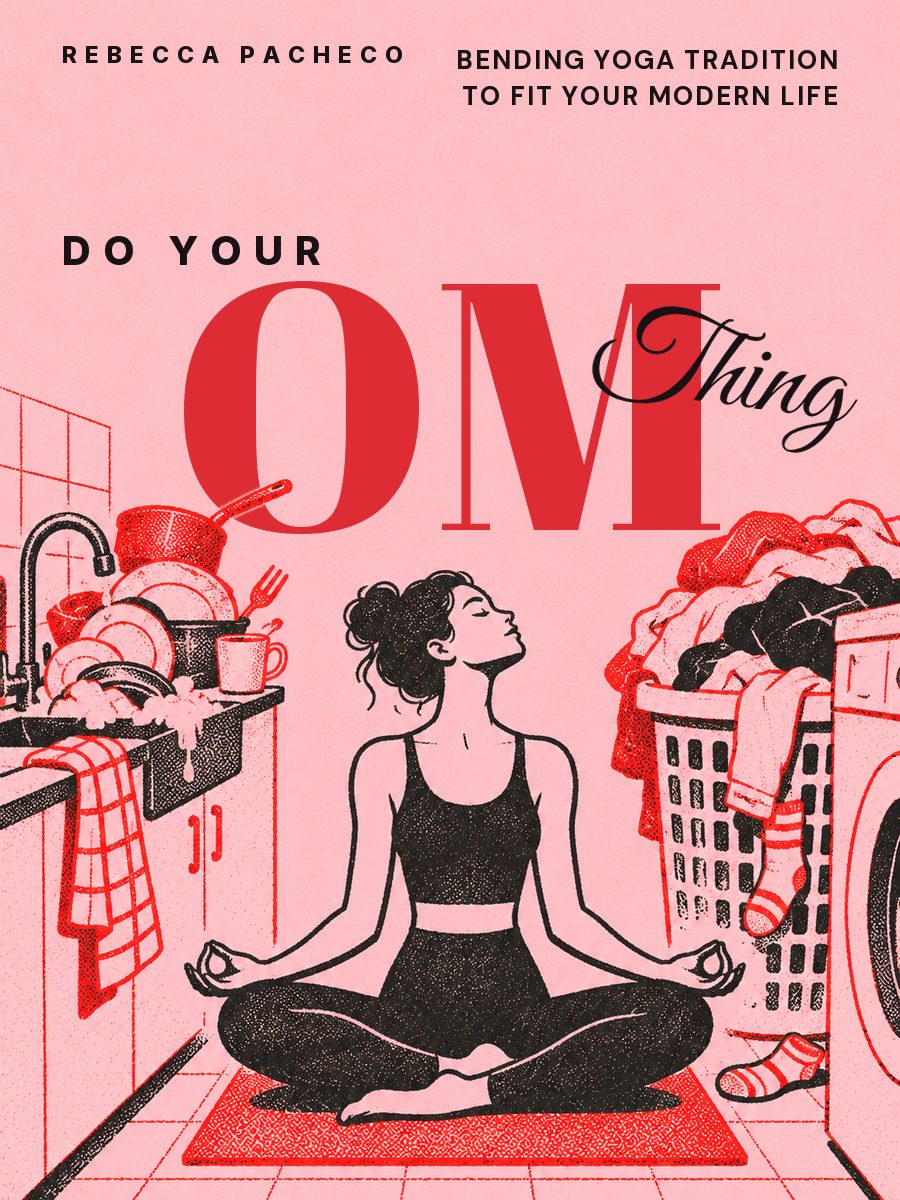
Do Your Om Thing: Bending Yoga Tradition to Fit Your Modern Life
Yoga is marketed with bendy bodies, juice cleanses and impossible poses. Rebecca Pacheco, who has taught it for most of her life, argues that its purpose was always the mind: to quiet it and to live more honestly. Without a guru and without a spiritual scorecard, her book takes the old tradition apart into tools you can use in a traffic jam, at the dentist or with a difficult friend.
Who it is for
For anyone who goes to yoga classes and suspects there is more to it than stretching, and for anyone who feels they are not a real yogi because they eat meat, work in an office or cannot sit still.
Yoga should not be confused with positive thinking. It's clear thinking.
A teenager on a beach towel
In the mid-1990s a sixteen-year-old girl sat on a beach towel in a recreation centre on Cape Cod, surrounded by white-haired retirees. She had come because a friend's older sister she idolised did yoga. The teacher looked at her as if to say: this kid needs to be here.
That girl was Rebecca Pacheco. She went on to teach at one of the most famous yoga studios in the world and watched yoga turn into fashion and fitness. Her book opens with a parody of the usual promise of bliss and calls it nonsense.
The real purpose of yoga, she reminds us, was set down in Patanjali's Yoga Sutras about two thousand years ago: to still the fluctuations of the mind. In Sanskrit, yoga comes from a verb meaning to yoke or join. Pacheco wants to join your yoga life to your real one, with its office and its bad days. Yoga is not positive thinking, she writes, but clear thinking.
Cause less harm, but keep your hiss
If you want yoga in one sentence, Pacheco says, take ahimsa, its first ethical guideline. It is usually translated as non-violence, but she prefers non-harming, because harm is broader than violence. Road rage, gossip and cruel words to your own reflection are all small harms that grow into habits of thought.
She refuses to turn it into a scorecard. Many teachers say ahimsa means veganism. Pacheco notes that the Dalai Lama is not vegetarian, and few would call him less compassionate. You can eat a burger and still live mindfully; each person reaches their own conclusions.
Then comes her favourite parable. A monk taught a poisonous snake that terrorised a village not to bite. A year later he found it beaten and starving: the villagers now threw stones at it. The monk conceded: "I did teach you not to bite people. But I never said you couldn't hiss." Kindness, for Pacheco, is not martyrdom. You may protect yourself; you just don't need fangs to do it.
About the author
Rebecca Pacheco is a Boston yoga and meditation teacher, a former master teacher at the Baptiste Power Yoga Institute and the creator of the blog OmGal.com. She is also a runner and a Boston Marathon finisher.
All books by this author: Rebecca Pacheco
Do Your Om Thing: Bending Yoga Tradition to Fit Your Modern Life Quiz
Terms from the book
- Cape Cod
- Sanskrit
- ahimsa
- chakras
- Vishnu
- Patanjali: An Indian scholar credited with compiling the Yoga Sutras from an oral tradition that already existed.
- Yoga Sutras: A collection of short sayings, written about two thousand years ago, that sets out the main ideas of yoga. Sutra means thread in Sanskrit.
- Dalai Lama: The spiritual leader of Tibetan Buddhism. The present, fourteenth Dalai Lama has lived in exile in India since 1959.
- Iyengar: B.K.S. Iyengar (1918-2014), an Indian teacher who helped bring yoga to the West. His style is slow, precise and uses props.
- Walden: Patricia Walden, whom the author calls the most senior Iyengar teacher in the United States.
- Jennelle: A friend of the author and an experienced marathon runner who had run at least one marathon a year for seven years.
- Heartbreak Hill: The hardest stretch of the Boston Marathon course, actually four hills one after another.
- Brahma: In Hinduism, the creator god. The author uses him as an image of every beginning.
- Shiva: In Hinduism, the god of destruction and renewal. The final resting pose of a yoga class is named after him.
- Savasana: The resting pose lying on the back that closes most yoga classes, also called Corpse Pose.
- sangha: A Buddhist word for a spiritual community. The author uses it for the people who support and inspire you.
Similar books
- Driven to Distraction: Recognizing and Coping with Attention Deficit Disorder from Childhood Through Adulthood, Edward M. Hallowell, John J. Ratey
- Feeling Good, David Burns
- Feeling Great: The Revolutionary New Treatment for Depression and Anxiety, David D. Burns
- The Gift of Therapy, Irvin D. Yalom
- Good Morning, Monster: Are You Brave Enough to Remember Your Past?, Katherine Gildiner
- Gut: The Inside Story of Our Body's Most Underrated Organ, Giulia Enders
- Habits of a Happy Brain: Retrain Your Brain to Boost Your Serotonin, Dopamine, Oxytocin, & Endorphin Levels, Loretta Graziano Breuning
- Hello Sleep: The Science and Art of Overcoming Insomnia Without Medications, Jade Wu
- Dollars and Sex: How Economics Influences Sex and Love, Marina Adshade
- Don't Shoot the Dog! The New Art of Teaching and Training, Karen Pryor