
The key ideas
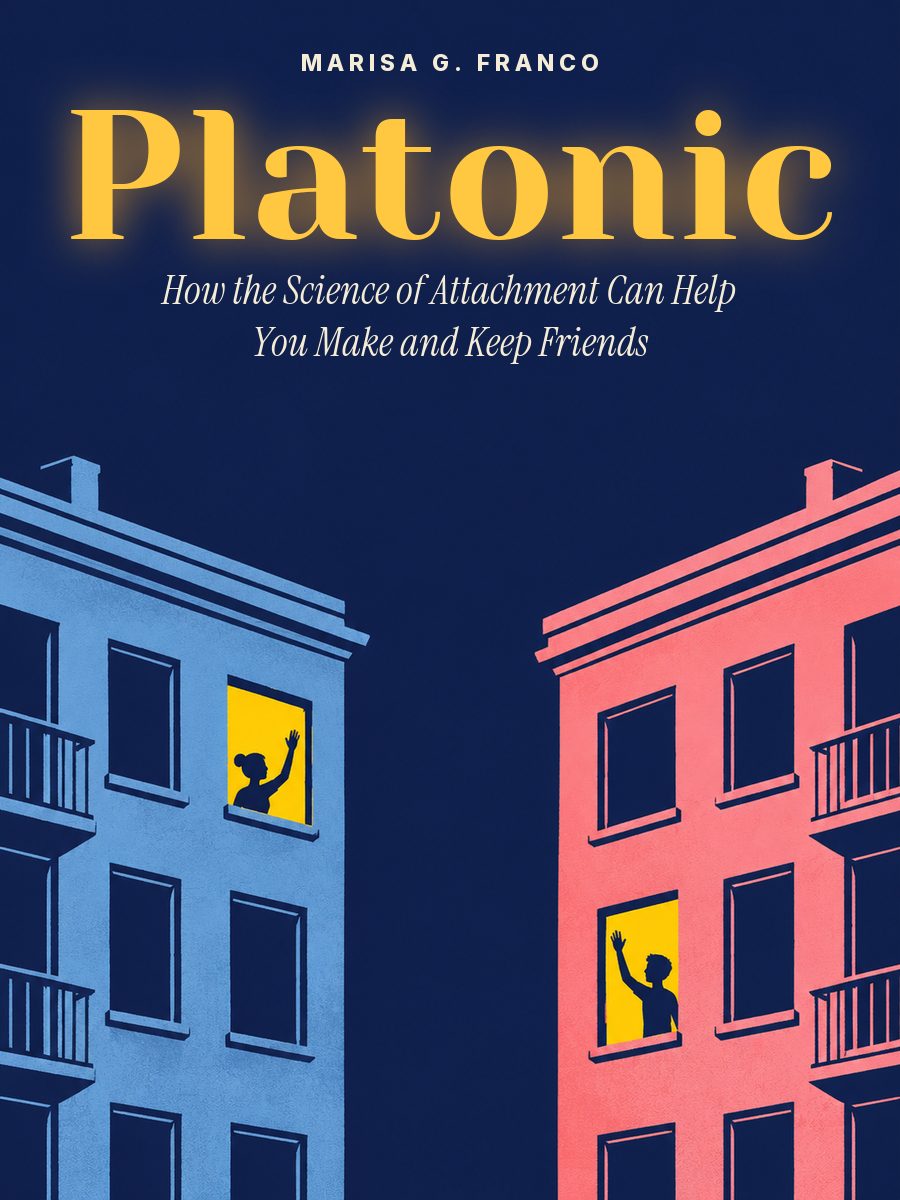
Platonic: How the Science of Attachment Can Help You Make, and Keep, Friends
In adult life friends stop turning up on their own, and the advice to "find a hobby" doesn't help much. Psychologist Marisa Franco explains how past experiences of closeness get in the way of approaching people, and walks through the skills that help you make friends and keep them.
Who it is for
For anyone who has changed city, job or social circle and can't work out where and how to make friends as an adult.
One hello can be the difference between being lonely and finding your best friend.
A jar of notes from old friends
In 2017 psychologist Marisa Franco was moving from Washington to Atlanta, where she knew almost no one. In her suitcase was a jar of notes on which her friends had written their favourite shared memories. Not long before, it was her friends who had helped her through a painful breakup, and she realised she had been wrong to rank friendship below romantic love.
In the book Franco has gathered hundreds of studies and the stories of adults looking for friends. The usual advice to join a club often fails, the author believes, because it says nothing about the main thing: the fear of rejection and doubts about your own worth.
The book's central idea has two parts. Our past relationships affect how we get close to people now. And how we get close decides whether we will have friends. Franco describes six friendship skills, and this retelling covers the ones without which it is hard to begin.
Friends stop appearing on their own as you grow up
Psychologist Nancy Newall and her colleagues surveyed older people. Some believed friends come along through luck, others thought friendship takes effort. Five years later the first group turned out to be lonelier. Those who believed in effort more often visited people and went to church, and that is how they made friends.
At school friendship happens by itself, because people see each other every day. In adult life, and especially after a move, you have to create such meetings yourself.
This is propinquity at work: we become friends with those who are regularly near us. Sociologist Mady Segal studied police academy cadets who were seated in alphabetical order. Ninety percent of them named the person sitting next to them as a close friend. The mere exposure effect works too: a person we see again and again gradually seems more likeable to us.
Hence the author's advice: choose an activity that repeats, for example a course instead of a one-off workshop. Go for at least three months, even if the first meetings are awkward. Then invite the person you liked best to meet one to one. Franco once made herself go up to her neighbours and introduce herself, and out of that conversation grew a group chat and a weekly picnic.
About the author
Marisa G. Franco is an American psychologist who earned her doctorate in counseling psychology and has taught at a university. She studies friendship and loneliness.
All books by this author: Marisa G. Franco
Platonic: How the Science of Attachment Can Help You Make, and Keep, Friends Quiz
Terms from the book
- attachment theory
- Sam
- Bowlby
- Scott
- Newall: Nancy Newall, a psychologist at Brandon University in Canada. She studied how believing in luck or in effort is linked to loneliness in older people.
- propinquity: A social psychology term: people more often grow close to those who regularly happen to be physically near them, for example at the next desk or in the next flat.
- Segal: Mady Segal, a professor of sociology at the University of Maryland. She studied who became friends with whom at a police academy.
- mere exposure effect: A phenomenon known in psychology: what we see many times gradually comes to appeal to us more, even if we don't notice it.
- Secure attachment: An attachment style in which a person assumes by default that they deserve love and that others can be trusted.
- Anxious attachment: An attachment style in which a person fears being abandoned and tries to hold on to people by giving too much or getting close too fast.
- Avoidant attachment: An attachment style in which a person also expects disappointment but protects themselves differently: keeps people at a distance and doesn't show weakness.
- Boothby: Erica Boothby, a psychologist. In 2018, while working at Cornell University, she described the liking gap.
- liking gap: A perception error: after a conversation people usually think the other person liked them less than they really did.
- Mikulincer: Mario Mikulincer, an Israeli psychologist at Bar-Ilan University and one of the leading researchers of attachment.
- packaged vulnerability: The author's own phrase, not a scientific term: a person talks about something painful, but so lightly that the listener doesn't realise how much it matters.
- anger of hope: Bowlby's concept: anger that signals an unmet need and wants to repair the relationship.
- anger of despair: Bowlby's concept: the anger of someone who no longer hopes for reconciliation and so seeks to punish or push the other away.
- Billy: Marisa Franco's best friend. In the chapter on anger, the author tells of a conversation with her after hurts had piled up.
- low-dose friend: The author's phrase: a friend who is lovely to see now and then, although frequent contact with them is hard going.
- Hays: Robert Hays, an American psychologist at the University of Utah. He observed how friendships begin and last between people who had only just met.
- Floyd: Kory Floyd, an American professor at the University of Arizona who studies how people express warm feelings.
- Baker: Billy Baker, a journalist at the Boston Globe, who wrote a book about looking for friends as an adult.
Similar books
- Running on Empty: Overcome Your Childhood Emotional Neglect, Jonice Webb
- The Secret Anchor: Attachment in a Child’s Life, Ludmila Petranovskaya
- Set Boundaries, Find Peace: A Guide to Reclaiming Yourself, Nedra Glover Tawwab
- Sexuality, Self, and Society, Susan Rahman, Nathan Bowman, Damitra Jackson
- Stop Walking on Eggshells: Taking Your Life Back When Someone You Care About Has Borderline Personality Disorder, Paul Mason and Randi Kreger
- Supernormal: The Untold Story of Adversity and Resilience, Meg Jay
- The Anxious Generation: How the Great Rewiring of Childhood Is Causing an Epidemic of Mental Illness, Jonathan Haidt
- The Child in You: The Breakthrough Method for Bringing Out Your Authentic Self, Stefanie Stahl
- The Power of Habit, Charles Duhigg
- The Power of Now, Eckhart Tolle