
The key ideas
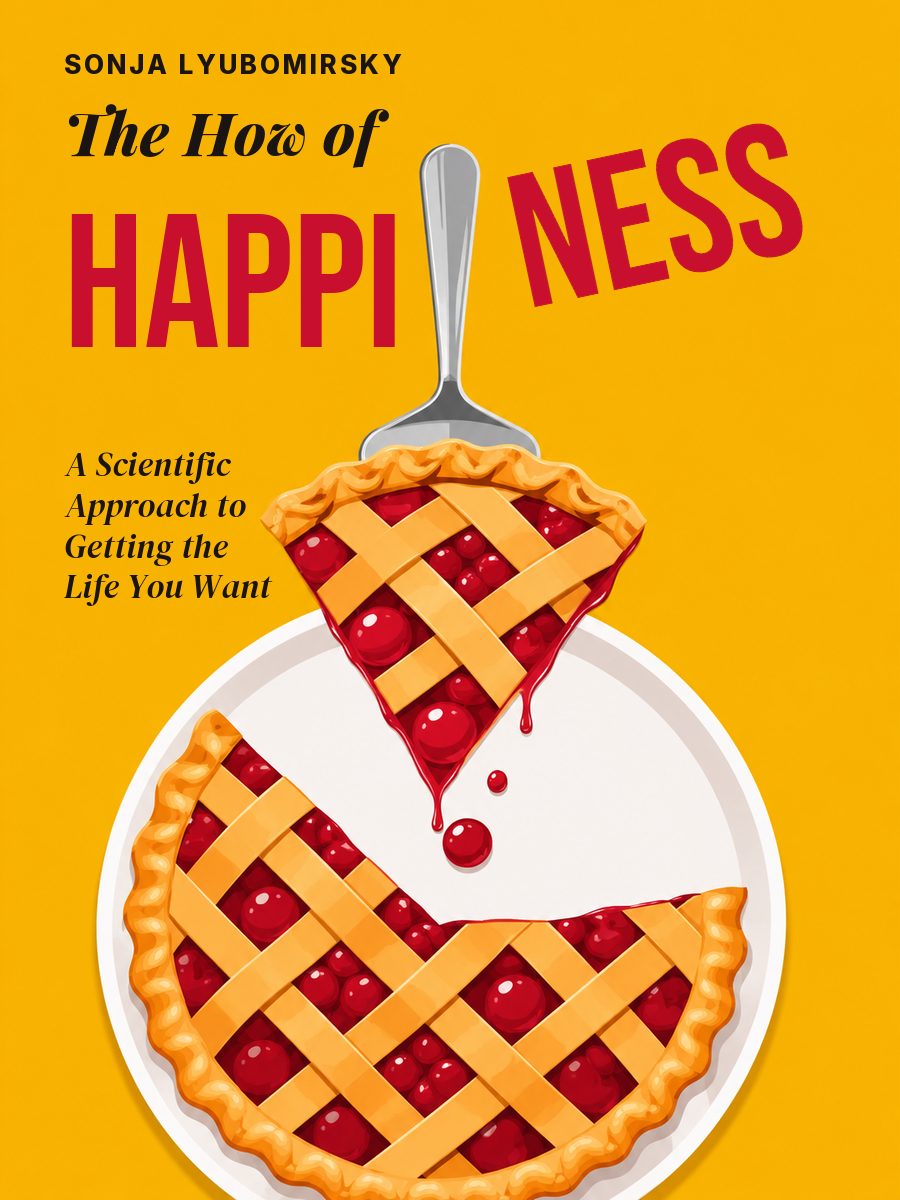
The How of Happiness: A Scientific Approach to Getting the Life You Want
New eyesight, a big house, a wedding: all of these bring joy, and then they become the norm. The psychologist Sonja Lyubomirsky explains why we get used to good things so quickly and what share of happiness, by her estimate, depends on what we do every day. Drawing on experiments from her lab, she shows how to choose an exercise that fits you and how to do it so the effect doesn’t wear off.
Who it is for
For anyone who expects happiness to arrive after a promotion, a move or a purchase, and notices how quickly the joy of them fades. And for anyone who wants to know what psychologists found when they tested in experiments whether a person can become happier.
Happiness isn’t a knock of good fortune that we must await, like the end of rainy season.
The drummer who lost everything
Neil dreamed of becoming a rock star, and he made it. He played drums in a successful folk-rock group, got rich and was nominated for a Grammy several times. Then the group broke up, the big house was gone, and his wife left.
The psychologist Sonja Lyubomirsky met him while filming a documentary about happy people. Neil was raising two children on his own in a modest house on the outskirts of the Canadian city of Winnipeg, and he seemed completely at peace. He said he’d had the money and fame, now he didn’t, and his happiness hadn’t grown or shrunk at all.
Lyubomirsky, a professor at the University of California in the city of Riverside, spent eighteen years studying happiness in experiments. In 2007 she gathered their results in this book. Her main idea: we look for happiness in the wrong places. Money, good looks and moving house bring less joy than we think, and only for a short while; what a person does and thinks every day matters more.
Ahead you’ll see why you get used to good things so quickly and what share of happiness the author considers within your control. You’ll also find out where that estimate reaches its limits, how to choose your own exercise and how to do it so the effect doesn’t wear off.
Two weeks later, the miracle was the norm
At thirty-six, Lyubomirsky had laser eye surgery. All her life she had seen poorly, and suddenly she could read road signs and tell the time on a clock at night. The first day was a miracle. Two weeks later, her new eyesight had become ordinary and no longer brought her joy.
Psychologists have a name for this: hedonic adaptation. After changes, the mind quickly returns to its previous level of happiness. In a large German study, people were surveyed every year for fifteen years. For those who married, the surge of happiness lasted about two years on average and then faded.
The author names two reasons we get used to things. The first: expectations rise, and yesterday’s dream becomes the norm. The second: comparing ourselves with others. Lyubomirsky’s friend Dianna once spent a whole year living with her husband, their baby and her mother in a tiny dormitory room. Later the family moved into a new four-bedroom house. A few months on, Dianna lost her peace of mind over an identical house next door, just with an extra bedroom and a patio.
That’s why, Lyubomirsky believes, changes in circumstances hardly make us happier for long. Before telling yourself “I’ll be happier when…,” it’s worth remembering how long the joy of your last big purchase lasted.
About the author
Sonja Lyubomirsky is an American psychologist and a professor at the University of California, Riverside. She grew up in Russia and the US, and for many years she has been studying in experiments whether people can become happier for the long term.
All books by this author: Sonja Lyubomirsky
The How of Happiness: A Scientific Approach to Getting the Life You Want Quiz
Terms from the book
- Peterson
- Hedonic adaptation
- Sheldon
- Positive psychology
- Rosenthal
- Neil: A former drummer in a successful band whom Lyubomirsky met while filming a documentary about happy people. After the band broke up, he lost his money and fame but, in his words, didn’t become any less happy.
- Folk-rock: A style of music that combines folk songs with rock music: electric guitars and drums.
- Grammy: The leading music award in the US, presented since 1959.
- Winnipeg: A city in central Canada, the capital of the province of Manitoba, known for its long, cold winters.
- Riverside: A city in Southern California, home to one of the campuses of the University of California.
- Dianna: A friend of the author. Her story about her new house and the house next door serves in the book as an example of getting used to good things.
- Schkade: David Schkade, an American scholar who studies decision making. The third coauthor of the model of happiness with the pie chart.
- Happiness set point: The level a person returns to after ups and downs, according to the author’s model. Lyubomirsky considers it largely inborn and compares it to body weight, which holds steady differently for each person.
- Markus: A participant in a large German study who, after his wedding, made an effort not to get used to his marriage and eight years later was still happier than before it.
- Roland: A participant in the same German study. He was disappointed in his marriage, didn’t notice his relationship deteriorating, and became less and less happy.
- Savoring: The ability to notice a pleasant moment, linger on it and extend the pleasure, including by remembering good things and looking forward to them. One of the twelve activities in the book.
Similar books
- The Human Machine, Arnold Bennett
- The Let Them Theory, Mel Robbins
- The Life-Changing Magic of Tidying Up: The Japanese Art of Decluttering and Organizing, Marie Kondo
- The Magic of Thinking Big, David J. Schwartz
- The Marshmallow Test: Mastering Self-Control, Walter Mischel
- The Miracle Morning: The Not-So-Obvious Secret Guaranteed to Transform Your Life (Before 8AM), Hal Elrod
- The Monk Who Sold His Ferrari, Robin Sharma
- The Mountain Is You: Transforming Self-Sabotage Into Self-Mastery, Brianna Wiest
- The Intimate Animal: The Science of Sex, Fidelity, and Why We Live and Die for Love, Justin R. Garcia
- The Joy of Movement: How Exercise Helps Us Find Happiness, Hope, Connection, and Courage, Kelly McGonigal