The key ideas
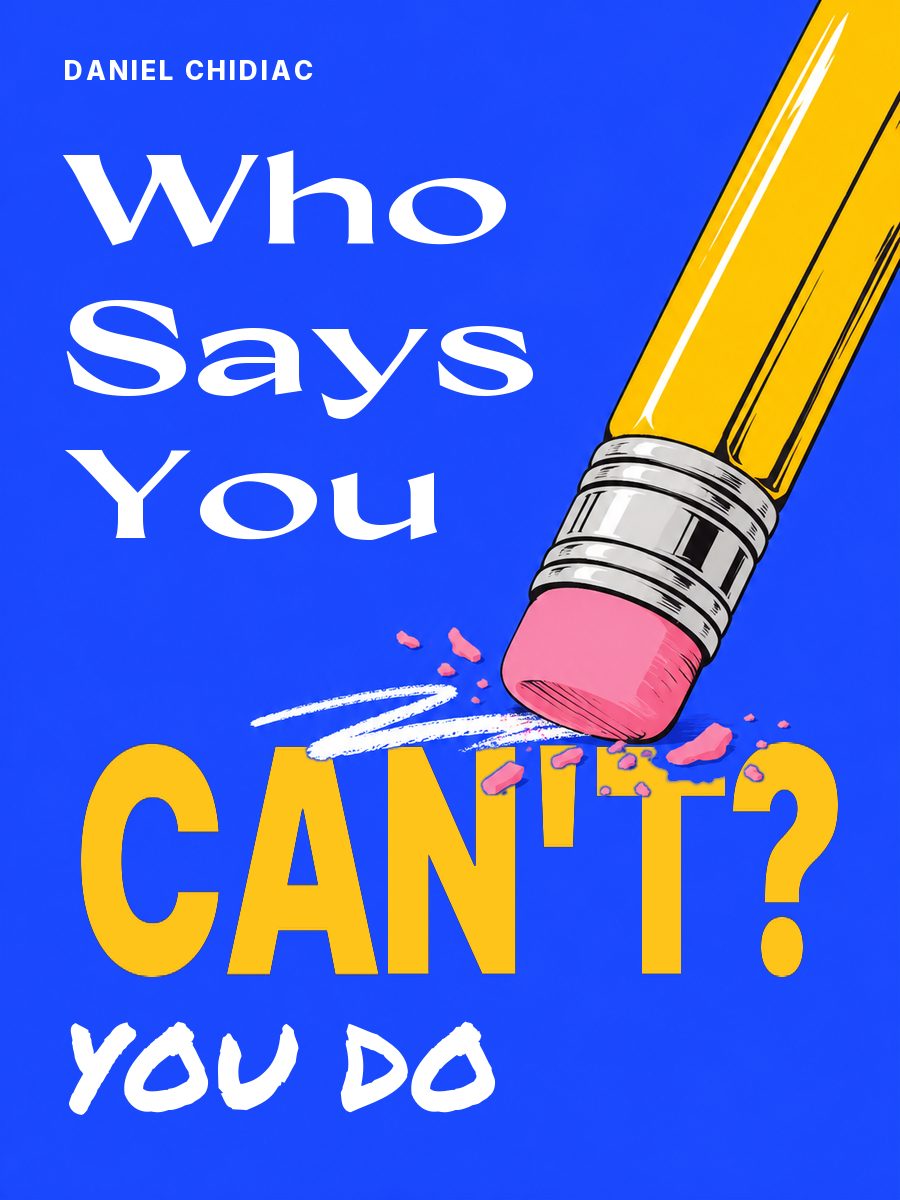
Who Says You Can't? You Do
A young man whose life looks great from the outside, with emptiness and addiction on the inside, spends twenty minutes one night staring at himself in the mirror. That night grew into a book about changing your questions, beliefs, words and actions. It brings together simple daily tools the author tested on himself and his clients.
Who it is for
For those who have spent years putting off change until Monday. And for those who are tired of answering “okay” when someone asks about their life.
The challenge isn't knowing who we are as a person, it's having the courage to act like it.
Twenty minutes in front of the mirror
The guy is barely past twenty. From the outside everything looks great: his own business, five trips to Europe, and whenever someone asks how he's doing, he always answers “Loving life”. In reality he is addicted to drugs, broke and has no idea where he's going. One night, after yet another weekend without sleep, he falls to his knees in his room, then gets up and sees himself in the mirror. For twenty minutes he looks at his own face and realizes: the person he has wanted to be his whole life is looking right back at him.
That guy is Daniel Chidiac, an Australian coach. Just two years before this book came out he was still on drugs, and only eight months later he was already working with people twice his age. He warns honestly that there will be no easy path, and he offers only what he has tested on himself and his clients.
The main idea is hidden in the title. Most often it isn't the world that says “you can't”, it's you: through your questions, beliefs, words and inaction. Which means you are also the one who can overturn that verdict. Next come the four tools the author used to start his own change.
The question “why can't I” keeps you stuck
Chidiac noticed that people ask themselves the same questions for years: “Why am I so unlucky?”, “Why does this always happen to me?” Questions like these, he believes, bring the same answers and the same feelings. The mind obediently looks for proof that you can't.
He pulled himself out of addiction with a chain of questions. “Does taking drugs really make me happy?” Maybe. A shaky answer, so he had to keep asking. “If it makes me happy for a couple of hours, but I hate the rest of the week, is that really happiness?” No. “Is taking drugs stopping me from getting what I really want out of life?” Yes. “What can I do instead?” He started spending his evenings with his family, and he liked it.
Hence the book's first rule: swap “why can't I” for “how can I”. The new question doesn't hand you a ready-made solution, but it widens the frame, and you start noticing options that used to slip past you.
Next the author suggests digging deeper and asking yourself who you are: “Is there kindness in me? Honesty? Gratitude?” For each quality, recall a time it showed, and then turn the question into a statement: “There is kindness in me.” As Chidiac sees it, we usually know what we are really like, but we lack the courage to act that way.
Even when everything seems to have collapsed, he won't call that moment rock bottom. For him it is a point of awareness: only from there can you see that the road was leading the wrong way.
About the author
Daniel Chidiac is an Australian coach and author. As a young man he dropped out of university and went through addiction, and then began helping people change their lives.
All books by this author: Daniel Chidiac
Who Says You Can't? You Do Quiz
Terms from the book
- coach
- Europe: Europe, the continent. As a young man the author traveled there on business: he had his own clothing import company.
- point of awareness: The author's term, not a scientific concept. It is what he calls the moment when everything seems lost: in his view, that is exactly when you can see you were heading the wrong way.
- state of appreciation: The author's phrase: the frame of mind he gets into every morning by reading a list of what he values in himself and around him.
- conflicting beliefs: The author's term: two wants or beliefs that pull in different directions, for example “I want my own business, but I'm afraid of being embarrassed”.
- importer: A person or company that buys goods abroad and sells them in their own country.
- Lamborghini: An Italian brand of expensive sports cars.
Similar books
- Win the Day: 7 Daily Habits to Help You Stress Less & Accomplish More, Mark Batterson
- Working Identity: Unconventional Strategies for Reinventing Your Career, Herminia Ibarra
- Year of Yes: How to Dance It Out, Stand in the Sun and Be Your Own Person, Shonda Rhimes
- You Are a Badass: How to Stop Doubting Your Greatness and Start Living an Awesome Life, Jen Sincero
- Your Erroneous Zones, Wayne Dyer
- 13 Things Mentally Strong People Don't Do, Amy Morin
- The 7 Habits of Highly Effective People, Stephen Covey
- A Mind for Numbers: How to Excel at Math and Science, Barbara Oakley
- The Whole-Brain Child, Daniel J. Siegel, Tina Payne Bryson
- Why Buddhism Is True, Robert Wright