
The key ideas
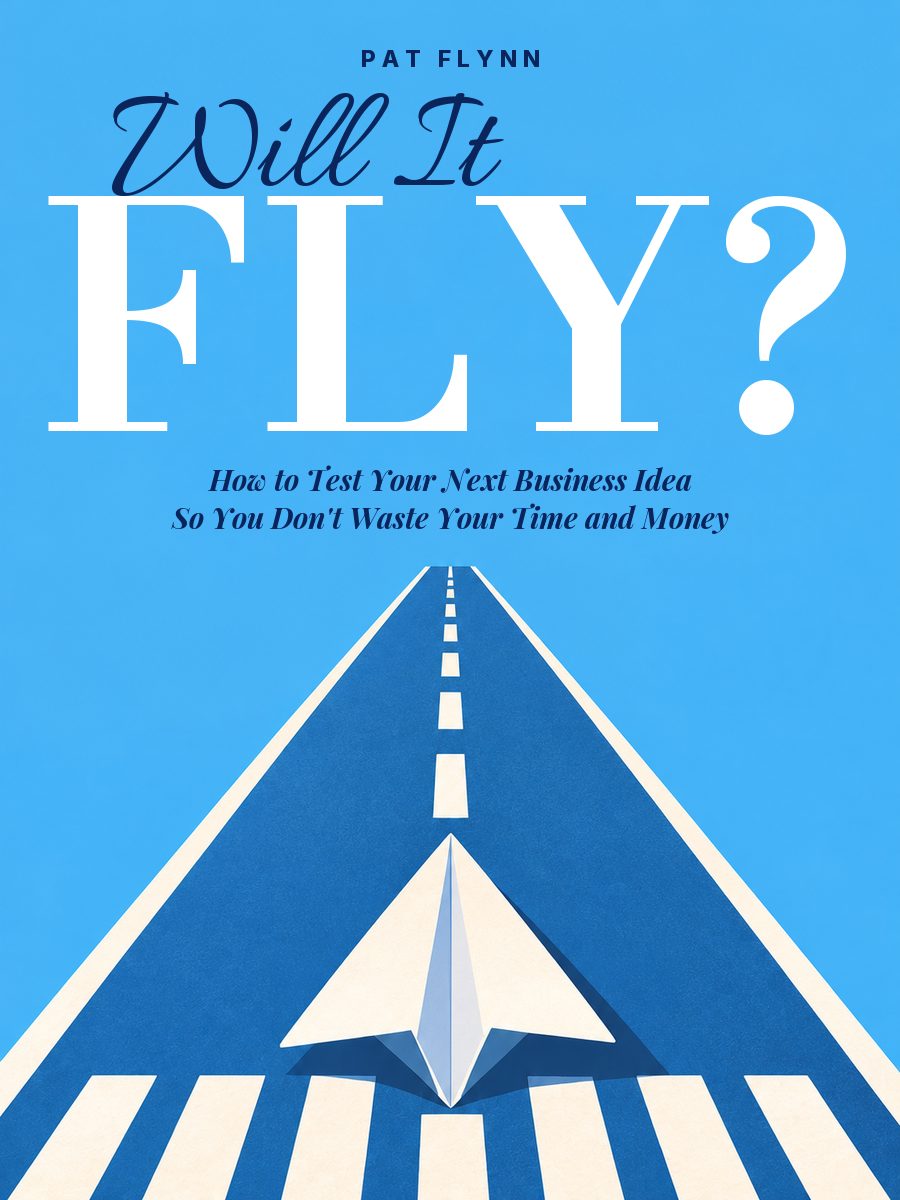
Will It Fly? How to Test Your Next Business Idea So You Don't Waste Your Time and Money
Many people start a business with a logo and business cards and think about customers later. Pat Flynn, a former architect who built several online businesses after being laid off, suggests testing an idea step by step: whether it suits you, who needs it, and whether people will pay for it before it is ready.
Who it is for
For people who have an idea for a business of their own and are afraid of wasting years and money on it.
You don't have to go big in the world to experience success. You just have to be big in somebody's world.
The plane that crashed two steps away
Pat Flynn decided to teach his three-year-old son Keoni to fold a paper airplane. The boy did not want to watch how his father did it: he hastily folded a sheet in half a minute and threw it. The plane fell a couple of steps away, and Keoni announced that he did not like airplanes. The second time they folded planes together, and his father showed him how to make the wings. This time Keoni's plane flew across the room.
Flynn was an architect. After being laid off in 2008, he built a website for preparing for LEED, a difficult industry exam, and then built several more online businesses. He boils his failures down to two causes: money mattered more to him than the people he was working for, and he was in a hurry.
In this book the author suggests testing an idea before years and money go into it. First you hold it up against your own life, then you refine it, study your buyers and, finally, run a small experiment with real money. You cannot fail these tests, Flynn says, because they test not you but the idea.
Twenty thousand a month and no joy
One day Flynn got an email from James, a listener of his podcast. The subject line read: “I make $20,000 per month and I'm not happy.” James's dream had come true, and he realized he had hardly given it any thought. Flynn draws a conclusion: a successful business and a good life are not the same thing, so the first part of the book is devoted not to the idea but to its owner.
The first test is called the Airport Test. Imagine that five years have passed and you run into an old friend in a departure lounge. To the question “How's life?” you answer “Amazing!” and you mean it. What is happening in your life then? You divide a sheet of paper into four parts for the most important areas. For Flynn these are family, work, money and health. In each part you write down what that area will become. Five years is far enough away for a big goal and close enough for a plan.
The second test looks back: for each of your previous jobs you write down what you liked, what annoyed you, your most vivid memory and an overall rating. This shows what really energizes you. The author does not consider a mismatch between the idea and your past experience a warning sign: perhaps change is exactly what you are after. But if the idea clearly clashes with the life from the Airport Test, it is the idea you should change, not your life plan.
About the author
Pat Flynn is an American entrepreneur and the host of the Smart Passive Income podcast. He started out as an architect, and after being laid off in 2008 he launched a website to help people prepare for the LEED exam.
All books by this author: Pat Flynn
Will It Fly? How to Test Your Next Business Idea So You Don't Waste Your Time and Money Quiz
Terms from the book
- James
- podcast
- Shark Tank
- Warner
- Kelly
- Harris
- Keoni: Pat Flynn's son. The book opens with the story of how he learned to fold a paper airplane.
- LEED: An American rating system for green buildings. There is a professional exam based on it, and Flynn's first business was a website for preparing for that exam.
- niche: A narrow part of a market where people have similar problems, habits and wants.
- unique selling proposition: A marketing concept: what makes a product or company different from the rest of the market. Flynn sets it apart from the unfair advantage, which is about the person.
- O'Leary: Kevin O'Leary, a Canadian entrepreneur and investor, one of the regular investors on Shark Tank.
- Post-it notes: Small sticky notes. Flynn writes one thought on each so he can freely rearrange them later.
- food truck: A van in which food is cooked and sold on the street. Flynn built a website for people who start or run such a business.
- pre-order: An order for something that does not exist yet: the buyer pays or leaves card details in advance and receives the product when it is ready.
Similar books
- Winning, Jack Welch, Suzy Welch
- Words That Change Minds, Shelle Rose Charvet
- Yes!: 50 Scientifically Proven Ways to Be Persuasive, Noah J. Goldstein, Steve J. Martin, Robert Cialdini
- 12 Months to $1 Million, Ryan Daniel Moran
- The 48 Laws of Power, Robert Greene
- A More Beautiful Question: The Power of Inquiry to Spark Breakthrough Ideas, Warren Berger
- Acres of Diamonds, Russell Conwell
- Aesthetic Intelligence: How to Boost It and Use It in Business and Beyond, Pauline Brown
- Win the Day: 7 Daily Habits to Help You Stress Less & Accomplish More, Mark Batterson
- Wintering: The Power of Rest and Retreat in Difficult Times, Katherine May