
The key ideas
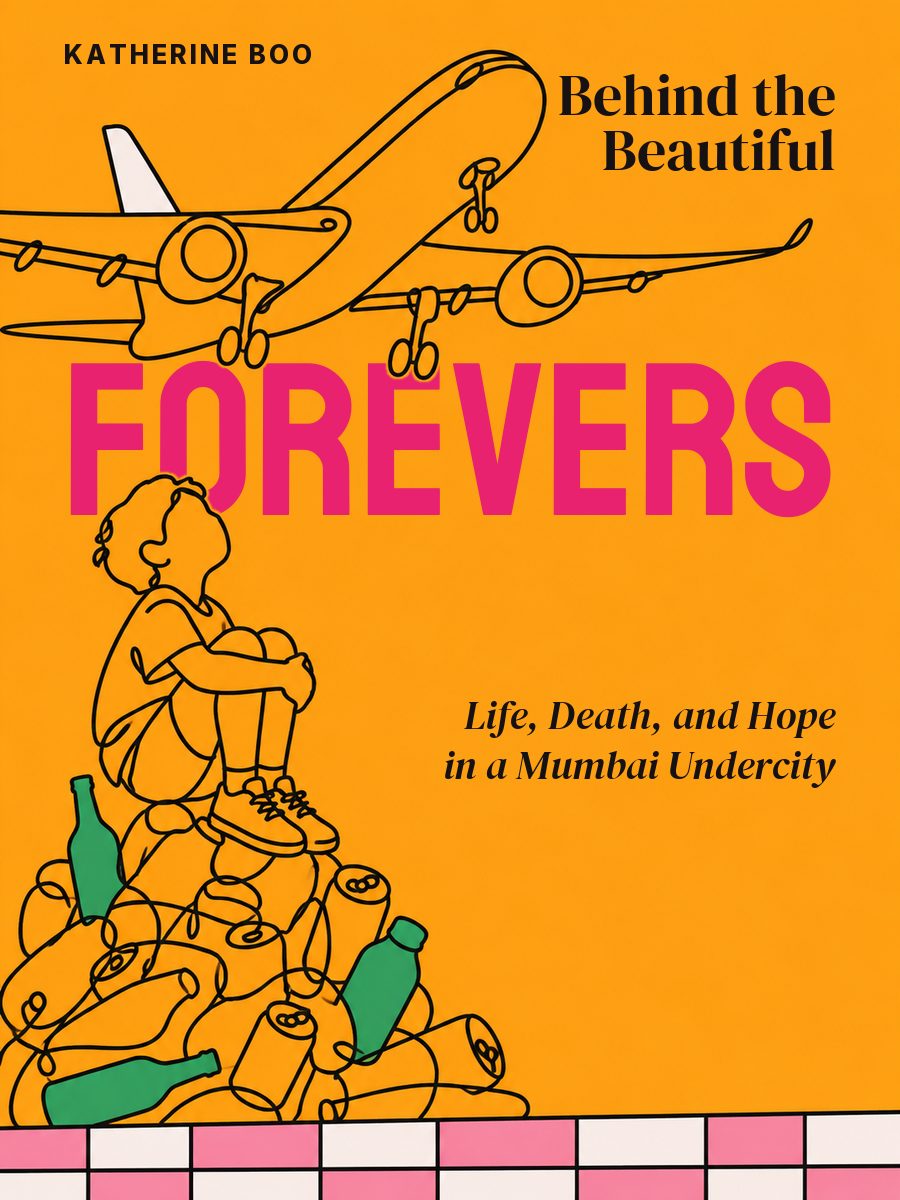
Behind the Beautiful Forevers
In 2008 a young recycling trader from a slum by the Mumbai airport is falsely accused after a neighbor sets herself on fire. Journalist Katherine Boo followed the residents of this slum for more than three years and recorded their true stories. The book shows what decides, in an India growing richer, who rises and who falls.
Who it is for
For readers curious about what lies behind the talk of economic growth. And for anyone who wants to understand why the poor in unequal cities so rarely unite.
Do you ever think when you look at someone, when you listen to someone, does that person really have a life?
The boy who hid in the garbage
A July night in 2008, a slum by the Mumbai airport. The police are heading for the Husain family’s hut, and young Abdul hides in a shed among the bottles and cardboard he buys from scavengers. The neighbor, a woman on crutches, has been taken away with burns. She set herself on fire, but she blamed his family.
This is Annawadi: 335 huts and about three thousand people on land belonging to the airport authority. Around it stand five luxury hotels, and from the road the slum is hidden by a wall covered in ads for floor tiles and the words “Beautiful Forever.”
Katherine Boo, a journalist at The New Yorker, followed the lives of several Annawadi families from November 2007 to March 2011. Every name in the book is real, and the characters’ thoughts are written down from what they told her. Pitiful pictures of poverty don’t interest her. Her question is this: in an India growing richer, who manages to get out of poverty, who doesn’t, and why.
Luck made of the disasters that passed you by
Abdul has been sorting garbage since he was about six, because his father’s lungs are bad. He divides what he buys into sixty kinds of paper, plastic and metal; he knows metal by its ring and plastic by its smell. In the winter of 2008 scrap fetches a good price, he earns five hundred rupees a day, about eleven dollars, and the family makes the first payment on a plot of land in the suburb of Vasai.
Abdul has a theory. Fortune in Annawadi depends not only on how a person works but on which misfortunes they managed to dodge. A decent life, as he sees it, is the train that hasn’t hit you, the malaria you haven’t caught.
His neighbor Raja Kamble cleaned public toilets, and that was a permanent job. That is rare: by official measures there are almost no poor people here, yet only six of the three thousand residents have permanent jobs. Then Kamble’s heart failed. A surgeon at a government hospital demanded a bribe: sixty thousand rupees for the valve. Kamble spent months raising money and died before he got the operation.
As Boo observes, for every two residents inching up, there is one in a steep fall. Soon Abdul himself will be the one in a steep fall.
About the author
Katherine Boo is an American journalist and a staff writer at The New Yorker who has written about the lives of the poor for twenty years. She is a Pulitzer Prize winner, and this is her first book.
All books by this author: Katherine Boo
Behind the Beautiful Forevers Quiz
Terms from the book
- Mumbai: India’s largest city and its financial capital, on the country’s west coast. It used to be called Bombay.
- Husain: Abdul Husain’s family: Muslims who trade in recyclables in Annawadi. His mother is Zehrunisa, his father Karam, his sister Kehkashan, his brother Mirchi, and there are younger children.
- Annawadi: A small slum by Mumbai’s international airport, on land belonging to the airport authority. Founded in 1991; by 2008 about three thousand people lived there.
- Vasai: A suburb of Mumbai where the Husain family made a payment on a plot of land. After the trial the money was lost: the plot was sold to another family.
- Kamble: Raja Kamble, a public toilet cleaner from Annawadi. He could not raise the money for a new heart valve and died.
- Shaikh: Fatima Shaikh, the Husains’ neighbor, a woman with a leg damaged from birth. In July 2008 she set herself on fire and blamed her neighbors; she died in the hospital.
- Waghekar: Asha Waghekar, an Annawadi resident and Shiv Sena party activist who became the slum’s de facto boss. Her daughter Manju goes to college.
- Vidarbha: A dry rural region in the east of the state of Maharashtra, where Asha comes from. It is known for farmers’ debts and suicides.
- Gaikwad: Bhimrao Gaikwad, an official of Maharashtra’s education department. Through front organizations he siphoned off money from a government program for educating children.
- Sarva Shiksha Abhiyan: India’s government program for universal primary education. It was meant to bring working children, girls and children with disabilities into school.
- Lakh: An Indian unit of counting equal to one hundred thousand. 4.7 lakh rupees is 470,000 rupees.
- Manju: Manju Waghekar, Asha’s daughter and the only college student in Annawadi. She ran a free school for poor children in her hut.
- Sharma: Sunil Sharma, a scavenger boy from Annawadi. He lived in an orphanage, came back to the slum, and for a while stole metal at the airport.
- Kalu: The nickname of fifteen-year-old Deepak Rai, a metal thief and Sunil’s friend. He was found dead near the Air India gates; the police recorded his death as tuberculosis.
- Shetty: Sanjay Shetty, a sixteen-year-old from the road near Annawadi. He saw the attack on Kalu and poisoned himself after a police beating.
- Dongri: A district of Mumbai where the city’s juvenile detention center is. Abdul was sent there before his trial.
Similar books
- Propaganda, Edward Bernays
- Better Small Talk: Talk to Anyone, Avoid Awkwardness, Generate Deep Conversations, and Make Real Friends, Patrick King
- Brandwashed: Tricks Companies Use to Manipulate Our Minds and Persuade Us to Buy, Martin Lindstrom
- Bury My Heart at Wounded Knee, Dee Brown
- Captivate: The Science of Succeeding with People, Vanessa Van Edwards
- Cues: Master the Secret Language of Charismatic Communication, Vanessa Van Edwards
- What You're (Not) Going to Die Of, Sergio Parra
- Designing the Future, Jacque Fresco
- Being You, Anil Seth
- Belonging: Remembering Ourselves Home, Toko-pa Turner