
The key ideas
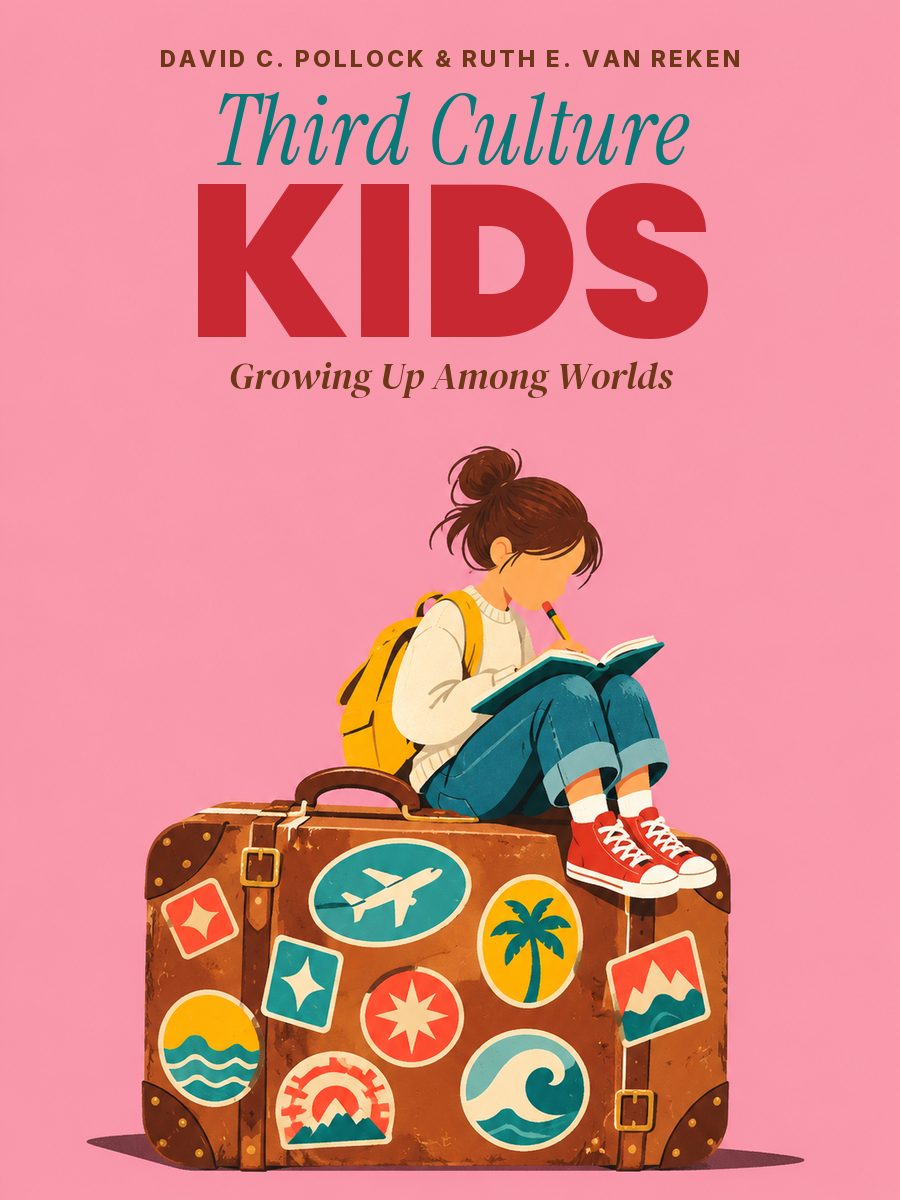
Third Culture Kids: Growing Up Among Worlds
Leaving a country where your passport is foreign can be very painful. David Pollock and Ruth Van Reken spent years gathering the stories of people who grew up between cultures, and described what such a life gives and what it costs. The book is about children, but its ideas will be useful to anyone who has moved and can't understand why the new place is so hard.
Who it is for
For anyone who has moved to another country or city, for parents raising children far from their home country, and for adults who grew up between cultures.
How can it hurt this much to leave a country that isn't even mine?
It hurts to leave a country that isn't even yours
The plane climbs above Singapore, and twenty-three-year-old Erika looks out of the window until the city disappears. She is American, but from the age of eight she lived in Ecuador and Singapore, and now she is going back to the US after a failed attempt to settle where she grew up. Two questions torment her: why it is so hard to leave a foreign country, and whether there is anywhere in the world where she belongs.
David Pollock and Ruth Van Reken call people like this third culture kids. They are people who spent a significant part of their lives before the age of eighteen outside their parents' culture. The first culture is the parents', the second is the local one, and the third culture forms between them: it is the shared way of life of people who live far from their home country.
The book is written about children, but the authors acknowledge that adults on their first move go through the same culture shock and the same stages of transition. The portrait they draw is made of common patterns and does not fit everyone completely. In the authors' view, life between worlds brings great gifts, and it has two main challenges: finding yourself, and getting through losses nobody sees.
Suitcases on their heads at a New York airport
The Edley family lived for ten years in a village in Africa. Before going back, the parents bought their four children fashionable clothes so they wouldn't stand out in any way. At the New York airport people stared at them anyway: the children walked in single file and carried their suitcases on their heads, as was the custom in their village.
The authors explain slips like these with a model by the anthropologist Gary Weaver. The cultural iceberg works like this: above the water you can see language, clothing and customs, while below the water lies the larger part: values and ideas of what is right. We decide from the visible part whether the person before us is one of us or a stranger, and we expect their hidden part to be the same as ours.
Someone who lives in one setting for a long time develops cultural balance: almost without thinking, they know what is appropriate, funny or offensive here. Third culture kids absorb culture from their surroundings just like everyone else. It's just that their surroundings change in a single flight, so the feeling that you keep getting things wrong says more about a change of rules than about a lack of intelligence.
About the author
David Pollock (1939-2004) spent many years running seminars for families living abroad, and described the stages every move goes through. Ruth Van Reken grew up in Nigeria and wrote a memoir about her own childhood far from her parents.
All books by this author: David C. Pollock, Ruth E. Van Reken
Third Culture Kids: Growing Up Among Worlds Quiz
Terms from the book
- chameleon
- Frame
- Erika: An American who grew up in Ecuador and Singapore. Her true story, with names and places changed, opens the book.
- third culture: A concept coined by the sociologists Ruth Hill Useem and John Useem: the shared way of life of people who live far from their home country. The first culture is the parents', the second is the local one, the third forms between them.
- Weaver: Gary Weaver, an American anthropologist and specialist in intercultural communication. The authors use his model of the cultural iceberg.
- cultural iceberg: Gary Weaver's model: above the water you can see language, clothing and customs, while below the water lie values, assumptions and a view of the world.
- Edley: A family who lived for ten years in an African village. The story of their return to New York was told to the authors by one of the adults who grew up between cultures.
- cultural balance: The almost unconscious knowledge of how things work in a given setting: what is appropriate, funny or offensive here.
- hidden immigrant: A concept from Pollock and Norma McCaig: a person looks like the locals but thinks differently, and the people around make no allowances for them.
- Krista: An American who lived in England from the age of six to sixteen and dreamed of returning to the US.
- Nicola: An Englishwoman who grew up in Scotland. She dreamed of going to study in England, and once there felt like an outsider.
- reverse culture shock: The confusion on returning to your home country, similar to what people go through when moving to a foreign one.
- screamer: An image from the book, not a scientific term: a person who stresses that they are not like the people around them.
- wallflower: An image from the book, not a scientific term: a person who keeps to the side and watches, so as not to give away that they don't know the local rules.
- hidden losses: The authors' concept: losses of a move that the people around don't see, such as a familiar way of life, your place in a community or favourite belongings.
- Inika: A woman who grew up in Guatemala. When she went back there for a permanent job, for the first time she had no departure date ahead of her.
- Kano: A large city in the north of Nigeria where Ruth Van Reken spent her childhood.
Similar books
- The Tipping Point, Malcolm Gladwell
- Instincts of the Herd in Peace and War, Wilfred Trotter
- The Theory of the Leisure Class, Thorstein Veblen
- What Every BODY Is Saying: An Ex-FBI Agent’s Guide to Speed-Reading People, Joe Navarro, Marvin Karlins
- What You Should Know About Politics... But Don’t, Jessamyn Conrad
- Why Nations Fail, Daron Acemoglu, James A. Robinson
- You’re Not Listening: What You’re Missing and Why It Matters, Kate Murphy
- 2084 and the AI Revolution: How Artificial Intelligence Informs Our Future, John C. Lennox
- This Idea Must Die: Scientific Theories That Are Blocking Progress, John Brockman (editor)
- This Is Marketing, Seth Godin