
Book quiz
Ageless: The New Science of Getting Older Without Getting Old Quiz
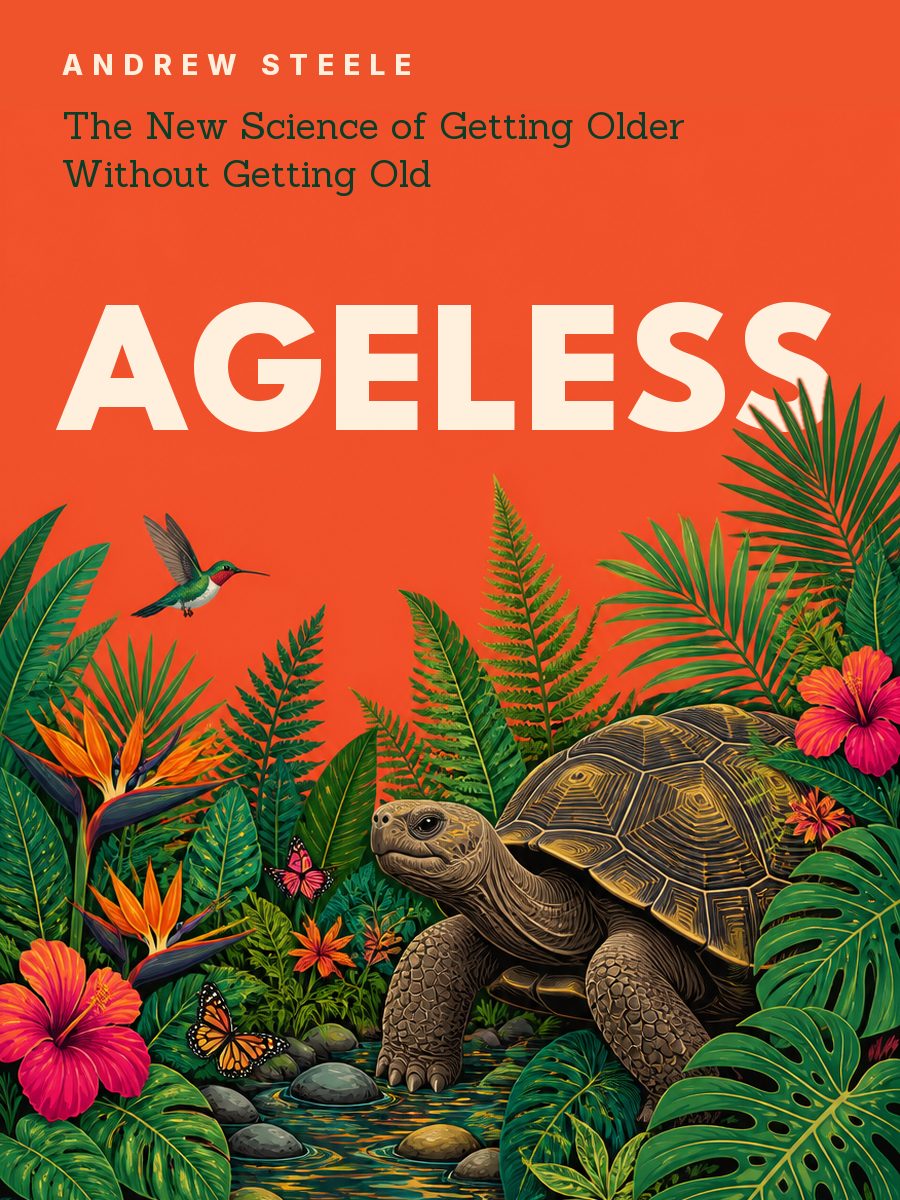 Ageless: The New Science of Getting Older Without Getting OldAndrew Steele
Why is a tortoise as vigorous at a hundred and seventy as at thirty, while we grow weaker with every decade? Biologist Andrew Steele shows that aging is a process with causes rather than a law of nature, and scientists can already change its speed in the laboratory. This book explains what breaks in an aging body…
Question 1 of 5
You're thirty-five, and your chance of dying this year is small. How does it change from here, according to the Gompertz law?
Show the answer
Right answer: It doubles roughly every eight years
Gompertz noticed this in mortality tables. It works like debt at compound interest: in your mid-thirties the chance is one in a thousand, by your mid-sixties it's one in a hundred.
Question 2 of 5
A mouse lives three or four years, while a bat of the same size lives more than thirty. Why, according to Steele?
Show the answer
Right answer: Mice die young more often, so a durable body is no use to them
Steele explains the difference by danger. Most mice die young, so it pays them to have offspring fast. A bat flies away from enemies and lives a long time.
Question 3 of 5
What is Steele getting at when he compares the body to a car rented for a week?
Show the answer
Right answer: Resources go into growth and offspring, not repair
This is Thomas Kirkwood's disposable soma idea: the body's resources are limited, and it spends them on growth and offspring rather than endless repair.
Question 4 of 5
A friend is thirty, smokes, and thinks it's too late to quit. What does Steele write?
Show the answer
Right answer: If he quits now, he'll get almost all those years back
According to Steele's figures, smoking takes about ten years of life, but someone who quits by around thirty gets back almost all of their normal lifespan.
Question 5 of 5
You sleep ten hours a night: it seems the more sleep, the better. What does Steele advise?
Show the answer
Right answer: No less than seven and no more than eight hours
Among the boring tips that help you hold out until there are treatments for aging, Steele names seven to eight hours of sleep a night, no less and no more.
Want all of the book's key ideas? Read or listen to its retelling in Livria.