
Book quiz
Behave: The Biology of Humans at Our Best and Worst Quiz
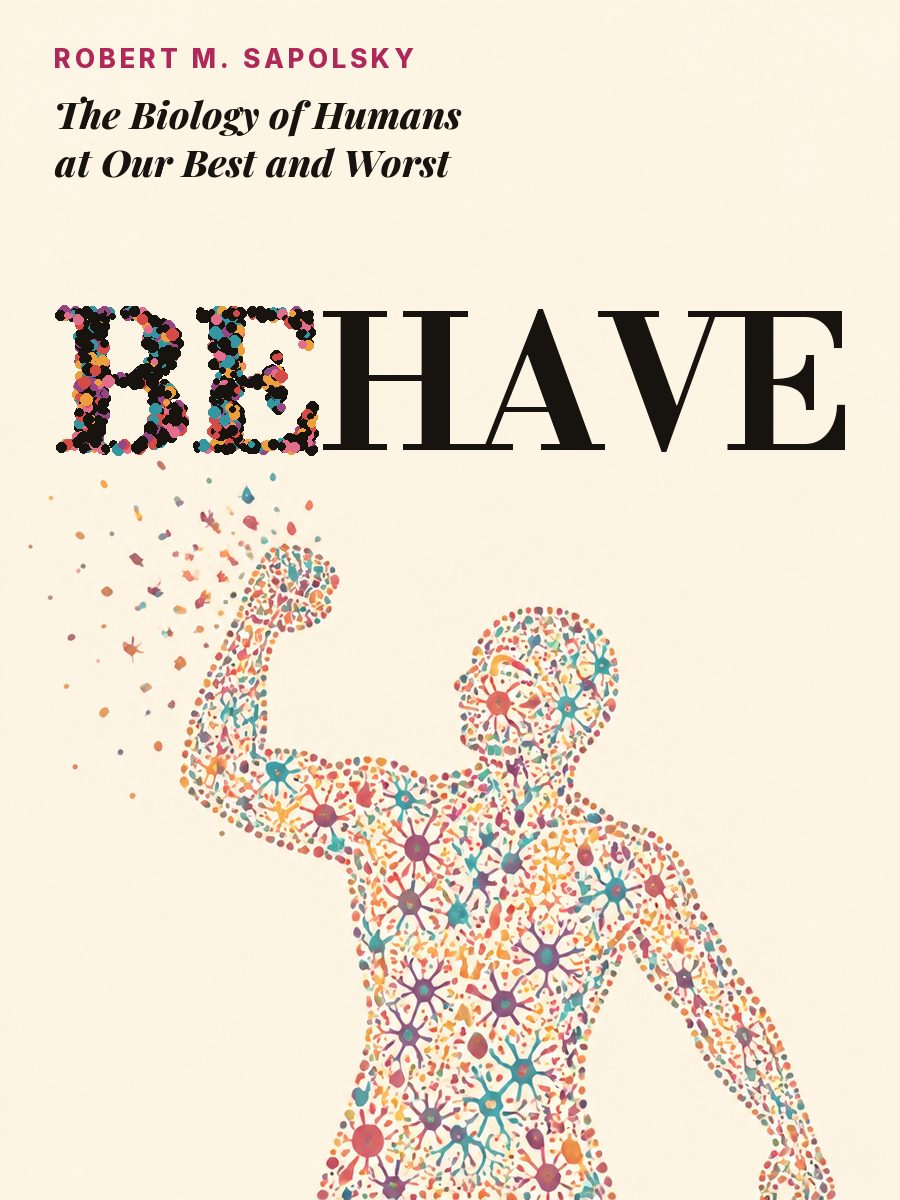 Behave: The Biology of Humans at Our Best and WorstRobert M. Sapolsky
A neuroscientist’s wife caught up with a rude driver at a red light and tossed a grape lollipop through his window. Robert Sapolsky takes any act apart step by step: what was happening in the brain a second before it, which hormones were at work that day, what childhood, genes and culture laid down. You’ll see why…
Question 1 of 5
It's evening after a hard day with no lunch, and you have to decide whether to answer a colleague sharply. What's wiser, according to the book?
Show the answer
Right answer: Eat and decide later
The frontal cortex burns energy, and a hungry, tired person leans toward harsher decisions, so it's worth getting your strength back first.
Question 2 of 5
A friend says of a hot-tempered man: "Aggression is in his genes, nothing can be done." What would the author answer?
Show the answer
Right answer: It depends on the conditions
Even the "warrior gene" tripled the likelihood of aggression only in those who were abused in childhood: a gene speaks only together with the environment.
Question 3 of 5
At a meeting everyone backs an unfair decision, and you have doubts. According to the book, what helps most to speak up?
Show the answer
Right answer: Find at least one ally
Two dissenters against ten change the balance far more than one against eleven: an ally turns a doubt into a position.
Question 4 of 5
You catch yourself thinking about a whole group of people: "They're all the same." What step from the book will help?
Show the answer
Right answer: Picture one particular person
When we think about a specific person's tastes and life, the brain sees an individual rather than a member of a group, and the reaction to "them" weakens.
Question 5 of 5
Watching someone else's suffering hurts so much you want to look away. According to the book, what helps you stay and help?
Show the answer
Right answer: Focus on warmth and care
Living through someone else's pain quickly drains you, while focusing on care brings a warm state and the wish to act.
Want all of the book's key ideas? Read or listen to its retelling in Livria.