
Book quiz
Better Small Talk: Talk to Anyone, Avoid Awkwardness, Generate Deep Conversations, and Make Real Friends Quiz
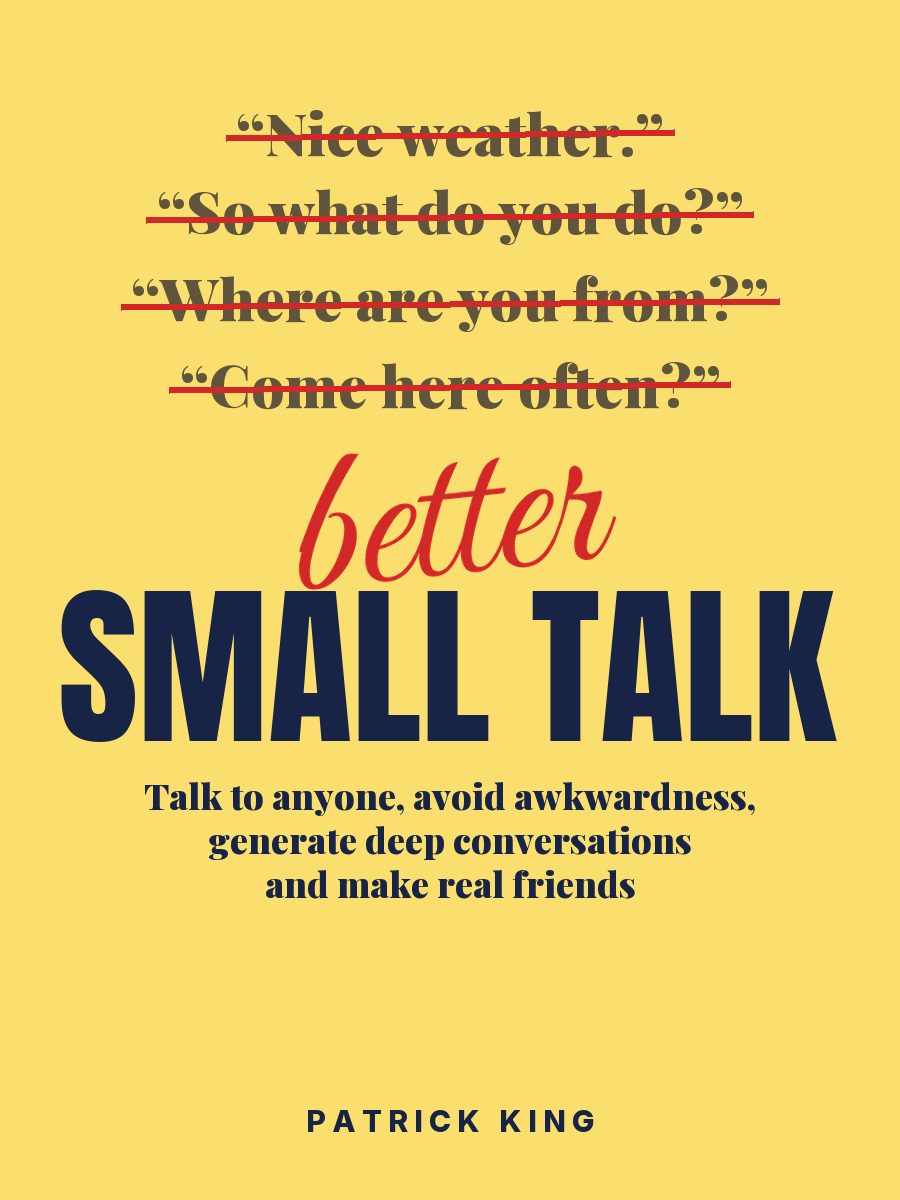 Better Small Talk: Talk to Anyone, Avoid Awkwardness, Generate Deep Conversations, and Make Real FriendsPatrick King
Why does a conversation with someone new so often die on the second line? Patrick King shows that small talk is not empty chatter but a warm-up for a real conversation. You will learn how to start without a rehearsed witty line, what to say to a one-word reply, and how to move from the weather to what actually matters.
Question 1 of 5
A new colleague at the coffee machine asks what you're most afraid of. Why is that awkward, according to King?
Show the answer
Right answer: He skipped the steps of getting to know someone
Getting to know someone goes in steps: small talk, facts, opinions, and only then feelings. Few people are ready to tell a stranger what worries them.
Question 2 of 5
You have an important meeting tonight, and you've spent all day silent at your computer. What does King advise?
Show the answer
Right answer: Exchange a few words with someone on the way
Inertia gets in the way, so your voice and your social side need a warm-up. Short exchanges with a cashier or a neighbor ease the stiffness: the most important conversation of the day shouldn't be the first.
Question 3 of 5
What question is better than "How was your trip?" if you want a lively conversation?
Show the answer
Right answer: "What was the most unexpected thing there?"
A general question asks for a report, and people answer it in one word. A question about the most unexpected thing asks for a story, and people find telling stories easier than reporting.
Question 4 of 5
The person you're talking to only answers "yes" and "no". Which of King's moves will often get them talking?
Show the answer
Right answer: Make a wrong guess about them
This is one form of elicitation. To "You must be a programmer?" they answer "No, I'm a teacher" and start talking on their own: the urge to correct is stronger than shyness.
Question 5 of 5
Following the 1:1:1 rule, how should you tell a story in conversation?
Show the answer
Right answer: Start as close to the end as you can
A story rests on one action, one emotion and a one-sentence ending. Most stories lose the listener long before the payoff, so start close to the end.
Want all of the book's key ideas? Read or listen to its retelling in Livria.