
Book quiz
Brain Lock Quiz
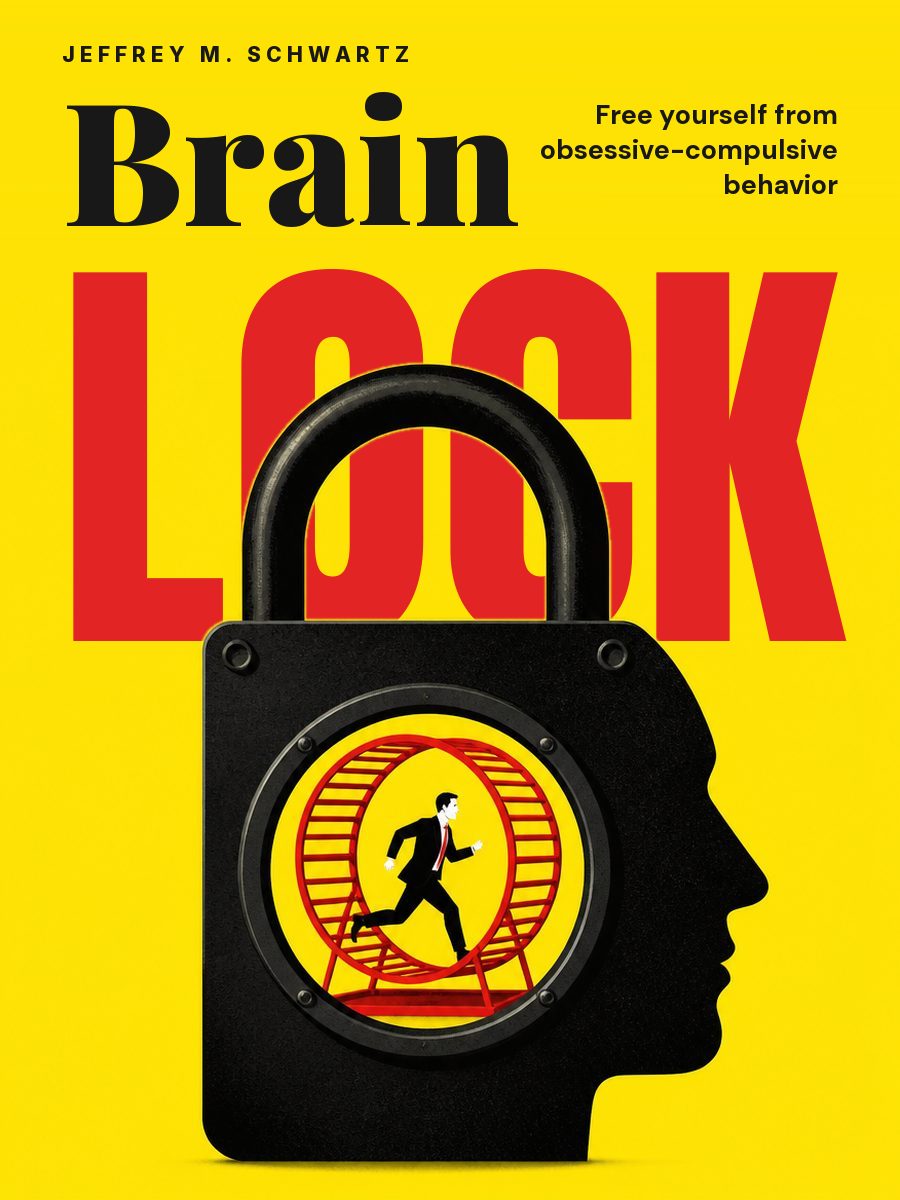 Brain LockJeffrey M. Schwartz, Beverly Beyette
Someone knows the door is locked but returns to check it again and again. Psychiatrist Jeffrey Schwartz explains why, in OCD, the mind understands one thing while a feeling demands another. He proposes his four-step method, which his group’s findings suggest may even be associated with changes in brain function.
Question 1 of 5
You're already on the subway, and a thought pops up: "Did I really turn off the iron?" What does the first step, Relabel, mean?
Show the answer
Right answer: Tell yourself: this is an obsessive thought about the iron
You call the thought what it is: not "the iron is on" but "I'm having an obsessive thought". A space opens up between you and the thought.
Question 2 of 5
Why, according to Schwartz, is it hard to argue an obsessive thought away?
Show the answer
Right answer: It's a false alarm signal, not a lack of arguments
With OCD, knowing and feeling come apart: you know the door is locked, but the error signal keeps spinning because the brain doesn't shift gears.
Question 3 of 5
You want to check the stove for the fifth time. What does the third step, Refocus, advise?
Show the answer
Right answer: Wait at least fifteen minutes while doing something else
You don't have to wait for the feeling to go: you choose the action. The fifteen-minute rule: switch to another task, and if that's hard, start with five.
Question 4 of 5
For the tenth time, your mother asks you to confirm that the door is locked. How does Schwartz advise answering?
Show the answer
Right answer: Gently call it an obsessive doubt
Family members shouldn't take part in the rituals, but they shouldn't shame either. Like Anna's husband, you can calmly say that this is the OCD talking.
Question 5 of 5
What does Dottie's formula "It's not me, it's my OCD" mean?
Show the answer
Right answer: The thought's force comes from a brain glitch, not real danger
This is the second step, Reattribute. It separates what the thought says from the person: a frightening thought isn't a sign that something is terribly wrong with them.
Want all of the book's key ideas? Read or listen to its retelling in Livria.