
Book quiz
Creative Experience Quiz
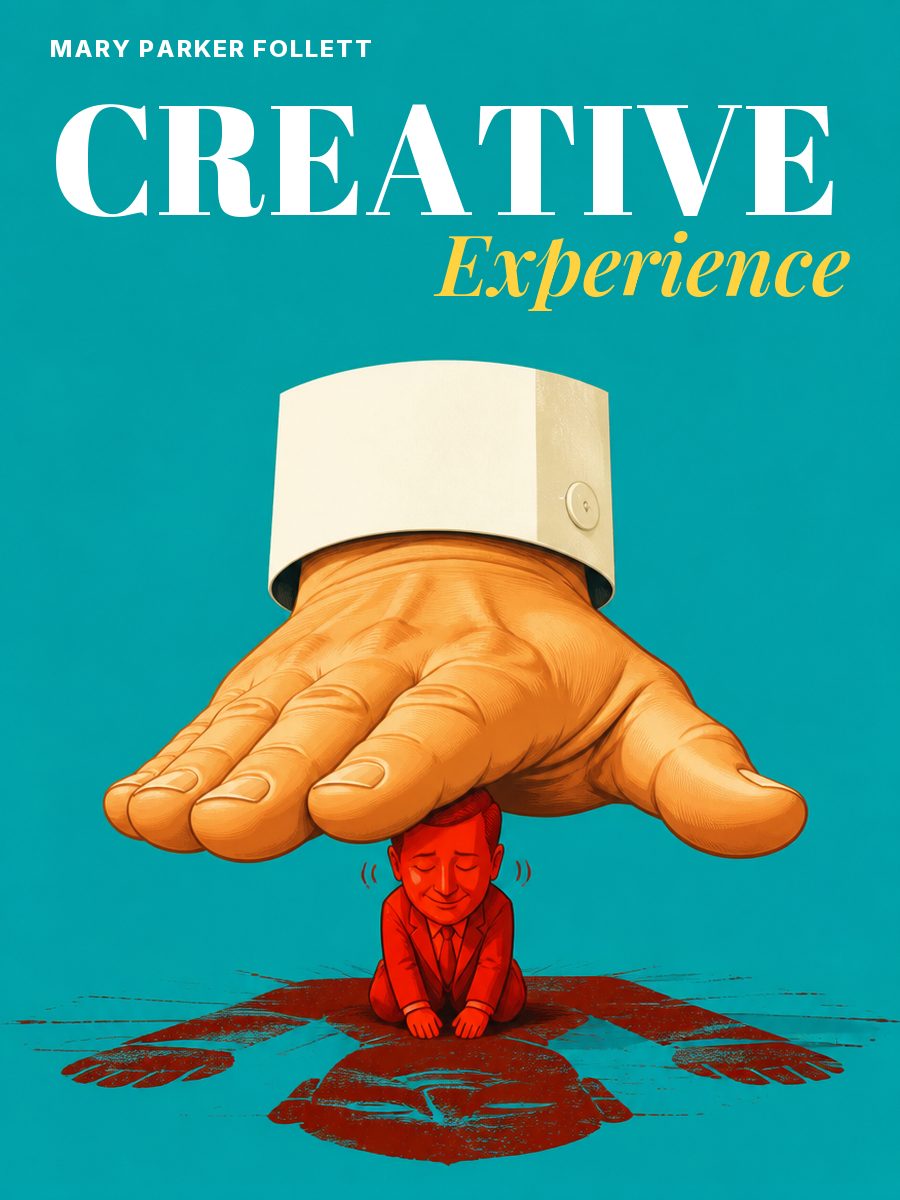 Creative ExperienceMary Parker Follett
Why does an argument go on even when all the facts are on the table? Mary Parker Follett herself sat on pay boards and watched factory committees at work, and her answer is unexpected: the difference between people is not an obstacle but material. You will learn how integration differs from compromise, why real power…
Question 1 of 5
A colleague snaps at every meeting. According to Follett, what question should you start with?
Show the answer
Right answer: What in the conditions brought this on
Earl Howard looked for the cause not in the worker's psychology but in the conditions. Follett adds: you are answering not a person but both of you, and your own behavior is part of the conditions too.
Question 2 of 5
Two people argue about a sum and meet exactly in the middle. What does Follett consider this outcome?
Show the answer
Right answer: A postponement of the next argument
A compromise makes each side give up part of what it wants, and a suppressed desire breaks through sooner or later. That's why the question comes back again.
Question 3 of 5
A mother wants the table in the middle of the room, her son wants it by the window. Where would Follett start?
Show the answer
Right answer: Find out what each of them wants
Behind a demand there is almost always something else: light, a view of the river, an easy path from the kitchen. Then the answer might be to take down the curtains, and no one has to cut anything off their wish.
Question 4 of 5
In a reading room, one person wants the window open, and the other doesn't want a draft. How did this dispute end for Follett?
Show the answer
Right answer: A window was opened in an empty room
She didn't need a closed room, and he didn't need that particular window. When desires are joined together, no one needs power over the other.
Question 5 of 5
A manager brings the team a finished plan and asks them to approve it. According to Follett, what's missing here?
Show the answer
Right answer: The people's own contribution
She calls consent to someone else's plan the voice of a wax doll. People become co-authors of a decision when they put their own experience into it.
Want all of the book's key ideas? Read or listen to its retelling in Livria.