
Book quiz
Essentialism: The Disciplined Pursuit of Less Quiz
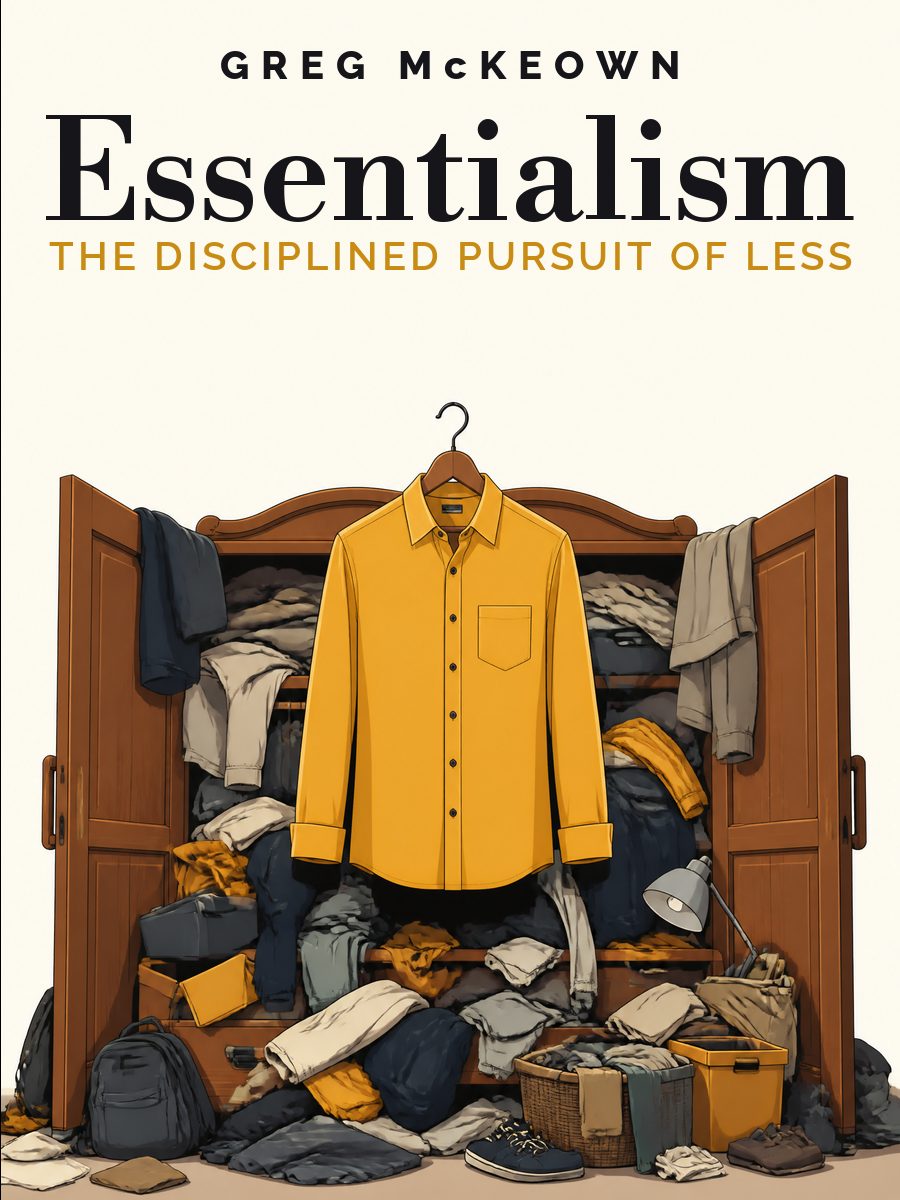 Essentialism: The Disciplined Pursuit of LessGreg McKeown
Why is it that the harder we try to get everything done, the less we get done of what really matters? Greg McKeown shows how to pick out the vital few, calmly turn down the rest, and set up your days so that the important things get done almost effortlessly. You'll learn to tell a clear yes from a polite maybe, and…
Question 1 of 5
You're offered a new project, and you rate it 70 out of 100. What does McKeown's rule advise?
Show the answer
Right answer: Say no: anything below ninety counts as zero
The ninety percent rule: if it isn't a clear yes, it's a clear no. Otherwise there's no room left for the rare excellent opportunities.
Question 2 of 5
You're praised for one thing and invited into new projects. According to the book, what should you watch out for?
Show the answer
Right answer: Good opportunities will lead you away from what brought success
This is the clarity paradox: success brings opportunities, your energy scatters, and the clarity that started it all is destroyed. Each single yes looks reasonable.
Question 3 of 5
For years you've kept a project going that doesn't pay off, but you hate to lose what you've put in. What question does the book suggest?
Show the answer
Right answer: Would I take it on if it didn't already exist?
This is the sunk cost trap, as with the Concorde. What's been invested can't be recovered, and the only question is whether to give this project your future as well.
Question 4 of 5
You think a report will take two hours. According to McKeown, how much time should you set aside?
Show the answer
Right answer: Three hours: add half again to your estimate
We stubbornly underestimate how long things will take. A buffer is needed so that a surprise doesn't knock you off your main task or eat into your sleep or family time.
Question 5 of 5
A work contact invites you to dinner on an evening you promised your daughter. What does Covey's story show?
Show the answer
Right answer: A clear no strengthens respect rather than destroying it
Covey said no, and his daughter remembered it for the rest of her life. McKeown advises separating the decision from the relationship: refusing a request doesn't mean refusing the person.
Want all of the book's key ideas? Read or listen to its retelling in Livria.