
Book quiz
Everybody Lies: Big Data, New Data, and What the Internet Can Tell Us About Who We Really Are Quiz
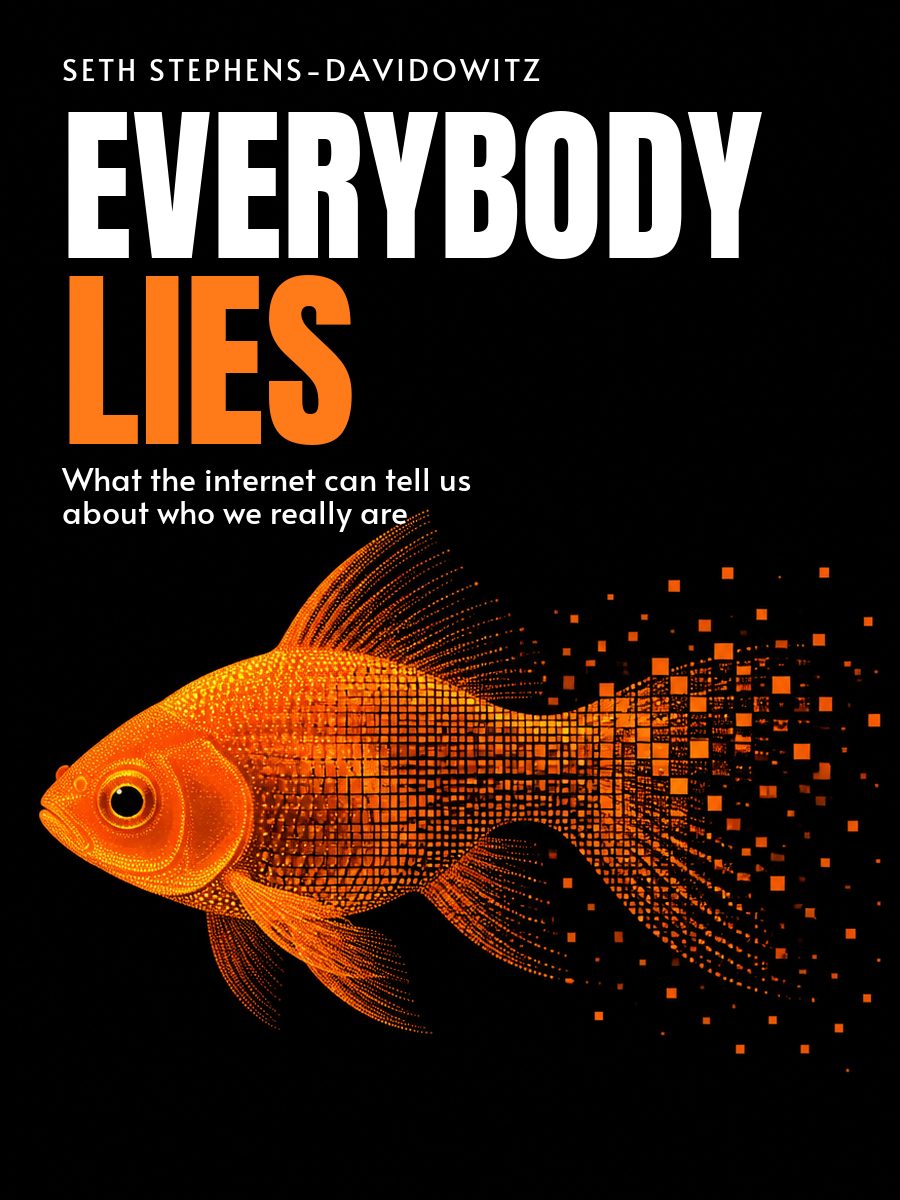 Everybody Lies: Big Data, New Data, and What the Internet Can Tell Us About Who We Really AreSeth Stephens-Davidowitz
People lie on questionnaires, to their friends and even to themselves, but not to the search bar. A former Google data scientist studied billions of searches and digital traces and learned things about sex, racism, children and money that nobody admits out loud. This book teaches you to judge people by what they do…
Question 1 of 5
It seems to you that "all successful people dropped out of college". Where's the mistake, according to the author?
Show the answer
Right answer: Intuition rests on a couple of vivid cases
Our experience is made of a few dozen vivid stories, and no one sees the thousands of failures. Gut feeling tells you where to dig, but it doesn't prove anything.
Question 2 of 5
Why are people often more honest with a search engine than in an anonymous survey?
Show the answer
Right answer: They're alone with the screen, and they need the answer themselves
There's no one to be embarrassed in front of, and you only get an answer if you ask honestly. That's why the author calls search a "digital truth serum".
Question 3 of 5
Your son is sure all rappers are slackers. Judging by Obama's speeches, which approach is more likely to work?
Show the answer
Right answer: Tell him a new fact that sparks his curiosity
A call not to blame Muslims increased hateful searches, while talk of Muslim athletes stirred interest. Reproach angers people, new information calms them.
Question 4 of 5
A shop owner is debating which product description sells better. What does the book suggest?
Show the answer
Right answer: Randomly show two groups different versions
In an A/B test the groups are assembled at random and are similar on average. A difference in results can be credited to the version itself, not to chance.
Question 5 of 5
A bank turned down your loan because of the words in your application, though you always pay on time. What limit of data does this show?
Show the answer
Right answer: Data describes a group well and a single person poorly
The words in applications helped predict defaults, but that's group statistics. It says nothing for certain about an individual.
Want all of the book's key ideas? Read or listen to its retelling in Livria.