
Book quiz
Flow: The Psychology of Optimal Experience Quiz
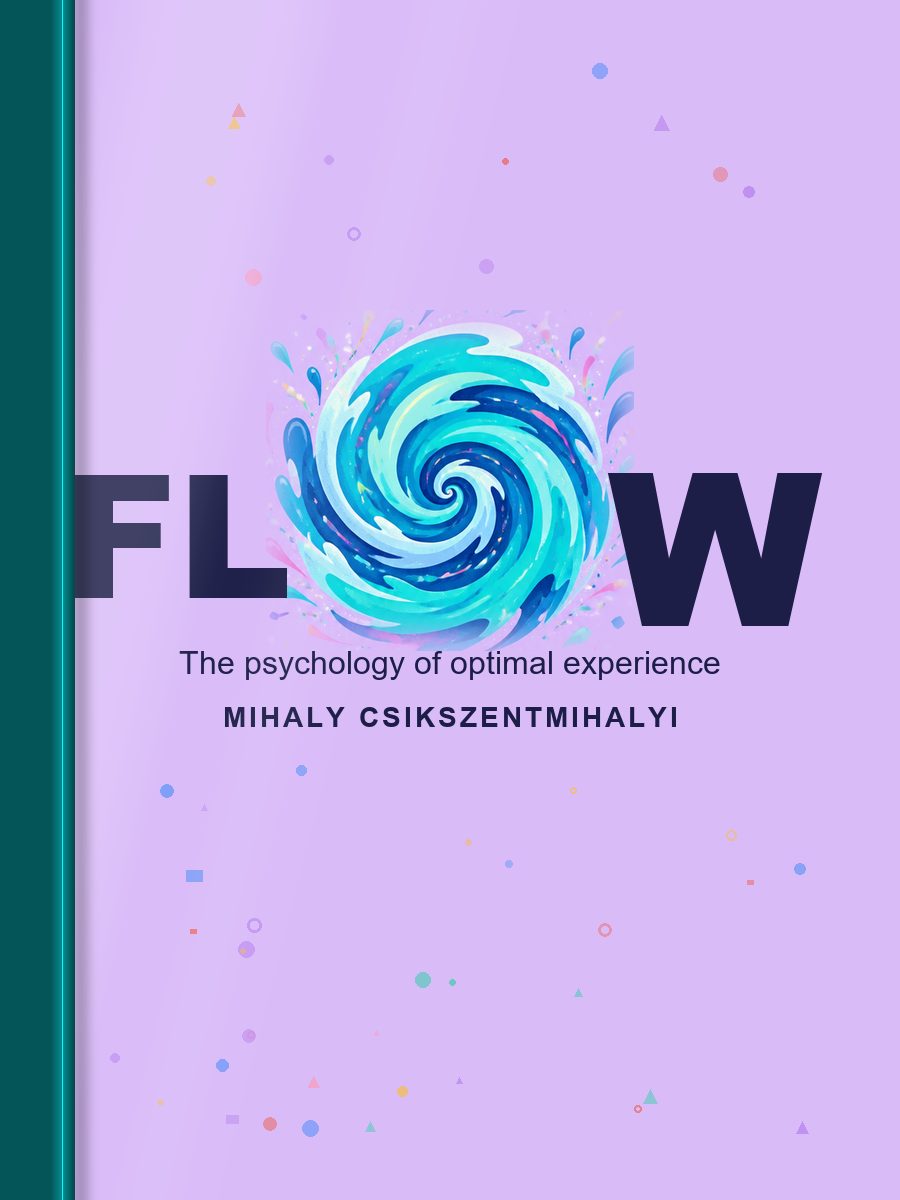 Flow: The Psychology of Optimal ExperienceMihaly Csikszentmihalyi
Why can one hour fly by like five minutes, while another drags on, empty and dreary, even though you’re supposedly “relaxing”? Psychologist Mihaly Csikszentmihalyi studied thousands of people and found that real joy comes not from idleness but from total immersion in a task that is hard yet doable. The book explains…
Question 1 of 5
A tennis match with a beginner is boring, and with a champion it's frightening. When does flow happen?
Show the answer
Right answer: When the opponent is a bit stronger and you play at your limit
Flow lives in a narrow corridor: the difficulty of the task roughly matches your skill. Too hard brings anxiety, too easy brings boredom.
Question 2 of 5
A recipe that says "to taste" and "until done" makes you nervous, while a jigsaw puzzle draws you in. What's the difference?
Show the answer
Right answer: The puzzle has a clear goal and instant feedback
For flow, at every moment you need to know what you're doing and whether it's working. In a puzzle a piece either fits or doesn't, and a vague recipe doesn't give you that.
Question 3 of 5
Working as a cashier feels endlessly boring, and you can't change jobs yet. What does the book advise?
Show the answer
Right answer: Invent your own inner goals and rules, a game
Even a dull job becomes flow if you add a challenge: beat your own record, do it faster or more neatly. You can't change the job, but you can change how you do it.
Question 4 of 5
Two people take the same seaside vacation. According to the book, who will come back more fulfilled?
Show the answer
Right answer: The one who learns to surf every day, falling and getting up
Passive rest gives only brief relief. What fulfills you is effort put into something hard and meaningful, which is why the surfer lives a month in a week.
Question 5 of 5
After a terrible blow, a person didn't break but grew stronger. What did they do, according to the book?
Show the answer
Right answer: Swapped "why me?" for "what can I do now?"
People who don't give up turn their attention to an action and goal within reach. That way an ordeal turns from a pit into a step, and false optimism has nothing to do with it.
Want all of the book's key ideas? Read or listen to its retelling in Livria.