
Book quiz
Fooled by Randomness: The Hidden Role of Chance in Life and in the Markets Quiz
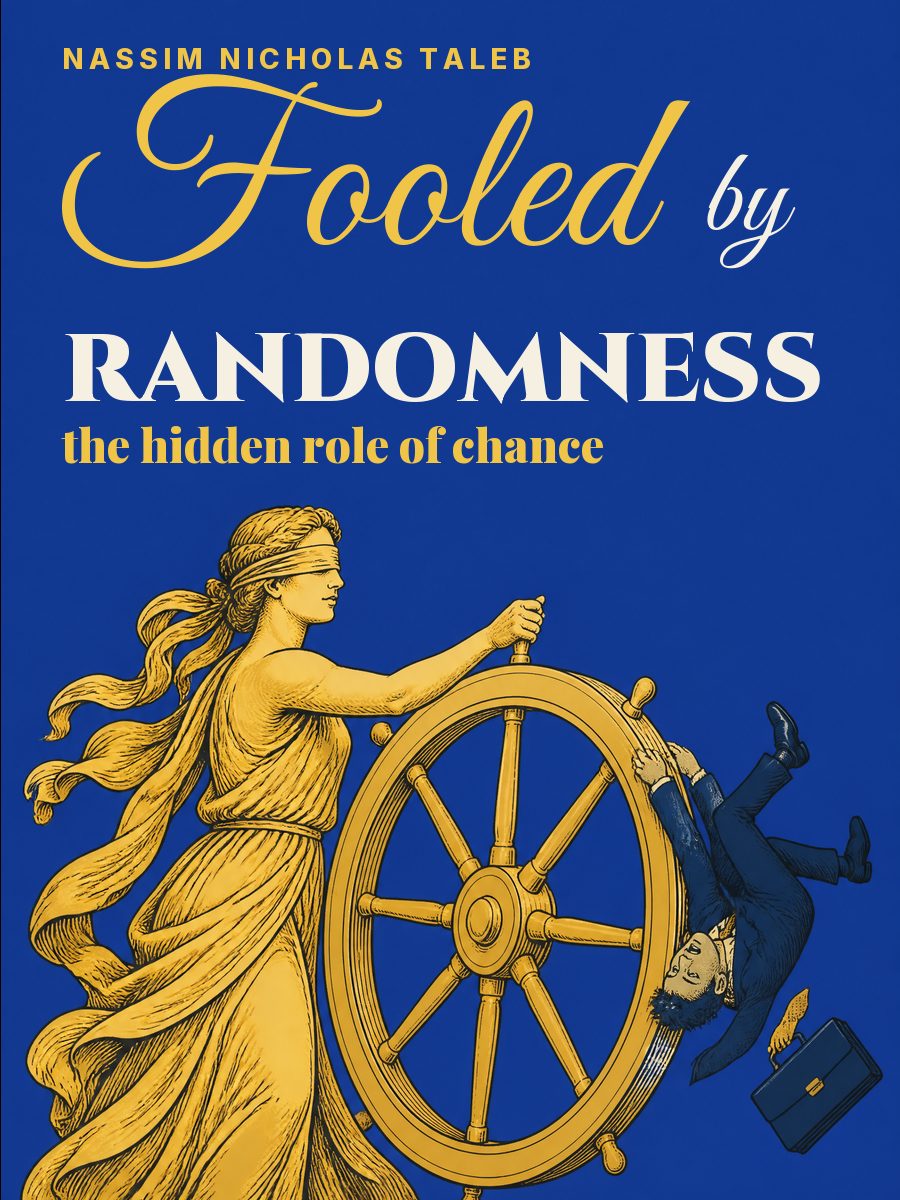 Fooled by Randomness: The Hidden Role of Chance in Life and in the MarketsNassim Nicholas Taleb
Why is the neighbour who earns more not necessarily smarter? Nassim Nicholas Taleb, a former trader, shows how we mistake luck for talent and random noise for meaning. You will learn how to judge success together with the outcomes that never happened, why checking your results often does you harm, and why the size of…
Question 1 of 5
Your neighbor earns much more than you in the same market. What does Taleb advise keeping in mind when you compare?
Show the answer
Right answer: The final sum doesn't say how it was made
For years John earned more than cautious Nero, and in the summer of 1998 he lost almost everything. A lucky fool can't be told from a smart man while luck is on his side.
Question 2 of 5
For five years in a row an acquaintance has been getting rich on a risky scheme without a single loss. According to Taleb, what does this prove?
Show the answer
Right answer: Only that the fatal bullet hasn't come up yet
In life, the revolver has hundreds of chambers. A long winning streak hides the cost of a mistake, so ask about the worst day, not an ordinary one.
Question 3 of 5
You're reading an interview with an investor who hasn't lost once in five years. What question would Taleb ask first?
Show the answer
Right answer: How many people started the game with him
Of ten thousand managers flipping coins, after five years about 313 will have no losing years. We see the survivors and not the ones who were weeded out.
Question 4 of 5
Your investments are meant for years, yet you check them several times a day. What does Taleb advise?
Show the answer
Right answer: Look rarely, say once a month
The shorter the period, the more noise in it. Checking often gives you not more truth but more distress, since a loss hurts more than a gain pleases.
Question 5 of 5
Taleb expected the market to rise with a probability of about 70 percent, yet he bet on a fall. Why is this not a contradiction?
Show the answer
Right answer: What matters isn't how often you win but how much
The rise was expected to be one percent on average, the fall ten. A decision depends on probability multiplied by consequences, not on probability alone.
Want all of the book's key ideas? Read or listen to its retelling in Livria.