
Book quiz
How to Manage Your Slaves Quiz
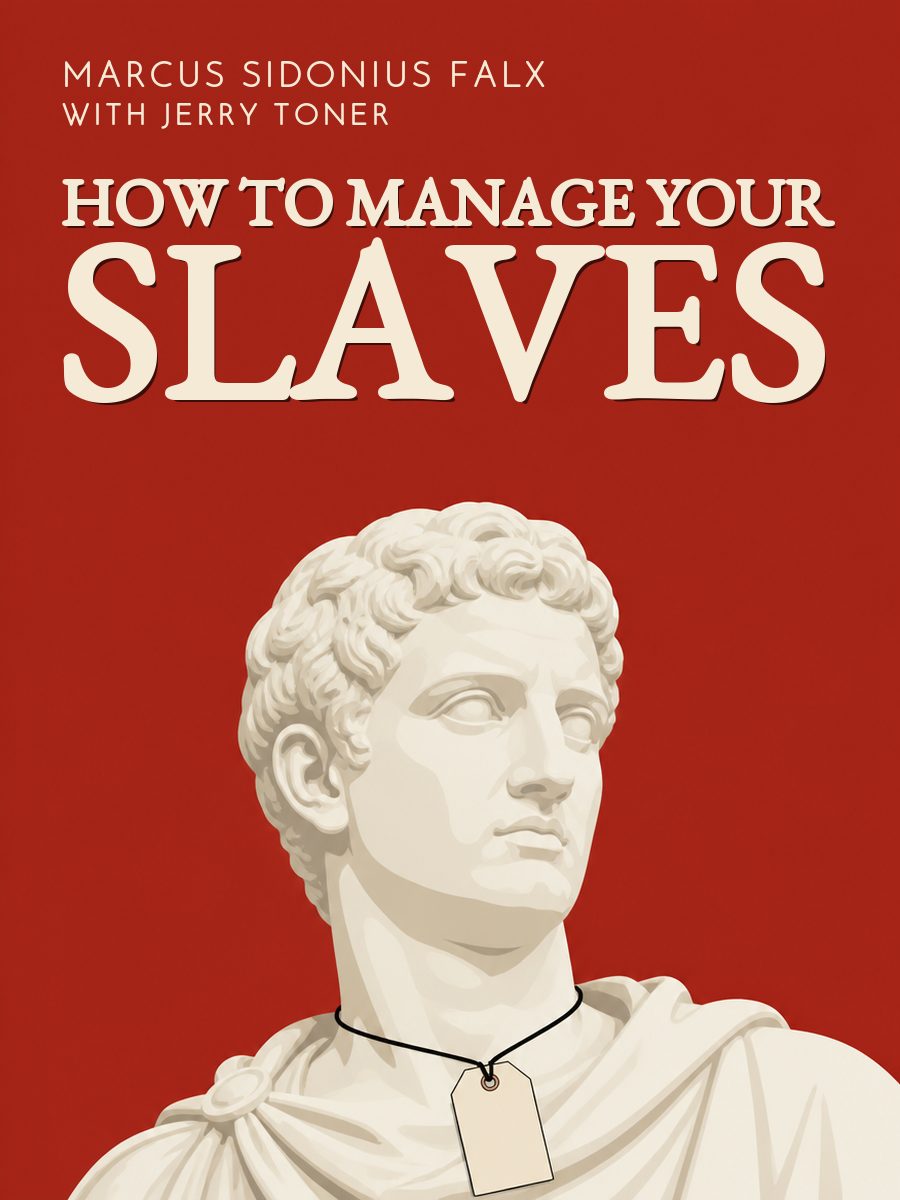 How to Manage Your SlavesMarcus Sidonius Falx, Jerry Toner
A Roman aristocrat gives practical advice: how to buy a slave, how to keep order, when to punish and when to set someone free. This aristocrat never existed. He was invented by a Cambridge historian, who added a commentary on the real Roman sources to every chapter. A satire that shows slavery through the voice of…
Question 1 of 5
A friend says Marcus Sidonius Falx was a real Roman master. What does the book say about this?
Show the answer
Right answer: Toner invented Falx, but draws on Roman sources
Falx was invented by the historian Jerry Toner. The character's voice is fictional, but everything he says is taken from Roman treatises, laws, letters and philosophy.
Question 2 of 5
A buyer found out that the seller had hidden a slave's illness. What did Roman law allow him?
Show the answer
Right answer: To return the "goods": that's how the law protected the buyer
Slaves were put up for sale with a placard about their origin and defects. A hidden illness or a tendency to run away gave the buyer the right to return the slave, and the law gave no thought to the person himself.
Question 3 of 5
Why does Falx advise giving good slaves better food, rest and hope of freedom?
Show the answer
Right answer: A slave who works only out of fear works badly
Falx sees himself as a sensible master: fear alone gets poor work, so it pays to combine it with hope, including the peculium and a chance at freedom.
Question 4 of 5
Why, by Falx's logic, did Roman courts take slaves' testimony under torture?
Show the answer
Right answer: A slave will lie, and only pain will get the truth out of him
Falx is sure a slave will lie for his own sake or his master's. Jurists doubted the method, since people in pain will say anything, but it wasn't abandoned.
Question 5 of 5
According to the book, what does the Roman saying "so many slaves, so many enemies" show?
Show the answer
Right answer: Masters treated slaves as things and feared them as people
Behind Falx's calm tone you can hear fear, and it had grounds: the revolt of Spartacus. The master saw slaves as things and feared them as people at the same time.
Want all of the book's key ideas? Read or listen to its retelling in Livria.