
Book quiz
I Hate You—Don't Leave Me: Understanding the Borderline Personality Quiz
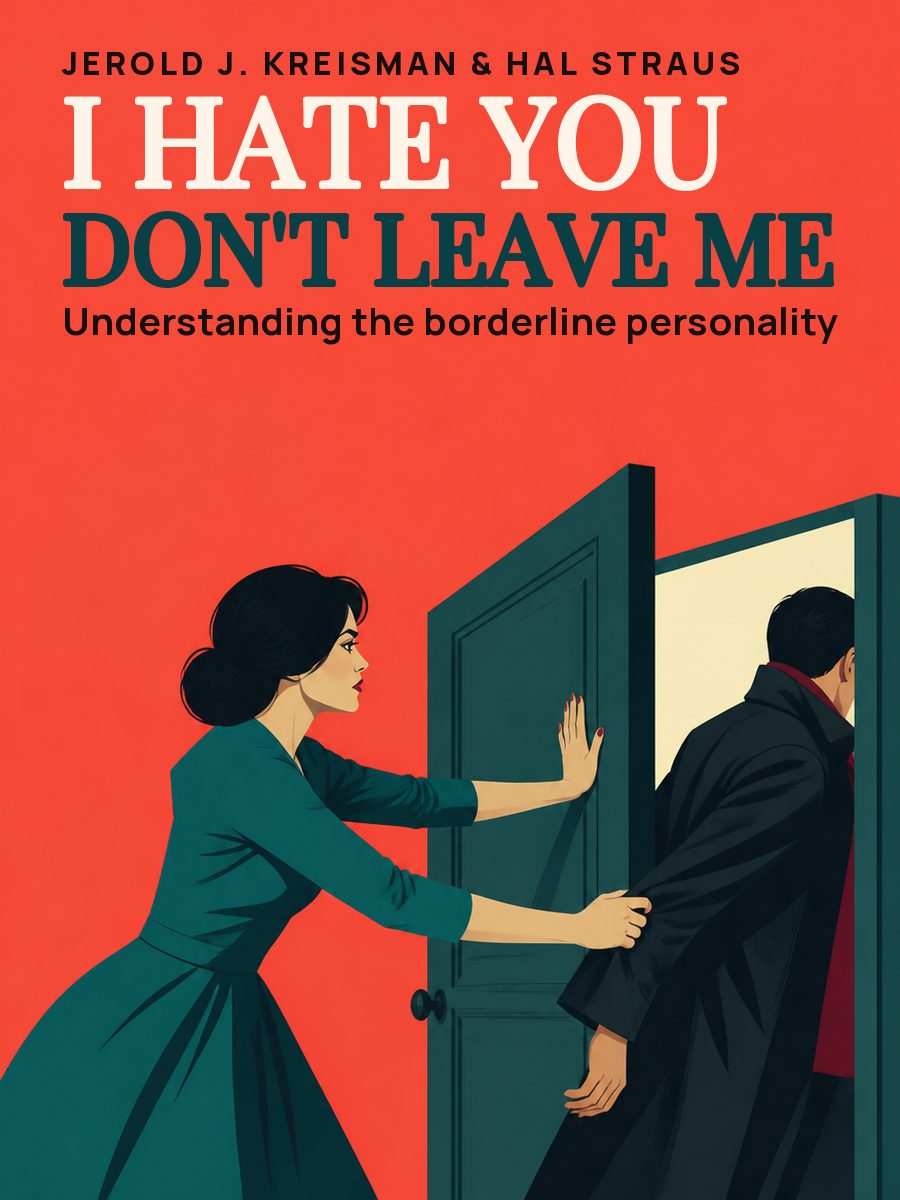 I Hate You—Don't Leave Me: Understanding the Borderline PersonalityJerold J. Kreisman and Hal Straus
“I hate you,” and a minute later: “Please don't leave.” Psychiatrist Jerold Kreisman explains what borderline personality disorder is: where it comes from, what an ordinary week looks like from inside for a person who has it, what to say at the height of a storm, and what is known today about treatment. The book does…
Question 1 of 5
Your partner says in tears: "You don't love me." What is the most common mistake with the SET method?
Show the answer
Right answer: Starting with the truth before the person feels heard
The order matters more than the wording: support and empathy first, then the truth. A person who hasn't been heard takes even an accurate sentence as an attack.
Question 2 of 5
A loved one's reaction seems out of proportion to what set it off. What second measure does the book suggest?
Show the answer
Right answer: How long the feeling lasts
This is emotional hemophilia: the feeling rises fast, and there seems to be no mechanism to stop it. More often it's not calculation but a missing brake.
Question 3 of 5
Someone writes "Go away, I don't need you," and ten minutes later asks you to stay. How do the authors explain this?
Show the answer
Right answer: Two fears at once: being left alone and dissolving in another
The fear of being abandoned and the fear of too much closeness pull in opposite directions. Both messages can be true, they're just about two different fears.
Question 4 of 5
Every time a child complains, the answer is "Oh, it's nothing, they'll invite you tomorrow." What does the child gradually learn, according to the book?
Show the answer
Right answer: That what they feel doesn't count
This is an invalidating environment: the child's feelings are answered as if they weren't there. It can be polite and loving, but the child doesn't learn to name and bear feelings.
Question 5 of 5
What did Zanarini's long study of people with BPD show?
Show the answer
Right answer: Almost all lost the diagnosis, but only about half got their lives back
Over ten years, almost everyone stopped meeting the diagnosis. Full recovery, with work and relationships, came for about half.
Want all of the book's key ideas? Read or listen to its retelling in Livria.