
Book quiz
The Innovator's Dilemma Quiz
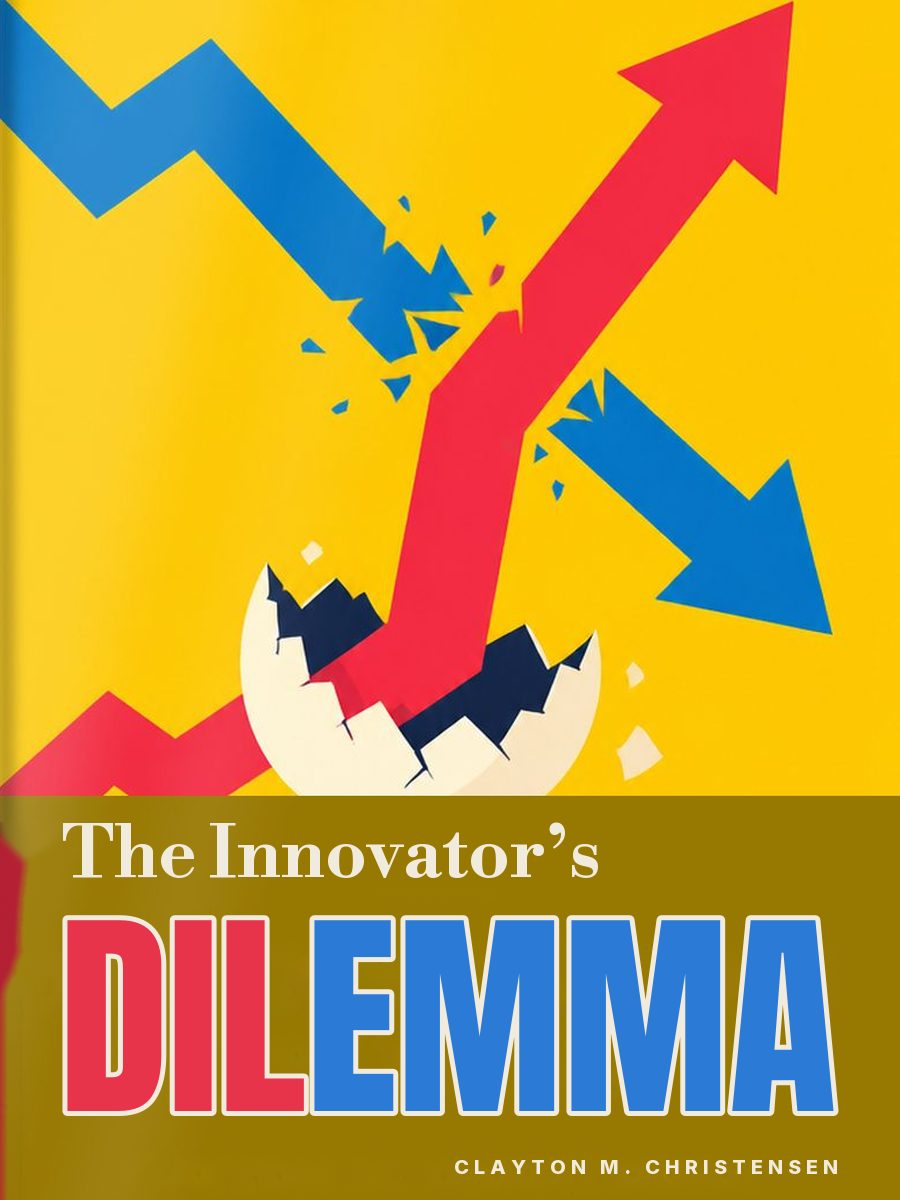 The Innovator's DilemmaClayton M. Christensen
Why does a company with smart people, sound management, and close attention to its customers suddenly lose to an upstart with an obviously weaker product? Christensen reveals the paradox: leaders don't fall because of mistakes. They fall precisely because they do everything “by the book.” They listen to their best…
Question 1 of 5
Your best customers ask for more power and less noise, not a cheap stripped-down version. What's the danger, according to Christensen?
Show the answer
Right answer: They pull you upmarket, away from the low end where the threat is growing
Current customers speak for the present. By listening to them faithfully, a company will never move into disruption, and the future market often consists of people who aren't buying anything yet.
Question 2 of 5
A big bank has decided to build a cheap app for teenagers in-house. What does the book advise?
Show the answer
Right answer: Move the project into a separate small team with its own rules
Inside the core business, normal rules will crush a disruption: margins, approvals, budget. You need a team for which a small market is already a big win.
Question 3 of 5
A team is launching a product for a market that doesn't exist yet. Where does the book say to start?
Show the answer
Right answer: With quick, cheap experiments and learning
A new market can't be calculated: any confident forecast there is fantasy. You need to fail cheaply and learn, saving money for a second try.
Question 4 of 5
Laptops get more powerful every year, yet people switch to simple tablets. How does the book explain this?
Show the answer
Right answer: The product outran people's needs, and "good enough" wins
This is performance oversupply: the customer doesn't use the extra features and stops paying more for them. Whoever is simpler and cheaper wins here.
Question 5 of 5
A coffee chain improves its beans, but morning sales don't grow. What question does the book suggest asking?
Show the answer
Right answer: What job does a person "hire" a cup of coffee to do
What matters isn't who the customer is but what job they want done. In the morning people buy coffee to pass the commute, so the lid and the speed matter more to them.
Want all of the book's key ideas? Read or listen to its retelling in Livria.