
Book quiz
Jonathan Livingston Seagull Quiz
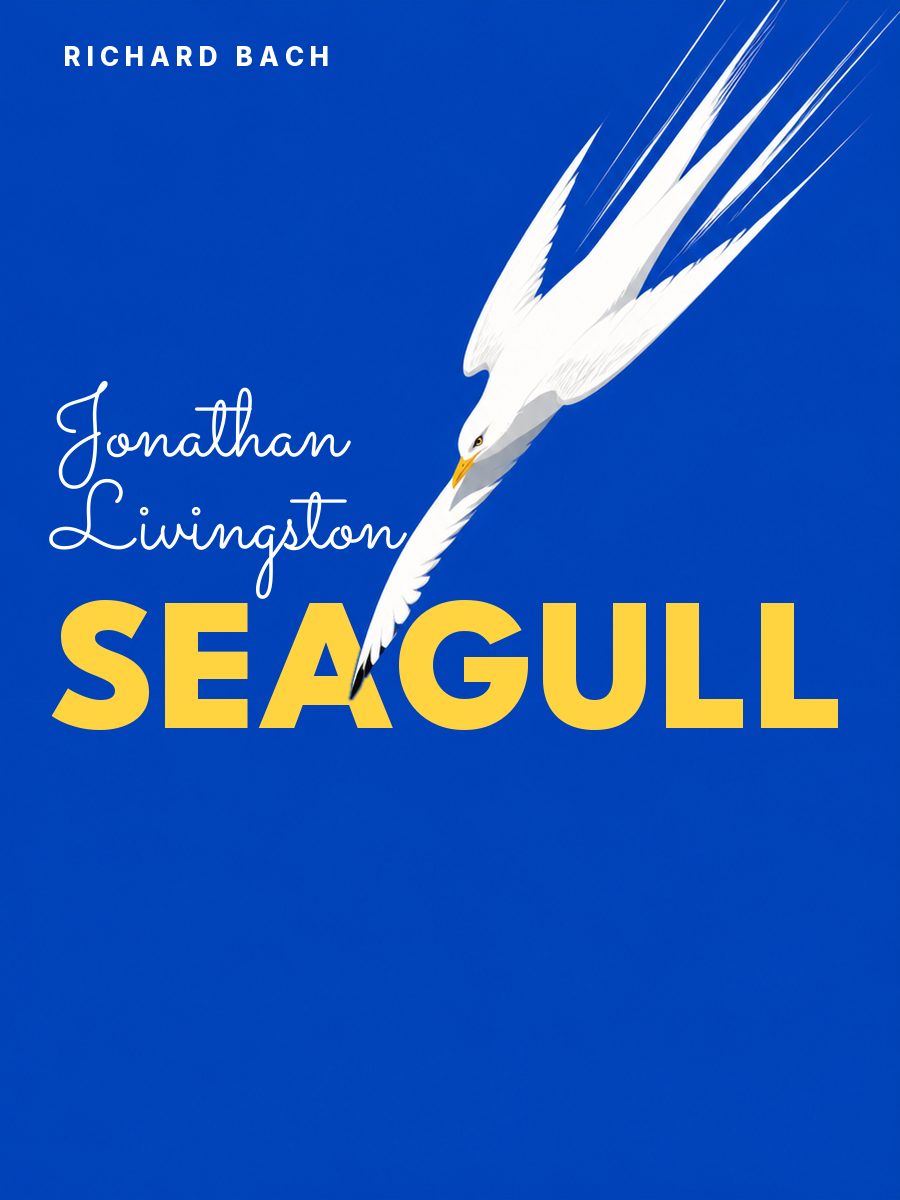 Jonathan Livingston SeagullRichard Bach
While the whole flock fights over fish by the boat, one seagull learns to fly. Richard Bach, a military pilot, wrote a short parable about how life is more than the search for food, and about the price people pay for their own path. You will learn how Jonathan turned exile into freedom, what perfect speed is, and why…
Question 1 of 4
The people close to you call your favorite pursuit a waste of time. What does the parable suggest?
Show the answer
Right answer: Keep a place for it in your week
Bach doesn't argue that we must eat, he argues with the idea that there is nothing more. The parable doesn't call you to go hungry, it asks you not to let your passion wither.
Question 2 of 4
You think: "I just don't have the ability." What does Jonathan's lesson with his wings teach?
Show the answer
Right answer: The limit is often in the method, not in nature
Jonathan decided that a gull wasn't made to fly fast, then folded his wings like a falcon. He didn't want less, he changed the position of his wings.
Question 3 of 4
You're chasing a number in your results. What does Chiang call perfect speed?
Show the answer
Right answer: Simply being where you want to be
Any number is already a limit, so a goal expressed as a number is always ahead, like the horizon. You need to know that you're already there.
Question 4 of 4
The students begin to worship their teacher. Why did Jonathan ask them not to make him a god?
Show the answer
Right answer: Worship crowds out the learning itself
Centuries later, the teaching had turned into rituals, and almost no one flew anymore. Real gratitude to a teacher means doing what he taught.
Want all of the book's key ideas? Read or listen to its retelling in Livria.