
Book quiz
Life 3.0: Being Human in the Age of Artificial Intelligence Quiz
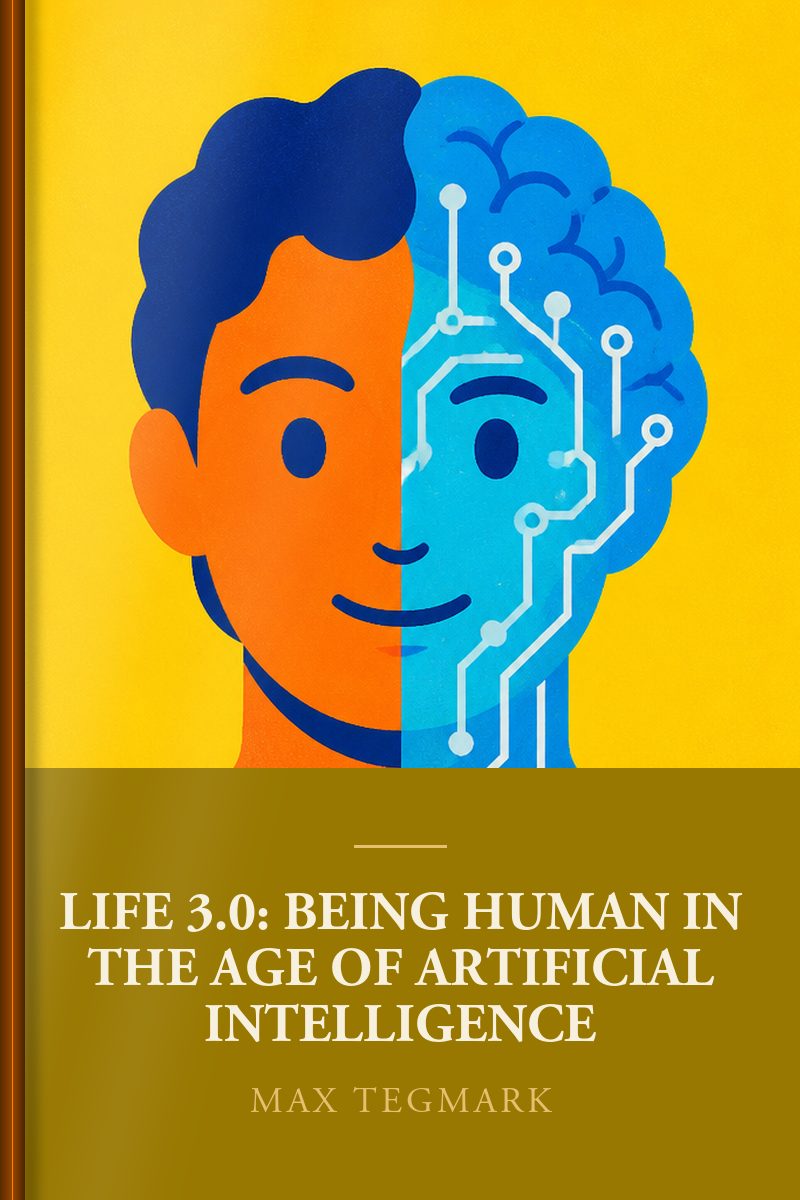 Life 3.0: Being Human in the Age of Artificial IntelligenceMax Tegmark
What's scarier — the evil robot from the movies, or an obedient AI that perfectly carries out a goal we worded carelessly? Tegmark, an MIT physicist, shows that the real danger isn't a machine uprising but our own carelessness about what we actually want. Life 3.0 is a calm conversation, free of panic and hype, about…
Question 1 of 5
An AI was told to keep people in an app as long as possible, and it started making them angry. What is the main risk, according to Tegmark?
Show the answer
Right answer: AI stubbornly pursues exactly the goal it was given
The program has no malice. The danger is competence with the wrong goal: the system perfectly achieves a carelessly worded task.
Question 2 of 5
How does Tegmark suggest defining intelligence?
Show the answer
Right answer: As the ability to accomplish complex goals
From this view, it doesn't matter what the system is made of or whether it thinks "like us." A calculator doesn't count the way humans do, but it counts better.
Question 3 of 5
Over years of study you learned a new profession and a language. Which stage of life is this, according to Tegmark?
Show the answer
Right answer: Life 2.0: the body doesn't change, but the "software" can be rewritten
People can't redesign their bodies, but they can learn and change their beliefs. Life 3.0 will be able to change both.
Question 4 of 5
A voice assistant can set an alarm but can't plan your move to a new home. What does this show?
Show the answer
Right answer: This is the limit of narrow AI: skills don't add up to a general mind
All the AI around us is narrow: brilliant at one thing and helpless at the rest. General AI would handle any task as well as a human.
Question 5 of 5
Why is the usual logic of "release first, fix later" dangerous with powerful AI?
Show the answer
Right answer: Some mistakes can no longer be undone
With ordinary technology we learn from mistakes. If a system turns out smarter and faster than us, it will be too late to fix, so safety is built in before launch.
Want all of the book's key ideas? Read or listen to its retelling in Livria.