
Book quiz
Making Up the Mind: How the Brain Creates Our Mental World Quiz
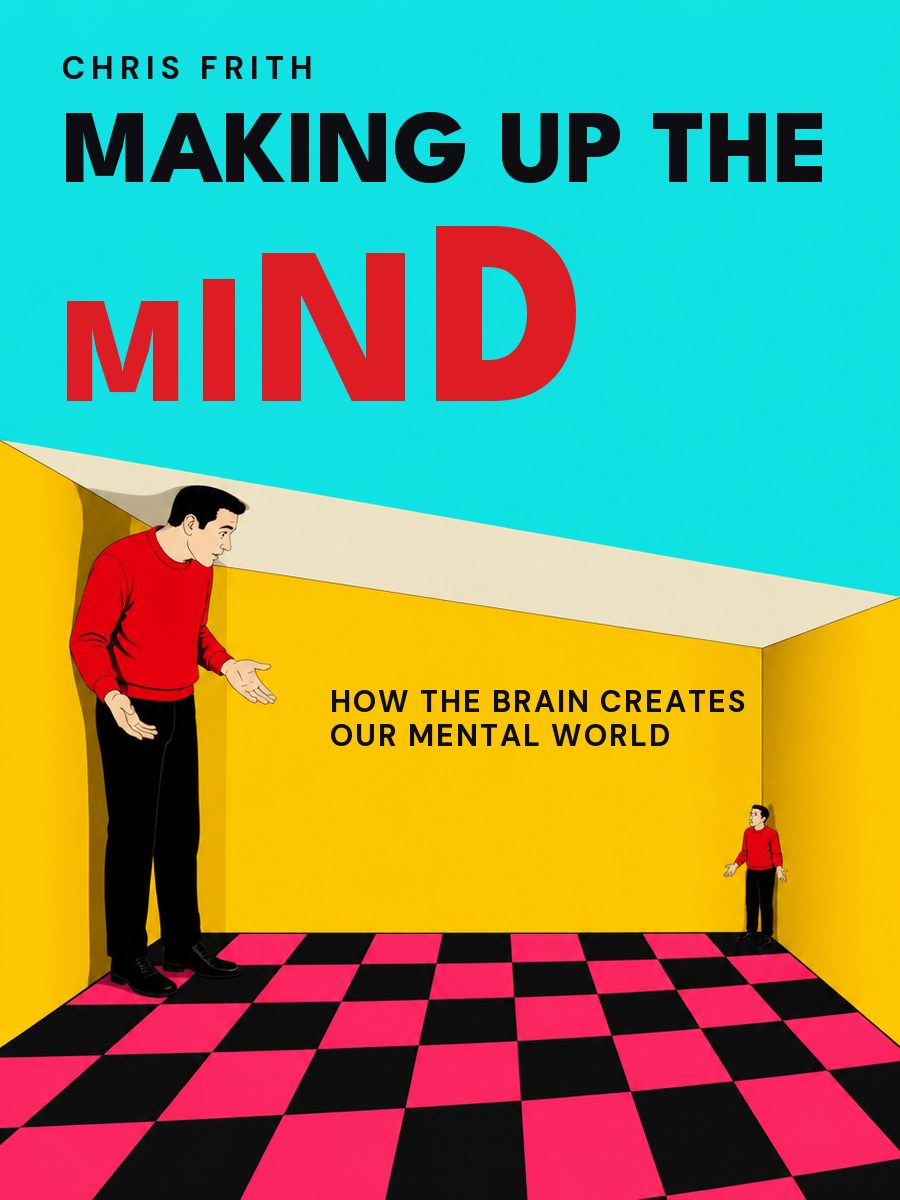 Making Up the Mind: How the Brain Creates Our Mental WorldChris Frith
The world seems to simply lie there in front of our eyes. Neuroscientist Chris Frith shows that the brain builds a model of it, guesses what comes next and hides all of that work from us. This book explains why knowing about an illusion does not make it go away, why you cannot tickle yourself, and how the same…
Question 1 of 5
After a horror movie you see a person in a dark hallway, but it's a coat. How does Frith explain this?
Show the answer
Right answer: Expecting a threat outweighed the weak signal from the eyes
The brain first guesses the world from its expectations and then checks the guess against the signals. You turn on the light, and the model corrects itself at once.
Question 2 of 5
Why can't you really tickle yourself?
Show the answer
Right answer: The brain predicts the sensation in advance and dampens it
The brain knows ahead of time about a touch from your own hand, and the scanner shows only a weak response. Someone else's hand causes a sharp spike, because its movement wasn't predicted.
Question 3 of 5
In Libet's experiment, the brain started an action before the person noticed the wish. What conclusion does Frith draw?
Show the answer
Right answer: We just aren't aware of the early steps of a decision
Frith does not conclude that there's no choice. The brain takes on most of the carrying out, and consciousness is left with the goal.
Question 4 of 5
You know the lines in the illusion are straight, yet you still see them bent. Why?
Show the answer
Right answer: Perception isn't a photo but the result of the brain's unconscious inferences
The brain draws unconscious inferences about the world, and we see only the result. That's why knowing doesn't cancel the illusion, even for Frith himself.
Question 5 of 5
You formed an opinion of a new acquaintance right away. What does Frith say about such first expectations?
Show the answer
Right answer: It's an unavoidable starting point that you correct by what they do
We read other people with the same prediction machine. The model is useful only if you check it against what the person actually does.
Want all of the book's key ideas? Read or listen to its retelling in Livria.