
Book quiz
Mindfulness: A Practical Guide to Finding Peace in a Frantic World Quiz
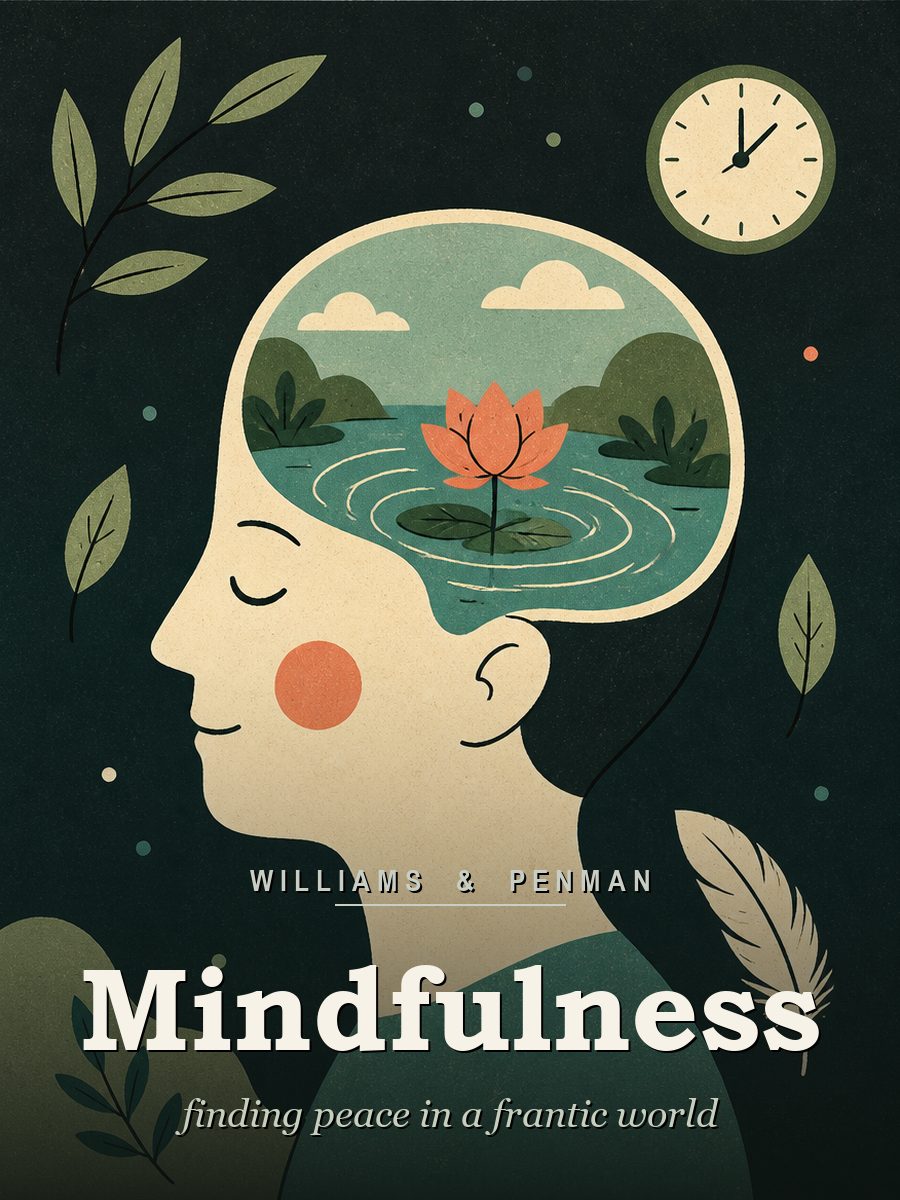 Mindfulness: A Practical Guide to Finding Peace in a Frantic WorldMark Williams, Danny Penman
Why do two people with the same to-do list end the day so differently — one drained and on edge, the other calm, even though they did the same things? Williams and Penman show that it isn't about how much you have on your plate. It's about the mind's habit of living anywhere but the present moment. The book offers…
Question 1 of 5
During a short breathing practice, your mind wanders off into thoughts again and again. How does the book say to treat this?
Show the answer
Right answer: It's part of the training: gently notice and come back to the breath
The goal isn't to have no thoughts. Every gentle return to the breath, without getting annoyed at yourself, is the training, like exercise for a muscle.
Question 2 of 5
Before a talk, a voice in your head says: "I'm going to blow it." What does the book suggest?
Show the answer
Right answer: Tell yourself: "I'm having the thought that I'll blow it"
A thought is an event in your head, not a fact about the world. If you name it as a thought, the distance from it grows, and you no longer need to argue with it.
Question 3 of 5
All evening you replay an unpleasant conversation with your boss. Why doesn't this help, according to the book?
Show the answer
Right answer: Doing mode tries to fix a feeling like a leaky faucet
Doing mode is good for tasks, but with moods it's useless: the mind endlessly analyzes "why do I feel bad," and things only get worse.
Question 4 of 5
You want to start practicing mindfulness. Which plan does the book consider more reliable?
Show the answer
Right answer: Five to ten minutes every day, even on busy days
The brain learns through repetition, not through one big effort. A small, steady dose fits into life, while a grand plan falls apart.
Question 5 of 5
After moving into a spacious house, the anxiety came back. How does the book explain this?
Show the answer
Right answer: The mind's habitual reactions travel with the person
Outer changes make life easier for a while, but it's more reliable to train attention itself and your relationship to your thoughts and emotions.
Want all of the book's key ideas? Read or listen to its retelling in Livria.