
Book quiz
Pygmalion in the Classroom: Teacher Expectation and Pupils' Intellectual Development Quiz
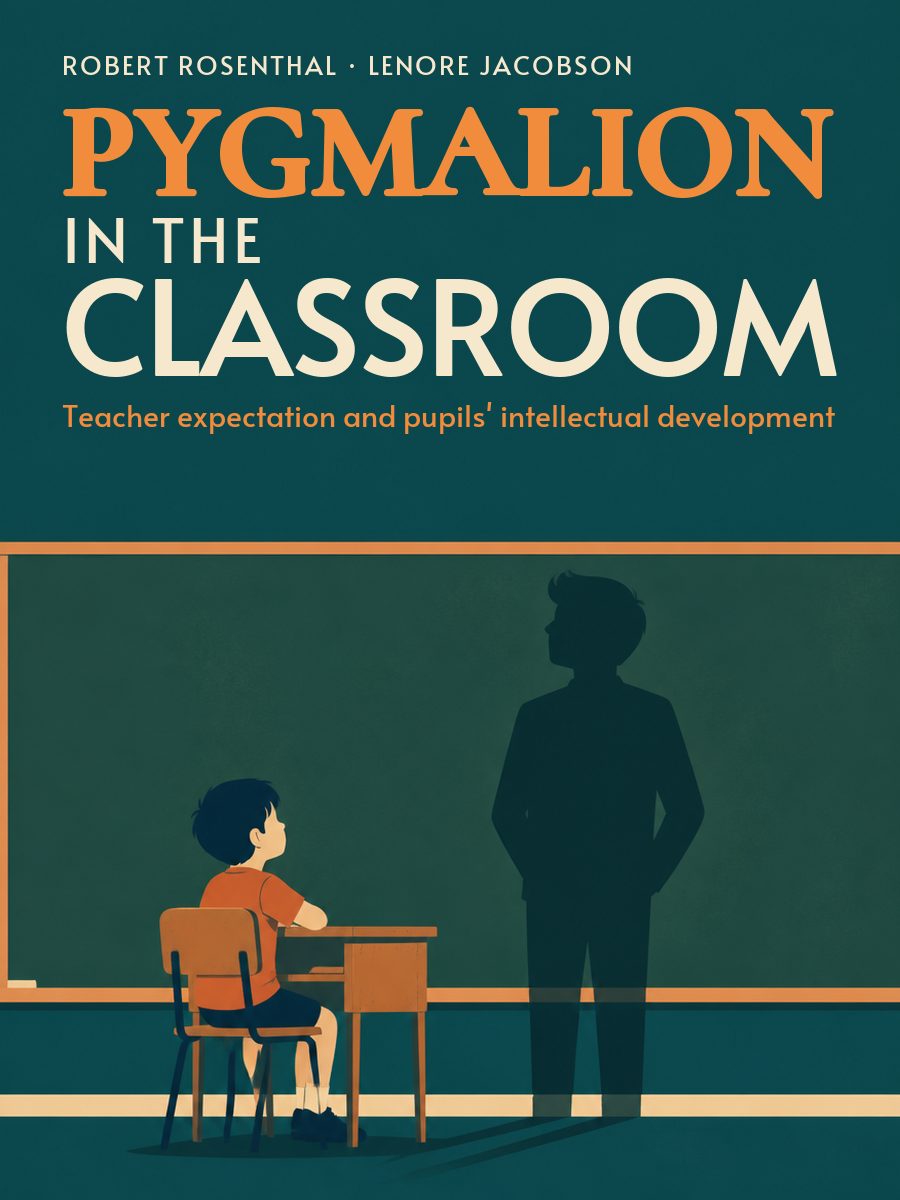 Pygmalion in the Classroom: Teacher Expectation and Pupils' Intellectual DevelopmentRobert Rosenthal, Lenore Jacobson
Teachers were told that a test had identified children who were about to make a leap in their development. In reality, the names were picked at random, and a year later many of these children really did gain on an intelligence test. A classic experiment about how our expectations change other people, and an honest…
Question 1 of 5
How did Clever Hans actually "solve" problems?
Show the answer
Right answer: He stopped at a barely visible movement by the questioner
Pfungst found that when the hoof reached the right number, the person shifted their posture slightly. No one did it on purpose: the expectation was passed on without words.
Question 2 of 5
How were the children on the list of "bloomers" at Oak School different from the others?
Show the answer
Right answer: Only in the teacher's expectations: their names were chosen at random
There was no special test, and the names were picked at random. The only difference was in the head of the teacher, who expected these children to spurt ahead.
Question 3 of 5
How did teachers describe the children not on the list who also improved noticeably?
Show the answer
Right answer: Worse: as less likable and more troublesome
Growth that was expected pleased teachers, while unexpected growth irritated them. This was especially true of children from the weaker classes.
Question 4 of 5
According to meta-analyses, what was left of the expectation effect after it was checked?
Show the answer
Right answer: The effect is real but small on average
Hundreds of studies gave a calmer picture than the book: the effect exists but is modest, stronger in the first weeks and for those of whom less is expected.
Question 5 of 5
According to the book's conclusion, what's the most useful thing a teacher or manager can do?
Show the answer
Right answer: Check what an expectation is based on and even out the small things
A raised expectation is hard to fake. It's more useful to check what it rests on and even out the small things: time to answer, tasks, praise for trying.
Want all of the book's key ideas? Read or listen to its retelling in Livria.