
Book quiz
Rest: Why You Get More Done When You Work Less Quiz
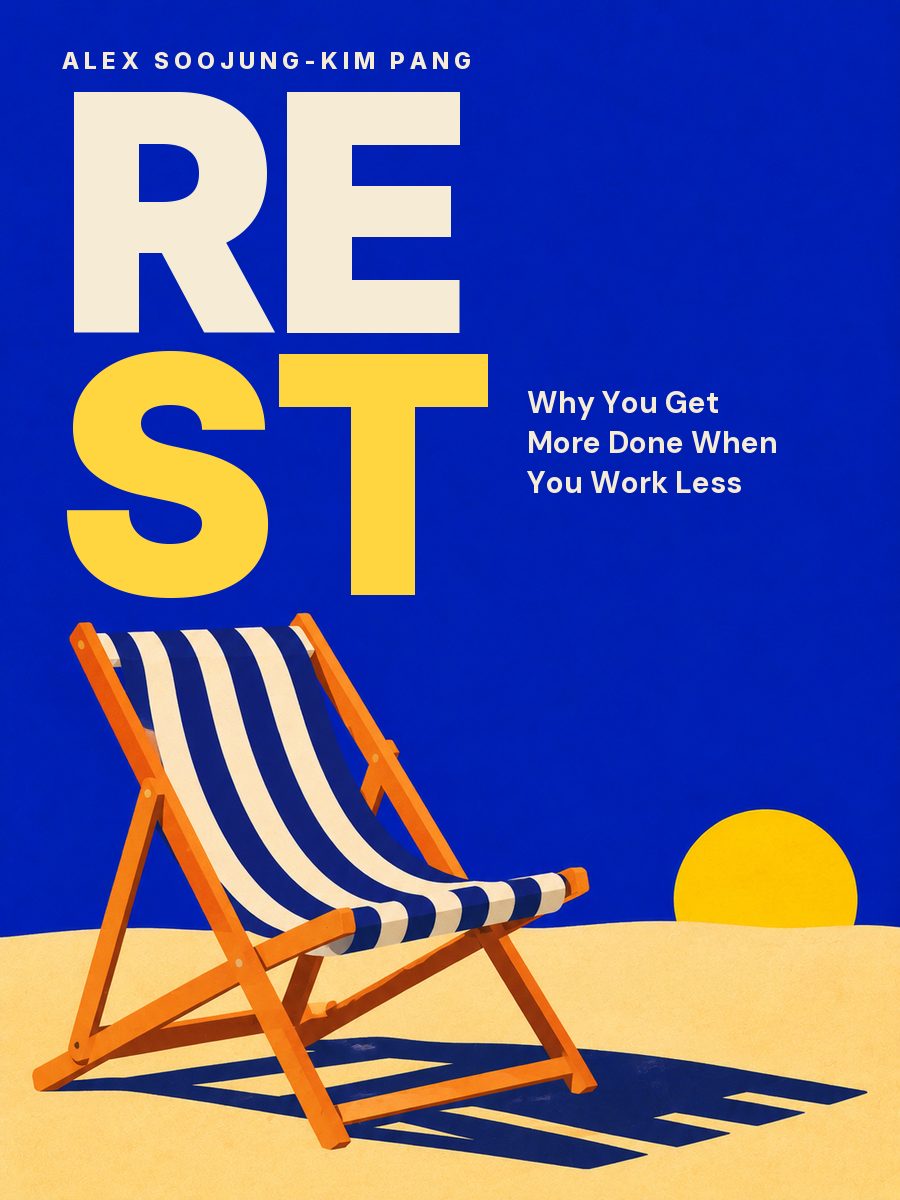 Rest: Why You Get More Done When You Work LessAlex Soojung-Kim Pang
Darwin did serious work for about four and a half hours a day and wrote nineteen books. Historian Alex Soojung-Kim Pang studies the days of scientists, writers and leaders and shows that their rest was not a prize for finished work but part of the work itself. Walks, naps, an unfinished sentence and a demanding hobby…
Question 1 of 5
By Pang's count, how much real work was there in Darwin's day?
Show the answer
Right answer: Three stretches of an hour and a half
That's how Darwin wrote nineteen books. The rest of his time went to walks, naps and letters.
Question 2 of 5
In Van Zelst and Kerr's survey, who had the most published papers?
Show the answer
Right answer: Those who worked 10 to 20 hours a week
Those who put in thirty-five hours wrote half as much, and those who worked more than sixty had the fewest papers of all.
Question 3 of 5
According to Hemingway's advice, when should a writer stop working for the day?
Show the answer
Right answer: While he still knows what comes next
Then it's easy to start in the morning, and while the writer rests, his subconscious keeps working on the text.
Question 4 of 5
In Oppezzo and Schwartz's Stanford experiment, what helped people come up with ideas?
Show the answer
Right answer: Walking itself, even facing a wall
81 percent of the students did better while walking, and walking on a treadmill facing a blank wall helped almost as much as a walk outside.
Question 5 of 5
Why did the cottage in the woods restore Eisenhower so well?
Show the answer
Right answer: There, work went completely out of his head
Golf, bridge, novels and a ban on talking about the war gave him everything at once: relaxation, freedom, a hard challenge and detachment.
Want all of the book's key ideas? Read or listen to its retelling in Livria.