
Book quiz
Increasing Human Efficiency in Business Quiz
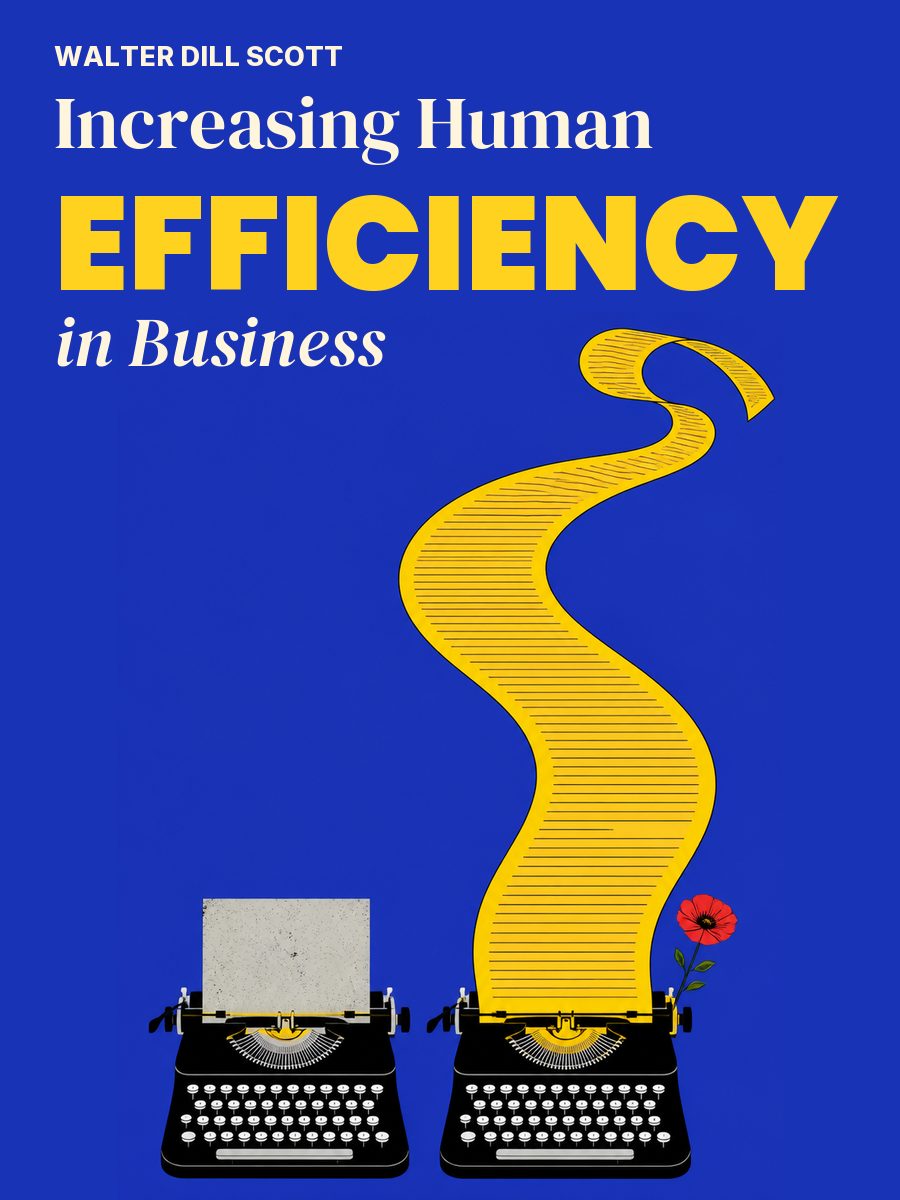 Increasing Human Efficiency in BusinessWalter Dill Scott
Why does the same person work at half strength in one team and give everything without any supervision in another? In 1911 the psychologist Walter Dill Scott questioned successful managers and tested their experience in a laboratory. The book is about six levers that raise people's output almost at no cost…
Question 1 of 5
A newcomer has joined the team. According to Scott, what's the fastest way to teach him the right pace?
Show the answer
Right answer: Put him next to the best worker
People copy what they see. A newcomer has nothing to unlearn yet, and next to a good example he'll pick up the right pace right away.
Question 2 of 5
You're setting up a contest for salespeople from big and small districts. What does Scott advise?
Show the answer
Right answer: Give each a target based on their district
The bar has to be fair and reachable. An agent from a small district must see a chance for himself, or he won't even try.
Question 3 of 5
By evening you're drained, though you've done few of the main tasks. How does Scott explain this?
Show the answer
Right answer: Distractions drained your energy
According to Scott, a businessman is worn out by resisting distractions: noise, phone calls, a line at the door.
Question 4 of 5
A manager wants to give an employee a raise. According to Scott, what will make it more effective?
Show the answer
Right answer: It should carry recognition
Behind wages lies a hunger for recognition. A raise on someone's birthday moved them more than one twice as big given in the usual way.
Question 5 of 5
You want to get rid of your own laziness. What does Scott advise?
Show the answer
Right answer: Keep away from lazy people
Without meaning to, we pick up slowing down more easily, so for Scott the best protection against laziness is the people around you.
Want all of the book's key ideas? Read or listen to its retelling in Livria.