
Book quiz
The Six Pillars of Self-Esteem Quiz
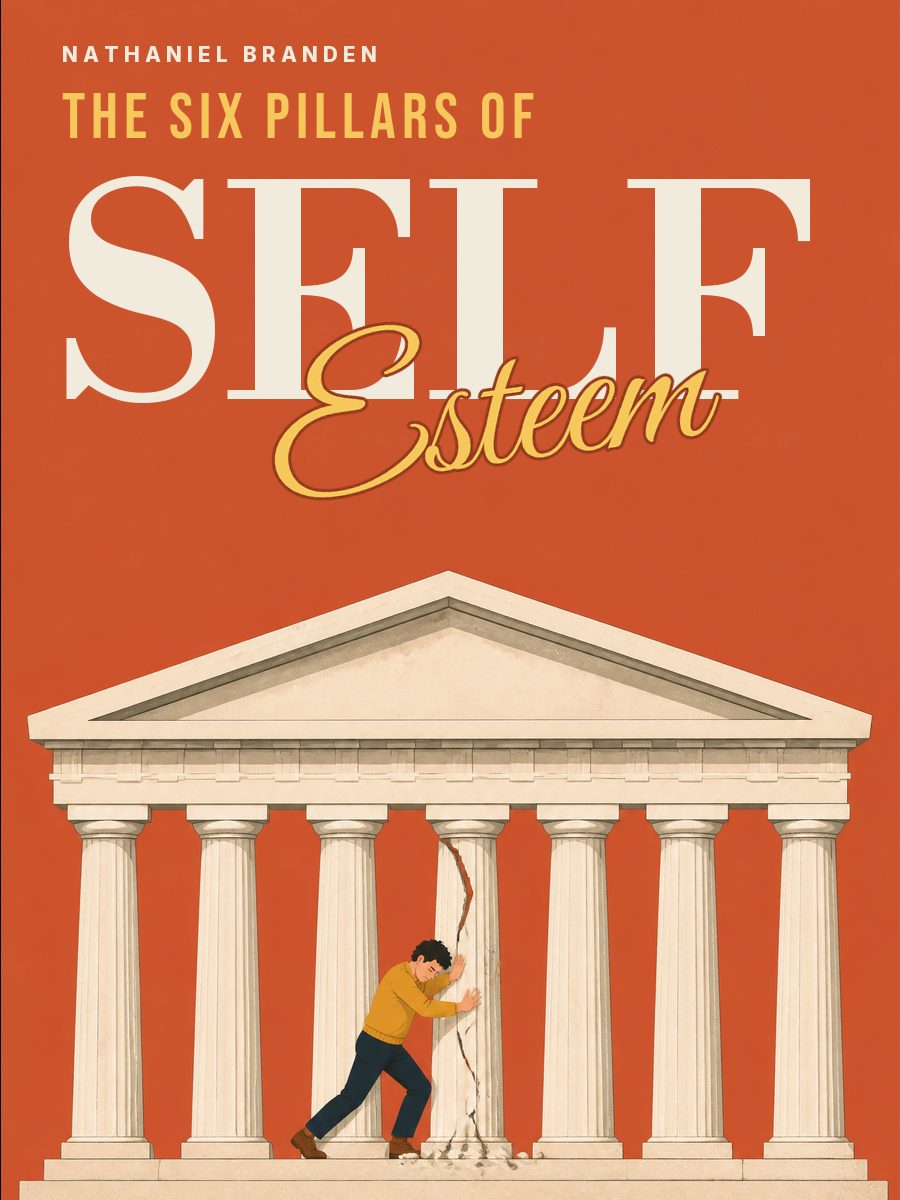 The Six Pillars of Self-EsteemNathaniel Branden
Why do some people still doubt themselves after praise and wins, while others stay steady even after a failure? Nathaniel Branden shows that self-esteem can't be handed to you as a gift: it is built by six daily practices. You'll learn what it is made of, how it gets faked, and how one unfinished sentence each…
Question 1 of 5
Someone collects cars, followers and promotions, but finds no peace. What does Branden call this?
Show the answer
Right answer: Pseudo-self-esteem: a show of confidence that hides fear
Money, popularity and victories can bring pleasure, but not self-respect. The race for proof of your worth never ends.
Question 2 of 5
For a month you haven't opened letters from the bank because there's something unpleasant in them. What does this mean for self-esteem?
Show the answer
Right answer: Each refusal to face the truth wears away your trust in yourself
The first practice: living consciously, respecting the facts. By turning away from an unpleasant truth, a person gradually loses trust in his own mind.
Question 3 of 5
You're afraid that if you accept yourself, you'll lose the wish to change. What does Branden answer?
Show the answer
Right answer: Just the opposite: you can't change what you deny
Self-acceptance doesn't mean approval. As long as a person pretends there's no problem, he can't work on it. Accepting a fact means you stop arguing with it.
Question 4 of 5
For years you've waited for your boss to notice your work on his own. Which practice does Branden suggest here?
Show the answer
Right answer: Self-responsibility: ask "What can I do?"
The third practice: no one is coming to fix your life. Responsibility isn't looking for someone to blame but asking what you can do yourself.
Question 5 of 5
You break a promise to yourself, and no one knows. According to Branden, why does it still hurt your self-esteem?
Show the answer
Right answer: There's always a witness: you, and it teaches you not to trust yourself
The sixth practice is personal integrity. You can fool others, but not your own memory, and every such betrayal wears away your trust in yourself.
Want all of the book's key ideas? Read or listen to its retelling in Livria.