
Book quiz
The Sociopath Next Door Quiz
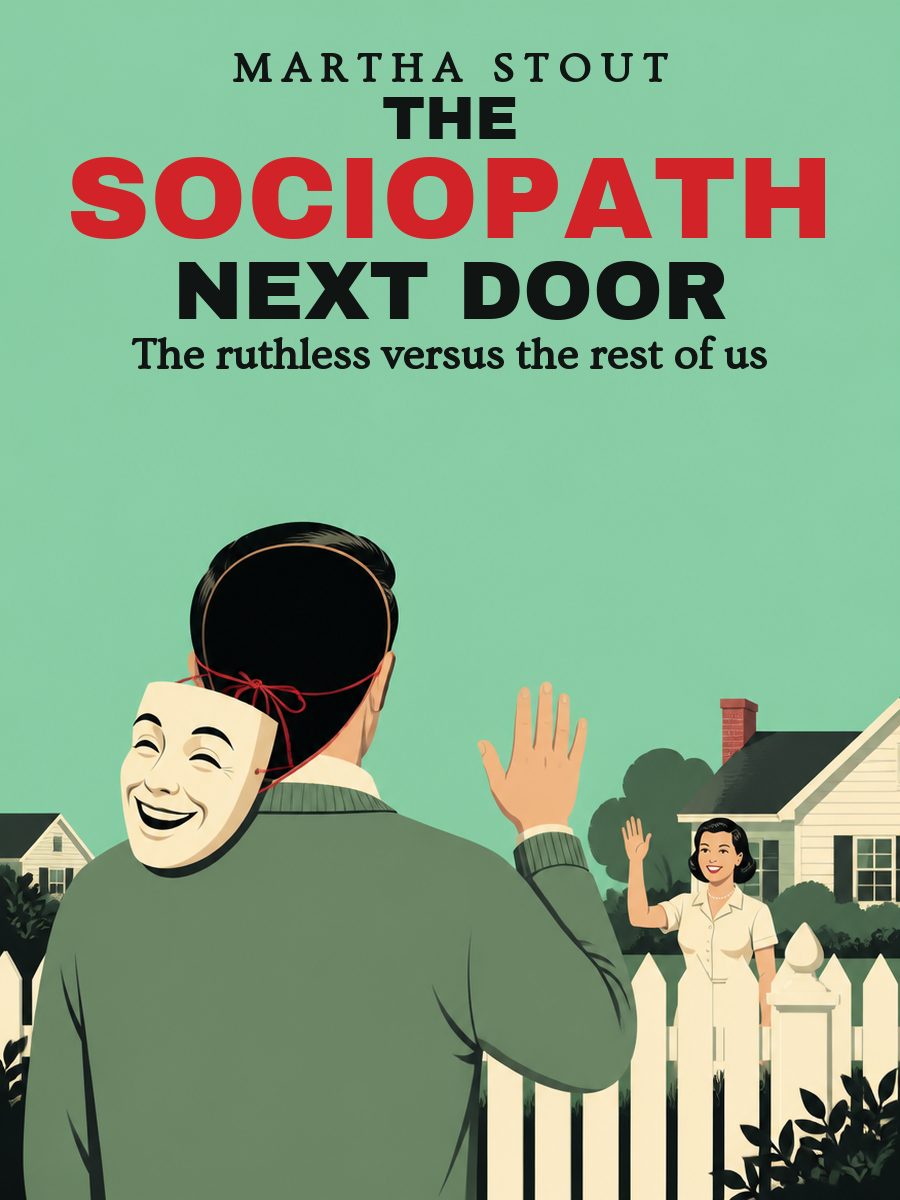 The Sociopath Next DoorMartha Stout
Imagine having no conscience: no guilt or shame, whatever you did. Clinical psychologist Martha Stout believes about one person in twenty-five lives this way. A book about why such people are hard to notice, which sign she considers most reliable, and how to protect yourself without diagnosing anyone.
Question 1 of 5
Joe is late for a meeting, but drives home to feed his dog. How does Stout explain this?
Show the answer
Right answer: A sense of obligation that grew out of attachment
For Stout, conscience isn't knowing the rules or fearing punishment, but a sense of obligation that grows out of attachment to others.
Question 2 of 5
Someone you know harms you again and again and each time tells you how hard things are for him. What does Stout consider the main sign?
Show the answer
Right answer: A pity play that makes you forgive again
People expected an answer about threats, but Stout named the pity play. If you keep pitying someone who harms you again and again, that's a reason to be on guard.
Question 3 of 5
A new acquaintance was late, then forgot an agreement, then lied. What does the rule of three suggest?
Show the answer
Right answer: See the pattern and step away from the person
For Stout, one lie may be a misunderstanding, two a serious mistake, but three incidents point to a pattern, and then it's time to step away.
Question 4 of 5
According to Stout, why does a person without a conscience go unnoticed for so long?
Show the answer
Right answer: We're sure everyone has a conscience, and we look for excuses
Most people assume everyone has a conscience and invent explanations: a hard time, a misunderstanding. The idea of deliberate harm seems too strange.
Question 5 of 5
A coworker is often rude and thinks only of himself. What does Stout say about such people?
Show the answer
Right answer: Not everyone who hurts others lacks a conscience
Stout warns that narcissism, in her words, is a failure of empathy, not of conscience, and rudeness and selfishness aren't a diagnosis either.
Want all of the book's key ideas? Read or listen to its retelling in Livria.