
Book quiz
Team of Teams: New Rules of Engagement for a Complex World Quiz
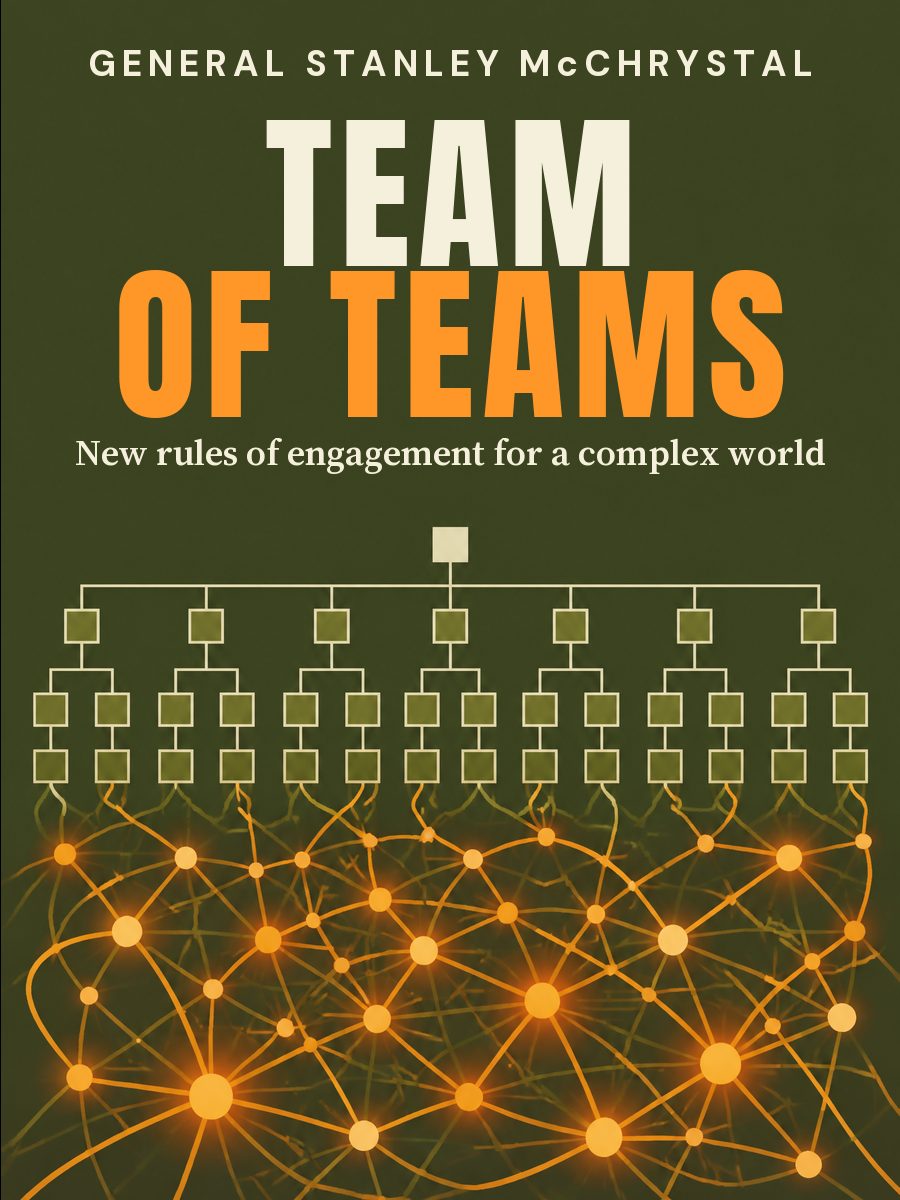 Team of Teams: New Rules of Engagement for a Complex WorldStanley McChrystal
Why was the best army in the world losing to a poorly armed network? General Stanley McChrystal tells how his task force in Iraq realised it was built for a world that no longer existed, and rebuilt itself into a "team of teams". You'll learn why adaptability matters more than efficiency, how thousands of people come…
Question 1 of 5
The best special forces are losing to a weak network. According to McChrystal, what was the real problem?
Show the answer
Right answer: The units adapted poorly to change
The task force did superbly what was no longer any use. While information passed down the chain, the enemy had time to change shape and strike somewhere else.
Question 2 of 5
In a company, every department is strong, but they work out of sync. What does McChrystal call the solution?
Show the answer
Right answer: Everyone knows and trusts someone on every team
Everyone knowing everyone is impossible. A team of teams rests on each person having someone they trust on every team, so the ties between teams resemble the ties within a unit.
Question 3 of 5
You're sending an employee to another department for six months. By McChrystal's rule, whom should you choose?
Show the answer
Right answer: The one you can't bear to give up
Exchanging people only works if you send your best. Once partners saw strong people, they began sending their own best in return, and personal ties formed.
Question 4 of 5
Why did McChrystal push decision-making down only together with shared consciousness?
Show the answer
Right answer: Without it, authority leads to chaos
Authority without shared consciousness leads to chaos, and shared consciousness without authority is frustrating: people see everything but can't do anything.
Question 5 of 5
What leadership role did McChrystal choose instead of the chess master?
Show the answer
Right answer: A gardener who prepares the soil and creates conditions
A gardener doesn't move pieces, he prepares the soil, waters and weeds. It's far from a passive role: the leader keeps an eye on everything but doesn't step into every action.
Want all of the book's key ideas? Read or listen to its retelling in Livria.