
Book quiz
The Big Short: Inside the Doomsday Machine Quiz
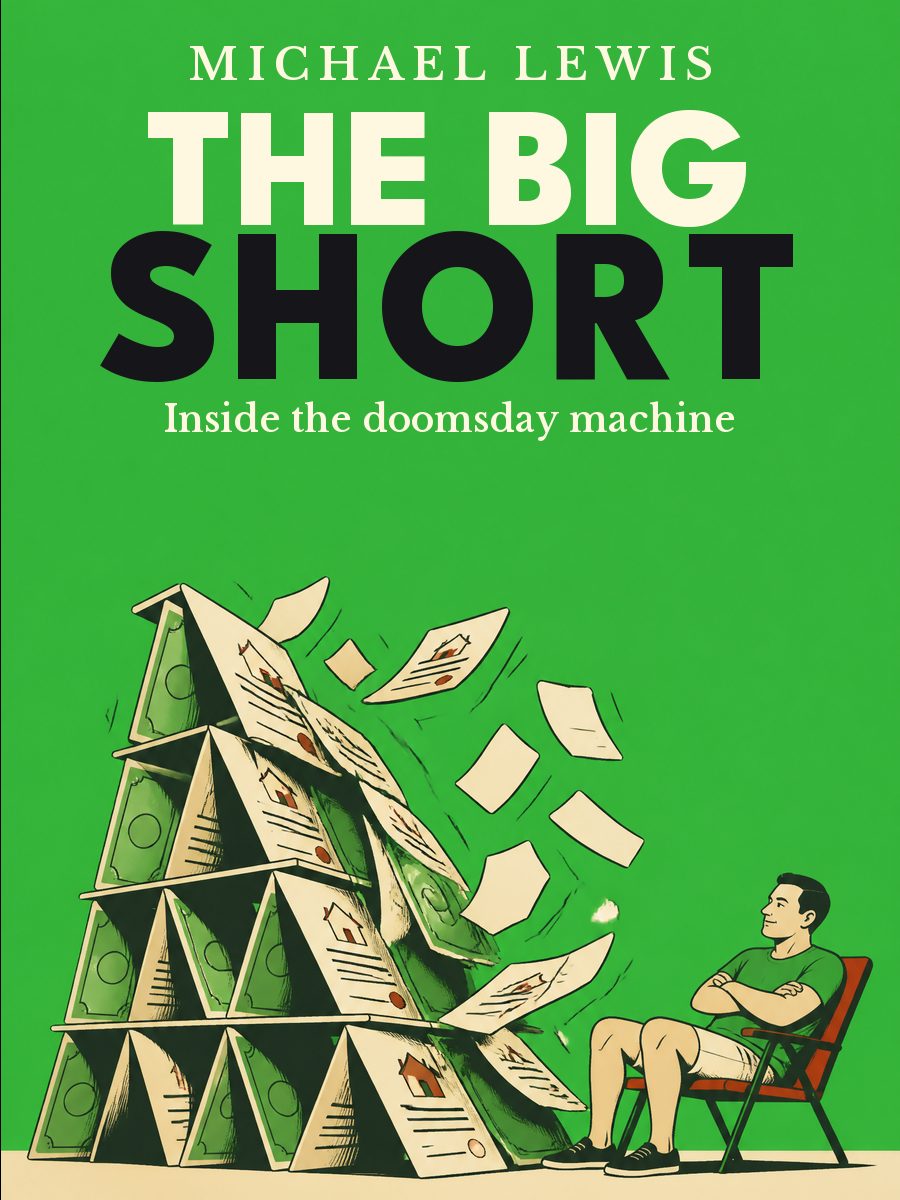 The Big Short: Inside the Doomsday MachineMichael Lewis
While the most respected banks in the world were buying up mortgage bonds, a handful of oddballs bet against them and turned out to be right. Michael Lewis tells the story of the 2008 crisis through these people: a doctor with a glass eye, a hot-tempered fund manager and two beginners working out of a shed. You'll…
Question 1 of 5
Why did lenders in the 2000s calmly give mortgages to people who couldn't repay them?
Show the answer
Right answer: They sold the loan on almost at once, and the risk passed down the chain
The lender got paid for making the loan and resold the mortgage to Wall Street banks right away. Whether the money came back no longer mattered to him.
Question 2 of 5
What had to happen to house prices for borrowers with teaser loans to stop paying?
Show the answer
Right answer: It was enough for prices simply to stop rising
Such a borrower could pay only while taking out a new loan against a house that had gone up in value. Once prices stopped rising, refinancing became impossible.
Question 3 of 5
How does the book explain why CDOs made of bottom-floor bonds got the top rating?
Show the answer
Right answer: The agencies looked at averages, and an average can be built from extremes
A pool where everyone has an average score is safer than a pool of near-hopeless and very safe borrowers, but to the agency they looked the same.
Question 4 of 5
In the book's view, what was Michael Burry's main advantage over the bankers?
Show the answer
Right answer: He patiently read prospectuses others found boring
Burry read hundreds of mortgage bond prospectuses and saw that loan quality was getting worse every year. He knew no secrets.
Question 5 of 5
In his talk with Gutfreund, where does Lewis see the root of the disaster?
Show the answer
Right answer: In the reward for risk and the responsibility for it coming apart
Partners risked their own money. A public bank risked its shareholders' money: the winnings went to employees as bonuses, and the losses fell on others.
Want all of the book's key ideas? Read or listen to its retelling in Livria.