
Book quiz
The Burnout Society Quiz
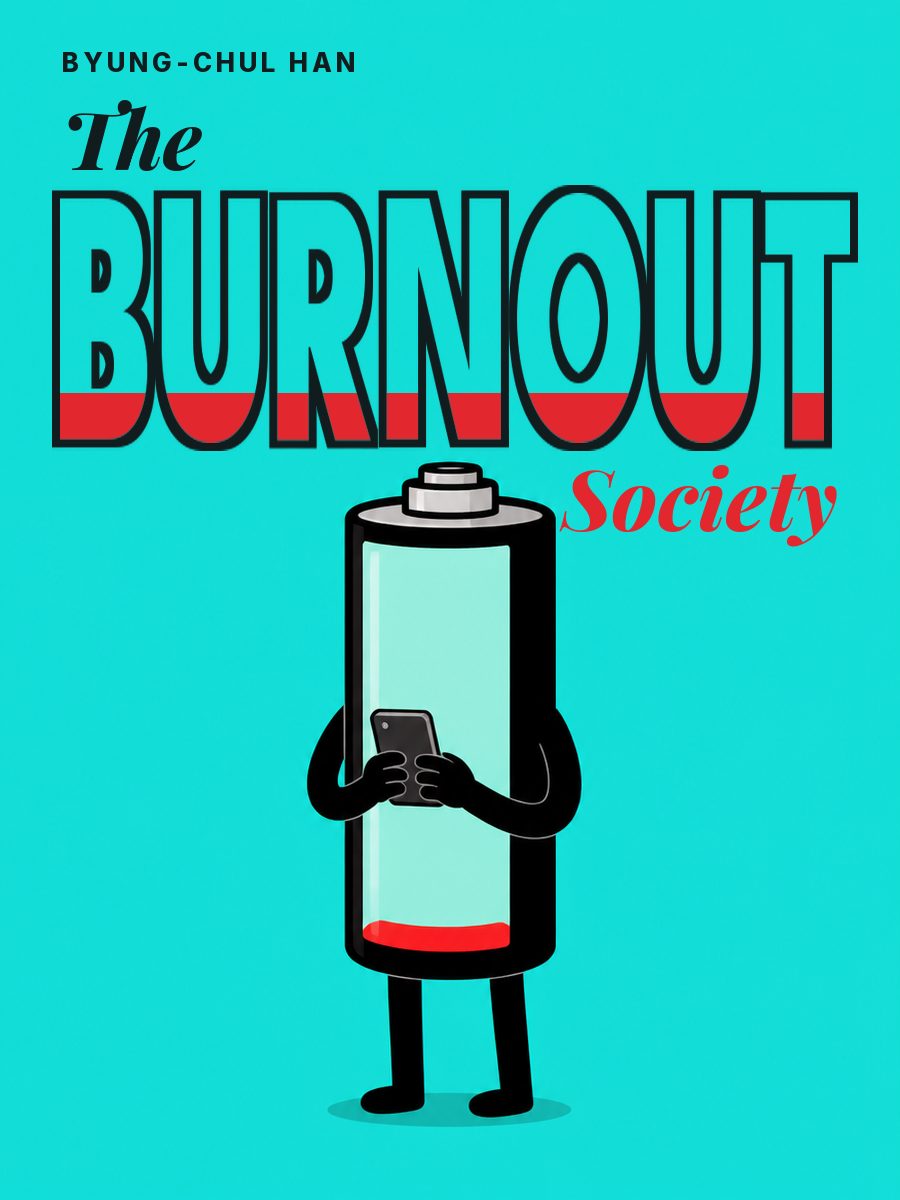 The Burnout SocietyByung-Chul Han
Why are we so tired, even though no one is forcing us? The philosopher Byung-Chul Han believes that what wears people out today isn't a ban but an endless "you can." In this short book, he explains how people became their own overseers, and why rescue may come from boredom, a pause and a special, shared kind of…
Question 1 of 5
Your evening is free, but you make yourself a long to-do list and are worn out by night. How would Han explain this tiredness?
Show the answer
Right answer: Too much "you can"
Han believes the illnesses of our time come not from bans but from too much "yes": the options, tasks and calls of "you can do anything" that people set for themselves.
Question 2 of 5
A message arrives in the middle of a conversation with a friend. Which is closer to the Nietzsche idea Han develops?
Show the answer
Right answer: Don't respond right away
Nietzsche advised training the eye to calm and not reacting at once to every stimulus. For Han, someone who responds to every signal isn't active, just obedient.
Question 3 of 5
A walk has become boring. In Han's example, what does the person who ends up inventing something new do?
Show the answer
Right answer: Puts up with the boredom
For Han, whoever endures boredom realizes one day that walking itself has become boring and invents a new movement, such as dance. Running, by contrast, is just fast walking.
Question 4 of 5
Nobody makes you work on weekends, but you sit down to work anyway. What does Han call this order of things?
Show the answer
Right answer: Self-exploitation
In the achievement society nobody stands over you, and you drive yourself, taking it for freedom. The predator and the prey are the same person.
Question 5 of 5
You and someone close to you are both drained after a hard week. For Handke and Han, which tiredness heals?
Show the answer
Right answer: Shared, together
Handke tells apart a lonely, mute tiredness that pushes people apart and a shared one that opens a person to the world. Then you're tired not of the other but together with them.
Want all of the book's key ideas? Read or listen to its retelling in Livria.