
Book quiz
The Comfort Crisis: Embrace Discomfort to Reclaim Your Wild, Happy, Healthy Self Quiz
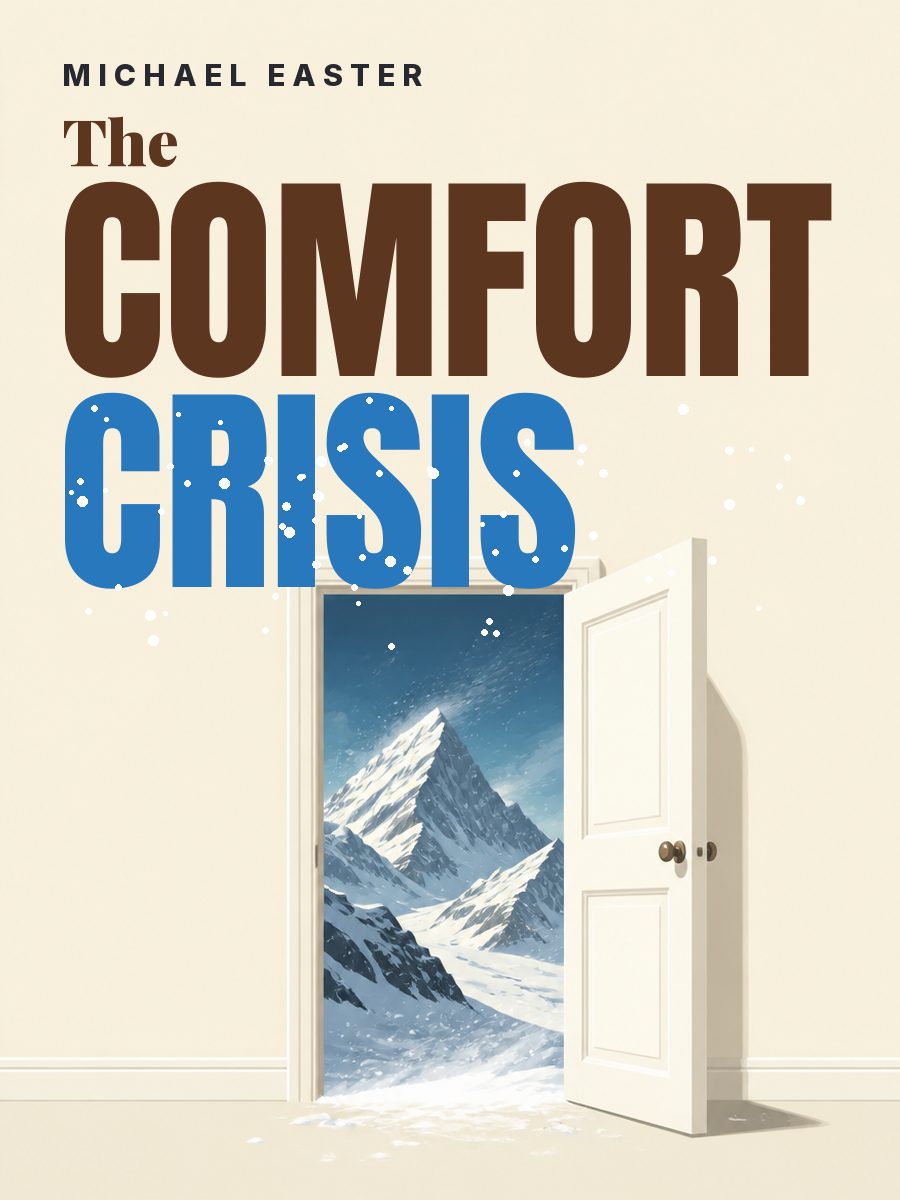 The Comfort Crisis: Embrace Discomfort to Reclaim Your Wild, Happy, Healthy SelfMichael Easter
Journalist Michael Easter spends thirty-three days in Alaska’s Arctic wilderness: a heavy pack, cold, hunger, boredom, and no phone. He returns with a question: could the comfort we work so hard for be making us weaker and unhappier? You will discover why the brain needs boredom, the body needs hunger and weight on…
Question 1 of 5
You're angry that your coffee went cold in a café, and the day seems ruined. How would Easter explain this?
Show the answer
Right answer: Without hardship, the brain lowers the bar for trouble
The brain judges everything by comparison: when there are no big troubles, small ones take their place. Easter calls this creeping comfort.
Question 2 of 5
You're choosing a misogi for the year. Which challenge fits Elliott's rules?
Show the answer
Right answer: Something with a fifty-fifty chance of success
Misogi has two rules: it must be truly hard, with about a fifty-fifty chance, and you must not die. A challenge with a known outcome is just a hike.
Question 3 of 5
You're standing in line and reach for your phone because you're bored. What does Easter advise?
Show the answer
Right answer: Don't scroll anything and let yourself be bored
In boredom the brain doesn't switch off; it shifts into mind-wandering mode, sorting through experiences and linking ideas. That's why Easter advises not scrolling in line.
Question 4 of 5
An hour after lunch you want a snack. Which of Kashey's questions should you ask yourself?
Show the answer
Right answer: Am I really hungry, or is it boredom?
Kashey looks not at what people eat but at why: from stress, from boredom or by the clock. If it isn't hunger, wait twenty minutes.
Question 5 of 5
You want to get stronger, but running is hard on your knees. Which workout does Easter see as one of the most important?
Show the answer
Right answer: Walking with a heavy pack on your back
Our ancestors carried things more often than they ran. Walking with a load burns two to three times more calories than ordinary walking and is easier on the knees than running.
Want all of the book's key ideas? Read or listen to its retelling in Livria.