
Book quiz
The Obstacle Is the Way: The Timeless Art of Turning Trials into Triumph Quiz
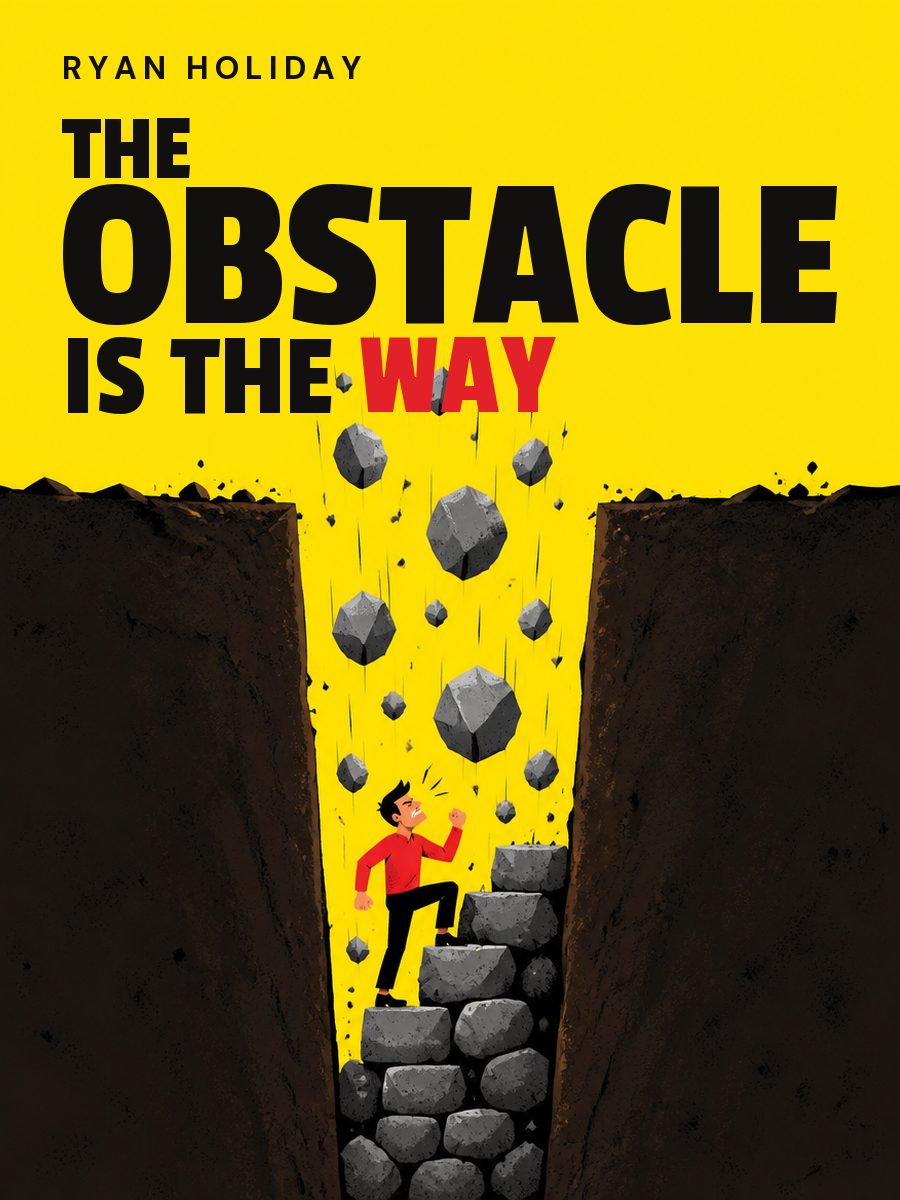 The Obstacle Is the Way: The Timeless Art of Turning Trials into TriumphRyan Holiday
A crisis, a rejection, a plan that fell apart: it feels like there is a wall ahead. Ryan Holiday gathered the stories of people, from a Roman emperor to Edison, who at that very moment found a road beyond the wall, and drew three skills from Stoic philosophy: seeing clearly, acting and enduring. This book shows you…
Question 1 of 5
On Friday your boss writes, "Come see me Monday," and you spend the whole weekend expecting to be fired. What does the book advise?
Show the answer
Right answer: Separate the fact from the reading that fear added
The discipline of perception: an event in itself is neither good nor bad; we add the fear. There was one fact, a talk on Monday, and your head wrote the rest.
Question 2 of 5
Your flight was canceled because of a storm. According to the Stoics in the book, where should you spend your energy?
Show the answer
Right answer: On the part of the problem that's in your power
Epictetus divided the world in two: thoughts, decisions and actions are in our power, the weather and other people's opinions are not. Energy spent on the second changes nothing.
Question 3 of 5
You're scared of public speaking, so on projects you always take the spreadsheets. What does the story of Demosthenes teach?
Show the answer
Right answer: Practice exactly where it's most uncomfortable
Demosthenes spoke so badly that people laughed at him, but he worked right through his weakness. The obstacle became his training ground.
Question 4 of 5
Your project is stuck, and the old approach fails again and again. What path does the story of Grant at Vicksburg suggest?
Show the answer
Right answer: Change the method, not the goal
Grant tried canals, bayous and different approaches, and each failure ruled out a wrong path. Persistence here means many different attempts, not one attack.
Question 5 of 5
Why did the Stoics think through in advance what might go wrong?
Show the answer
Right answer: So a sudden blow wouldn't catch them off guard
Seneca advised imagining setbacks before starting. The point isn't fear: for a trouble you've foreseen, you can prepare a backup move.
Want all of the book's key ideas? Read or listen to its retelling in Livria.