
Book quiz
The Uninhabitable Earth: Life After Warming Quiz
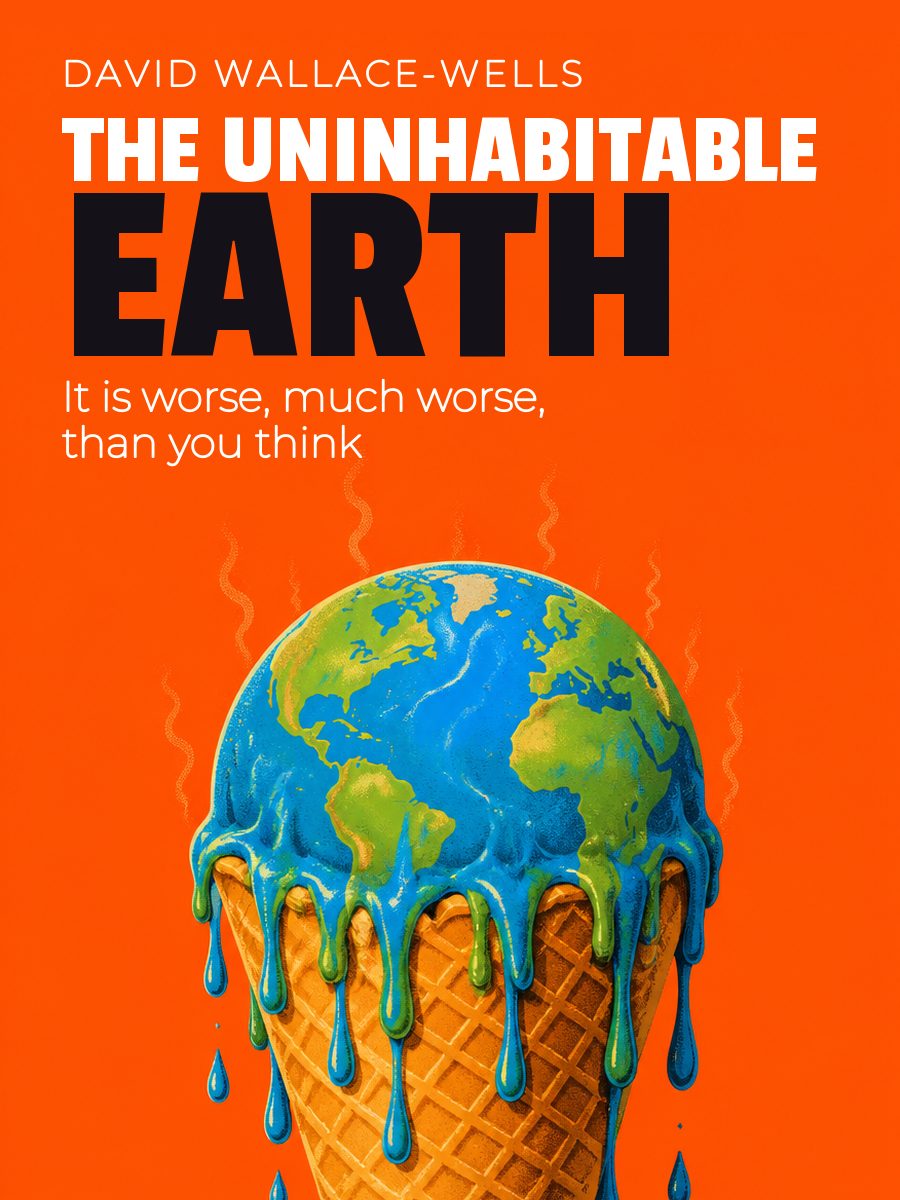 The Uninhabitable Earth: Life After WarmingDavid Wallace-Wells
The book opens with the line: “It is worse, much worse, than you think.” Journalist David Wallace-Wells shows how heat, hunger, fire, the economy and conflict hook into one another in cascades. At the same time he insists that the size of the disaster is not settled yet, and every fraction of a degree matters. The…
Question 1 of 5
Using melting Arctic ice as an example, what does the author call cascades?
Show the answer
Right answer: Disasters latch onto each other and amplify themselves
Melting ice exposes dark water, which absorbs more heat, and the ice melts faster. In the same way, heat hits harvests, harvests hit prices, and prices hit the poor.
Question 2 of 5
Why is humid heat more dangerous for people than dry heat at the same temperature?
Show the answer
Right answer: Sweat barely evaporates and stops cooling you
People cool down by evaporating sweat. In humid heat it barely evaporates, so even a healthy person in the shade may not cope.
Question 3 of 5
According to the author, why does responsibility for the outcome rest on one generation?
Show the answer
Right answer: More than half of all emissions came in the last thirty years
If one generation brought the planet to the edge, keeping it from going over is that generation's task. For the author, the speed of the disaster proves our power.
Question 4 of 5
What do military analysts mean when they call climate a "threat multiplier"?
Show the answer
Right answer: It rarely starts a conflict, but adds pressure where things are fragile
The link between hot years and violence is a matter of correlations, and climate's share in any particular war is disputed. Climate tends to heighten tension rather than create it.
Question 5 of 5
You get alarming climate news. What does the book advise asking?
Show the answer
Right answer: Which scenario and level of warming are meant
The darkest pictures belong to the high-emissions scenario. It's a warning, not a timetable, and the size of the disaster is still being chosen by people.
Want all of the book's key ideas? Read or listen to its retelling in Livria.