
Book quiz
Thinking in Systems: A Primer Quiz
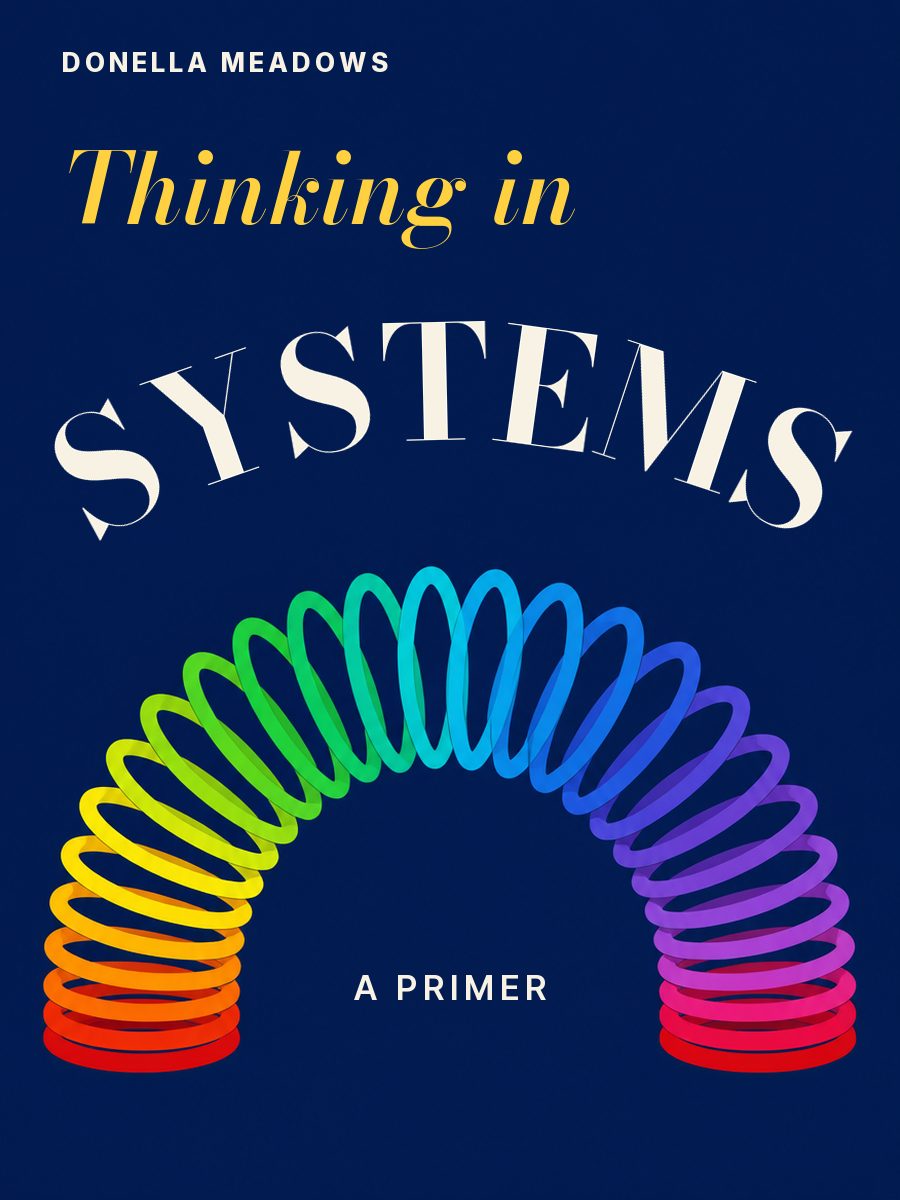 Thinking in Systems: A PrimerDonella Meadows
Why does a problem keep coming back, no matter how many people get blamed and replaced? Donella Meadows shows that the way a family, a company or a country behaves depends a lot on how it is built. With simple pictures, from a bathtub to a thermostat, the book teaches you to notice what piles up and what drains away…
Question 1 of 5
Money runs short by the end of the month, and your first thought is to find a side job. According to the book, what should you check first?
Show the answer
Right answer: Where the money drains away
A stock grows not only from inflow but also when less flows out. Closing the drain is often easier and cheaper than opening the tap wider.
Question 2 of 5
A store's sales fell two days in a row, and the manager wants to cut orders in half at once. What would Meadows suggest?
Show the answer
Right answer: Allow for the delay; don't rush
The car dealer in the author's model made his inventory swing harder when he began reacting faster. The swings died down when he spread his correction out over time.
Question 3 of 5
The department has had its third new manager, and deadlines are missed just the same. In the author's view, what should be changed?
Show the answer
Right answer: What people can see
A new person in the same position sees the same things and soon acts the same way. Behavior changes when the information and incentives in that position change.
Question 4 of 5
A family wants to spend less on electricity but doesn't want to forbid anything. Which step from the book can help?
Show the answer
Right answer: Seeing the usage every day
In a Dutch suburb, families with their meter in the front hall used a third less than families with their meter in the basement. Visible information became feedback by itself.
Question 5 of 5
Year after year the team says "we're no worse than last year," and results slowly slide. What does the author suggest?
Show the answer
Right answer: Measure against your best past results
This is the trap of drifting goals: a low bar leads to less effort and an even worse result. A bar set by your best past results turns the same loop upward.
Want all of the book's key ideas? Read or listen to its retelling in Livria.