
Book quiz
The Tipping Point Quiz
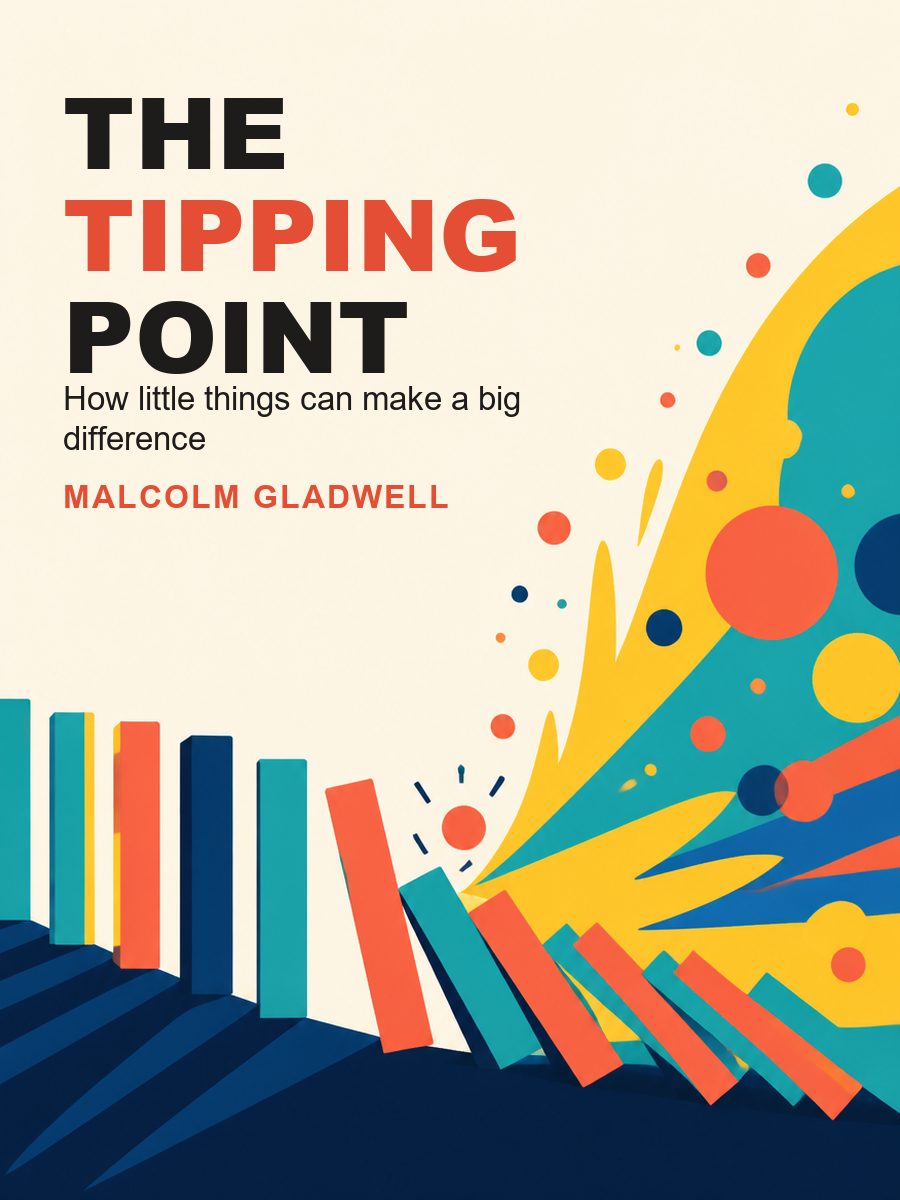 The Tipping PointMalcolm Gladwell
Why does one idea or product suddenly take over a whole city, while another, no worse, quietly dies in obscurity? Gladwell shows that it isn't about quality but about an invisible point after which the spread takes off like an outbreak of an epidemic — through a few special people and small details of the…
Question 1 of 5
For three months your new service has had 12 users. An investor suggests shutting it down. What would Gladwell say?
Show the answer
Right answer: Don't judge by the first numbers: growth may explode later
Spreading works like an epidemic: growth looks weak right up to the explosion. Judging an idea by its starting numbers and giving up early is a common mistake.
Question 2 of 5
According to the book, how can a bakery get people talking about its new bread with trust?
Show the answer
Right answer: Win over the meticulous neighbors whom the area trusts
Mavens check things for themselves and share their finds without self-interest. Their advice is trusted more than advertising, and the idea gains not just fame but a reputation.
Question 3 of 5
People litter in the office lobby, and lectures on the notice boards don't help. What does the book suggest?
Show the answer
Right answer: Change the setting itself: lighting, walls, order in the small things
Behavior depends on the setting more than on character. A clean, well-kept place nudges people to behave neatly.
Question 4 of 5
A company wants to hire twice as many call center agents because of the queues. What does the book teach?
Show the answer
Right answer: First look for the small detail the problem rests on
A system often rests on a few small supports. Remove one, such as the password question, and you can solve the problem without an expensive project.
Question 5 of 5
The company has grown to eight hundred people, and news reaches people last. What does the book advise?
Show the answer
Right answer: Split it into small, close-knit teams
Groups where people really know each other have a limit of a few hundred. Past it, ties wear thin, so small units work better.
Want all of the book's key ideas? Read or listen to its retelling in Livria.