
Book quiz
How to Make Good Things Happen: Know Your Brain, Enhance Your Life Quiz
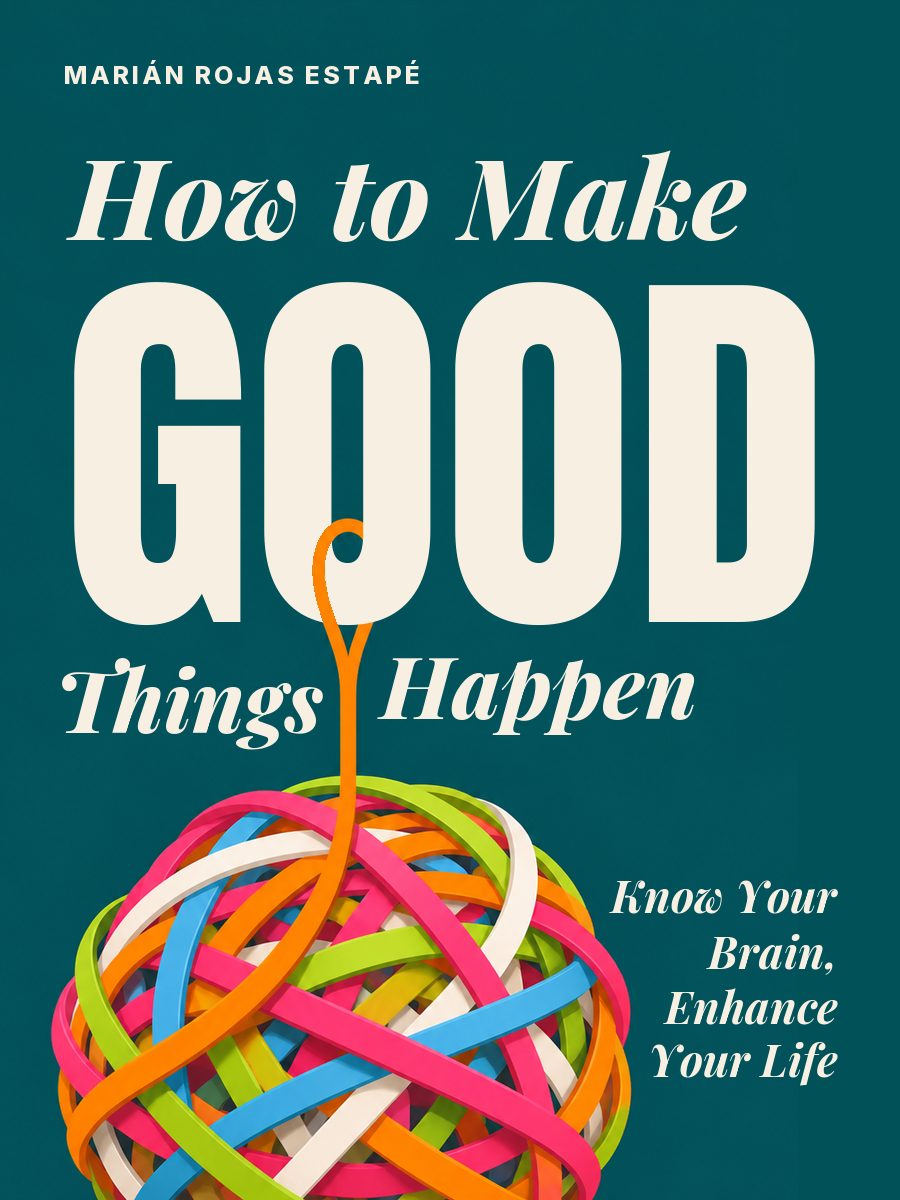 How to Make Good Things Happen: Know Your Brain, Enhance Your LifeMarian Rojas Estapé
The false fire alarm at the movies is over, yet for several hours the body carries on as if there had been a fire. Madrid psychiatrist Marian Rojas Estapé explains why the brain can barely tell a real threat from an imagined one, and what that leads to. Through the stories of her patients and of the Cambodian girls…
Question 1 of 5
Why does the thought "what if I get fired" hit the body even though nothing has happened?
Show the answer
Right answer: The body is poor at telling the real from the imagined
Just as your mouth waters at an imagined lemon, the body responds to an imagined threat too. That's why it's worth asking whether this is happening right now.
Question 2 of 5
From Rojas's experience, what happens to feelings that are silently swallowed?
Show the answer
Right answer: They come back as ailments of body or mind
Beatriz kept quiet for years and came to the doctor with apathy and dizzy spells. The author advises naming the feeling and calmly saying it out loud.
Question 3 of 5
Someone snaps at you: "What an outfit, it's awful." What answer does the author consider healthy?
Show the answer
Right answer: Calmly say that you like it
Rudeness damages the relationship, and a swallowed hurt spins in your head all evening. A calm answer speaks about your feeling without hurting the other person.
Question 4 of 5
According to Rojas, for whose sake is it worth forgiving, even when you can't understand the person who hurt you?
Show the answer
Right answer: For your own sake
Forgiveness doesn't excuse the offender. It lifts from the injured person a weight that keeps them in the past.
Question 5 of 5
According to the Harvard study, what made people happier and healthier?
Show the answer
Right answer: Good relationships
What decides it isn't the number of people you know but how warm things are with them. Lonely people on average fell ill more often and died earlier.
Want all of the book's key ideas? Read or listen to its retelling in Livria.