
Book quiz
The Science of Powerful Focus: 23 Methods for More Productivity, More Discipline, Less Procrastination, and Less Stress Quiz
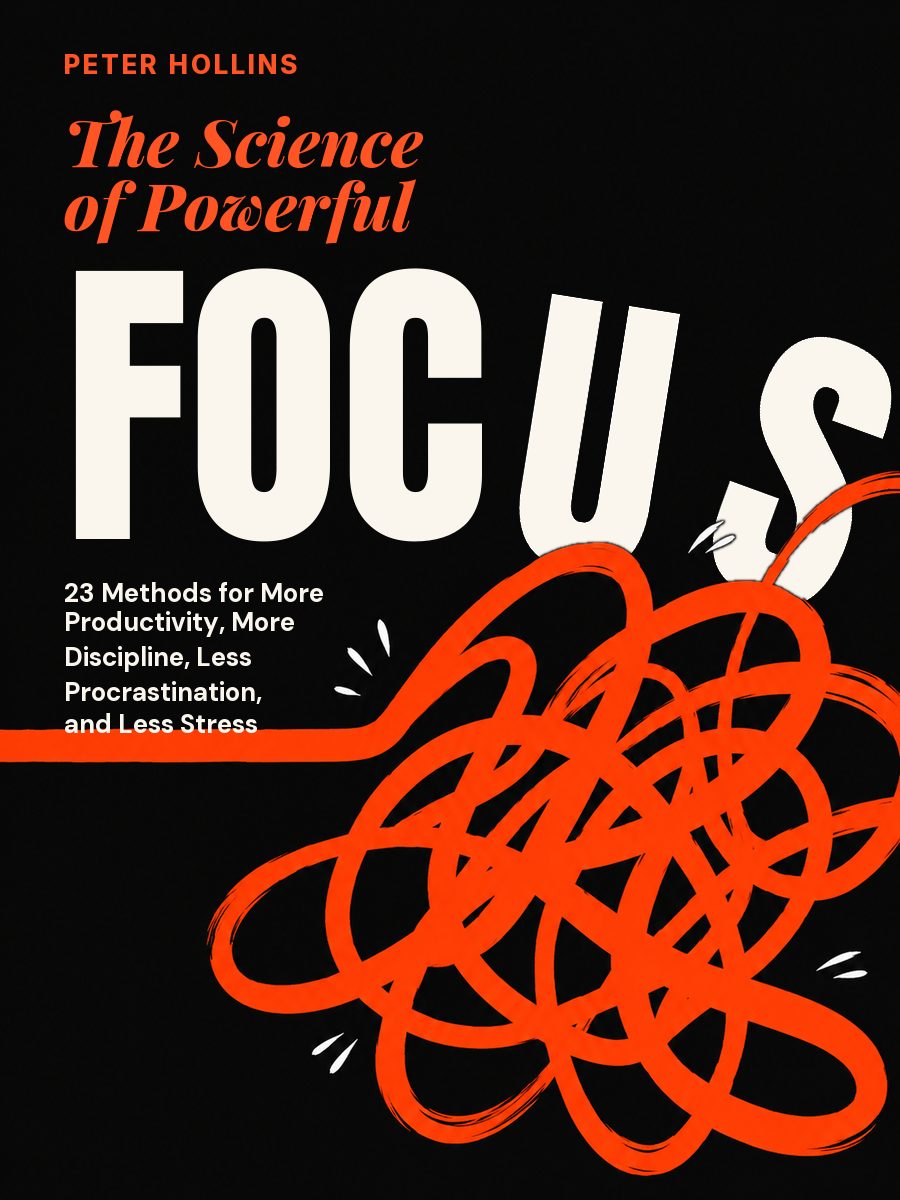 The Science of Powerful Focus: 23 Methods for More Productivity, More Discipline, Less Procrastination, and Less StressPeter Hollins
For years a student handed in his papers a minute before the deadline, until a simple timer changed his habit. Later that student became an author and gathered methods that help you hold your attention: from the ten-minute rule to one word that makes saying no easier. Here are only the main ones and what they rest on.
Question 1 of 5
You just can't get yourself to sit down to a big task. What does Hollins advise?
Show the answer
Right answer: Promise yourself to work for just ten minutes
Starting is the hardest part. Until you start, your imagination replays the worst parts of the task, and within ten minutes you build momentum.
Question 2 of 5
According to Hollins, how long should you work before a break?
Show the answer
Right answer: About an hour and a half, then rest
Even during the day the body runs in cycles of about ninety minutes, so after a block you need a break of fifteen or twenty minutes.
Question 3 of 5
In the Yerkes-Dodson model, what level of arousal is best for work?
Show the answer
Right answer: Moderate, between boredom and panic
With low arousal you're bored, and past the peak the results drop. You work best in the middle, when your head is clear.
Question 4 of 5
Why does frequent switching between tasks hurt your work?
Show the answer
Right answer: Part of your attention stays stuck on the previous task
This is attention residue, described by Sophie Leroy: the more of your thoughts cling to the interrupted task, the worse the next one goes.
Question 5 of 5
According to Hollins, what makes it easier to resist temptation?
Show the answer
Right answer: Tell yourself "I don't," like a decision already made
"I can't" sounds like a ban that rests on willpower. "I don't" sounds like a decision, and there's nothing left to argue about.
Want all of the book's key ideas? Read or listen to its retelling in Livria.